

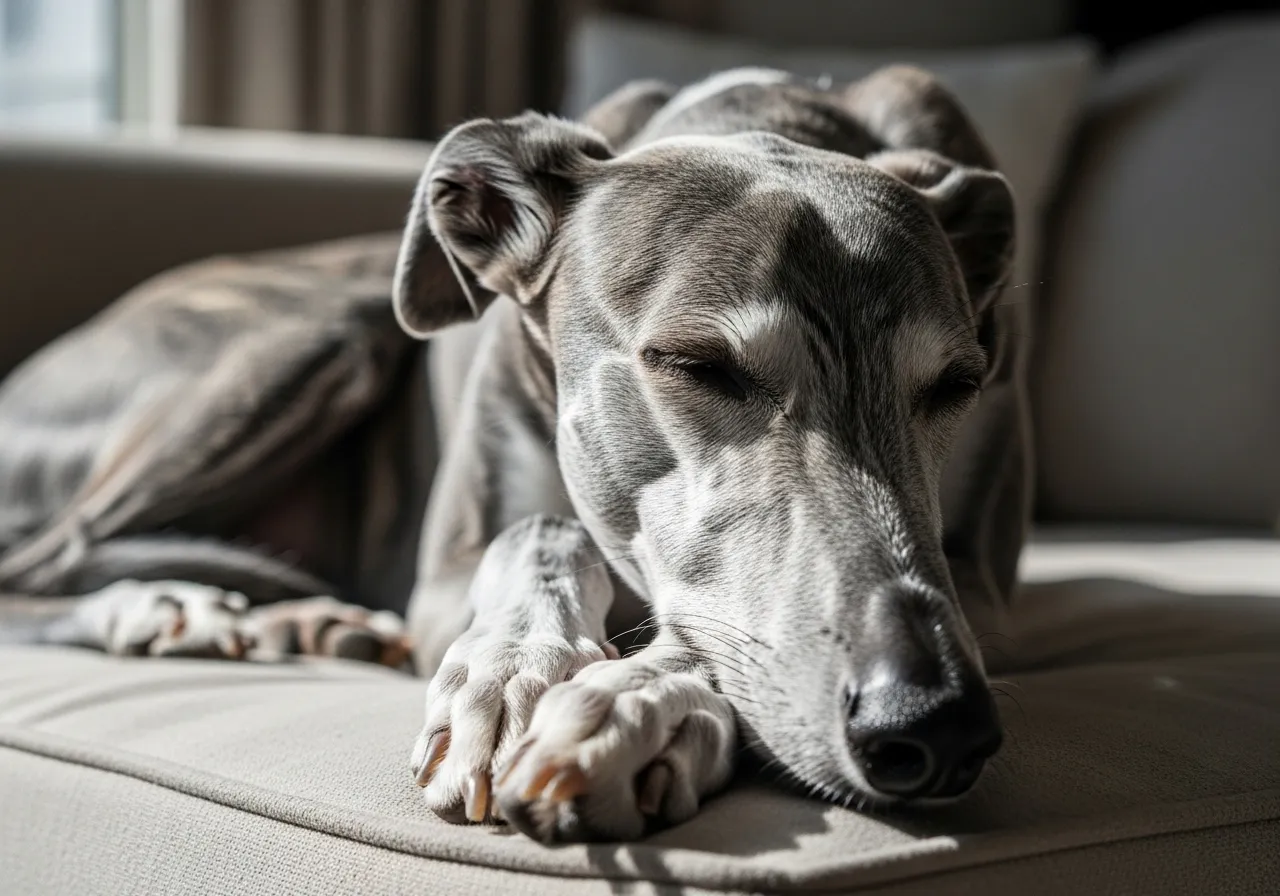
3. Greyhound: The 45-MPH Couch Potato
It may seem counterintuitive to include the world’s fastest dog on a list of low-energy breeds, but Greyhounds are the sprinters of the canine world, not marathoners. Bred for thousands of years to chase prey by sight, they expend their energy in short, explosive bursts. In a home environment, particularly for retired racers, they are famously docile, gentle, and content to snooze the day away.
Exercise and Temperament
A Greyhound’s exercise needs can often be met with a 20-30 minute daily walk on a leash. A few times a week, they will appreciate the chance to run full-out for a few minutes in a securely fenced area. It is critical that they are never allowed off-leash in an unfenced space, as their high prey drive and incredible speed mean they could be gone in an instant. Despite their size, they are remarkably graceful and well-suited to apartment dogs, often described as “cat-like” in their quiet demeanor indoors.
Health and Care
Greyhounds are a generally healthy breed. However, they have some unique physiological traits. They have lower levels of thyroid hormone and different blood-work values than other breeds, which veterinarians should be aware of. They are sensitive to anesthesia, particularly barbiturates. Like other deep-chested breeds, they are at risk for gastric dilatation-volvulus (GDV), or bloat, a life-threatening condition where the stomach twists. Owners should learn the signs, such as a swollen abdomen, non-productive retching, and restlessness, which constitute a veterinary emergency.
Grooming Needs
Their thin skin and short coat make grooming a breeze. A quick wipe-down with a hound mitt once a week is all that’s needed. However, their lack of body fat means they are sensitive to both heat and cold, and they often need a coat in winter weather. Dental care is very important, as they are prone to tartar buildup.













1 thought on “”
Your posts on dog “types” have been so informative. I read the one about dogs with low energy levels because I am a senior with heath issues that required bed rest. I have a small mix breed rescue I inherited when my boyfriend passed. I worried I wouldn’t be able to care for the pup since he was so hyper whenever we went out. What I found was he was content to sleep right along with me as long as I was able to get up and feed him and let him out a couple times a day and play a bit and give him a brush. Reading this post I found that the primary breed of my mix is Tibetan Terrier. So many of his traits make sense now., like the standing on furniture and the way he alerts my daughters Golden when people approach. Now I can adjust my care to fit his breed. Thank you for the info. Great posts. Also content is easy to access just click on the boxes!