

You can uncover the true resilience of life by examining how desert animals endure Earth’s most unforgiving landscapes. Arid wildlife survives blistering heat, freezing nights, and nearly non-existent water through brilliant evolutionary engineering. Instead of fleeing these harsh conditions, desert creatures rely on biological ingenuity to thrive. You will see how specialized kidneys, thermal-regulating ears, and moisture-harvesting shells transform hostile environments into flourishing habitats. By studying these specific survival adaptations, you gain profound insight into ecosystem endurance and the delicate biological balance required to sustain life on a warming planet. Exploring these five remarkable animals reveals the highly adapted mechanisms that make survival possible when the odds are stacked entirely against them.
The Fennec Fox: Radiating Heat and Hearing Prey
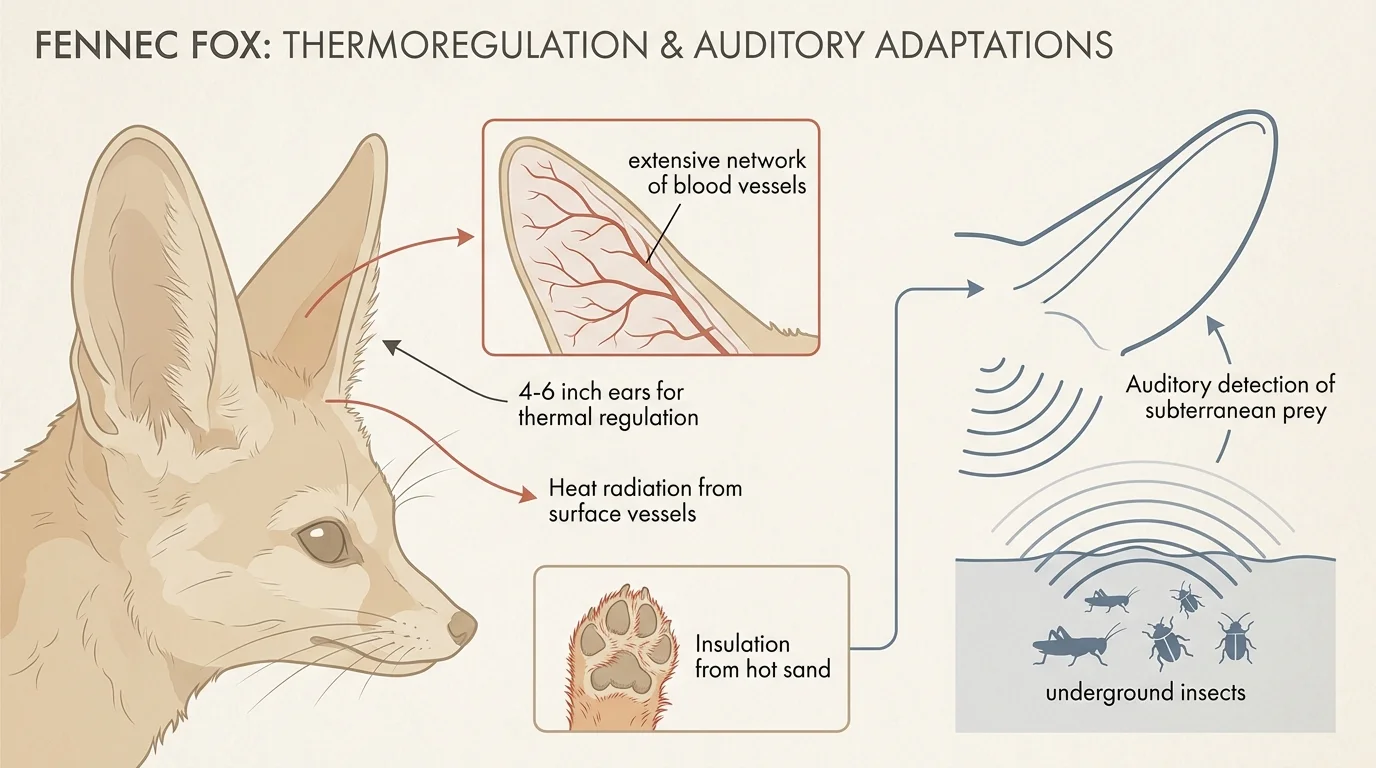
To understand the engineering behind the fennec fox, you must look at its most defining feature—its massive ears. Reaching four to six inches in length, these ears serve a dual purpose that dictates the animal’s survival in the Sahara Desert . First, they act as an organic thermal regulation system. An extensive network of blood vessels runs close to the skin’s surface within these ears; as blood pumps through these vessels, excess body heat radiates out into the cooler air, effectively lowering the fox’s core temperature . You can observe a similar principle in mechanical radiators, which rely on maximizing surface area to dissipate heat efficiently.
Beyond temperature control, these oversized auditory receptors allow the fennec fox to detect the faintest sounds of prey—such as insects and rodents—moving deep underground . This impeccable hearing ensures they expend minimal energy while hunting. To protect themselves from the scorching desert surface, fennec foxes feature heavily furred paws . This thick padding functions like insulated snow boots, preventing burns as they traverse the hot sand dunes and providing vital traction in the loose terrain.
Their sandy-colored coat offers more than just excellent camouflage against predators. The fur actively reflects the intense daytime sunlight while providing necessary insulation when temperatures plummet after dark . By spending the hottest hours of the day sheltered in underground dens—which they dig up to three feet deep into the sand dunes—they entirely avoid the peak solar radiation . As omnivores, they consume a varied diet of insects, snails, roots, and eggs, extracting nearly all their required moisture directly from this solid food source . When you look at the fennec fox, you see a creature perfectly calibrated to handle both the extreme heat of the day and the freezing temperatures of the desert night.
The Kangaroo Rat: Mastering Metabolic Water Production
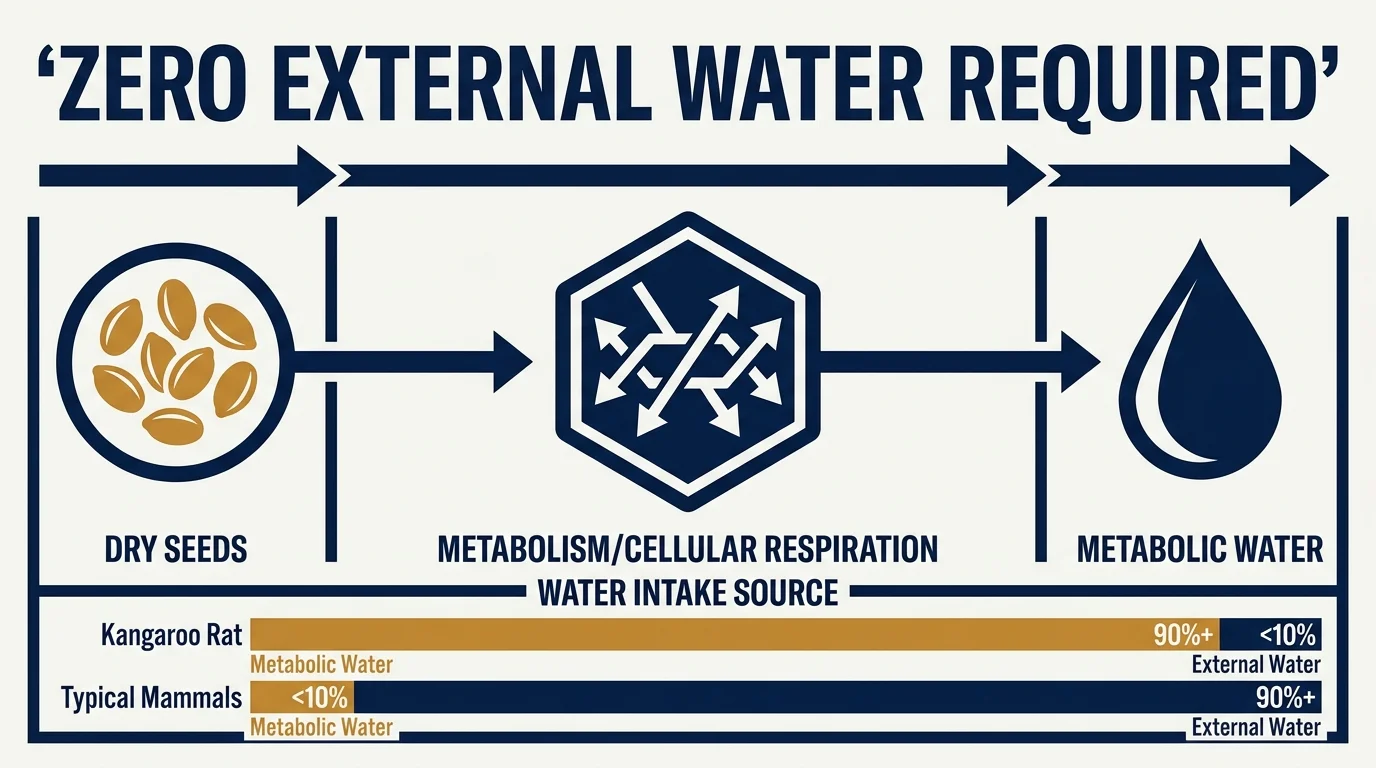
The kangaroo rat represents one of the most astonishing biological marvels in the animal kingdom; it can live its entire lifespan without drinking a single drop of liquid water . Native to the arid regions of western and southwestern North America, this small rodent has mastered the process of generating metabolic water . Instead of seeking out puddles or streams, the kangaroo rat extracts all the hydration it needs from a diet consisting primarily of dry seeds .
When the kangaroo rat digests carbohydrates, its cellular metabolism breaks down the food and produces water as a chemical byproduct. To ensure not a single drop of this precious internal moisture goes to waste, the animal relies on highly specialized kidneys. These organs feature exceptionally long loops of Henle, allowing them to extract and reabsorb almost all the water from their waste, consequently excreting urine that is concentrated into a semi-solid paste .
You will also find their complex respiratory system perfectly tuned for moisture retention. When a kangaroo rat exhales, the air passes through specialized nasal passages that cool the breath and recapture the water vapor before it can escape into the atmosphere . They further conserve moisture by sealing themselves inside their burrows during the day, creating a humid microclimate where the seeds they hoard actively absorb the moisture from the burrow’s air . They even possess external cheek pouches to carry seeds back to their burrows without moistening them with saliva . Because they do not sweat or pant to cool down, they strictly limit their foraging to the cooler nighttime hours . If a predator manages to track them, their powerful hind legs allow them to execute sudden, erratic leaps of up to nine feet to escape danger .
The Thorny Devil: Drinking Rainwater Through Its Skin
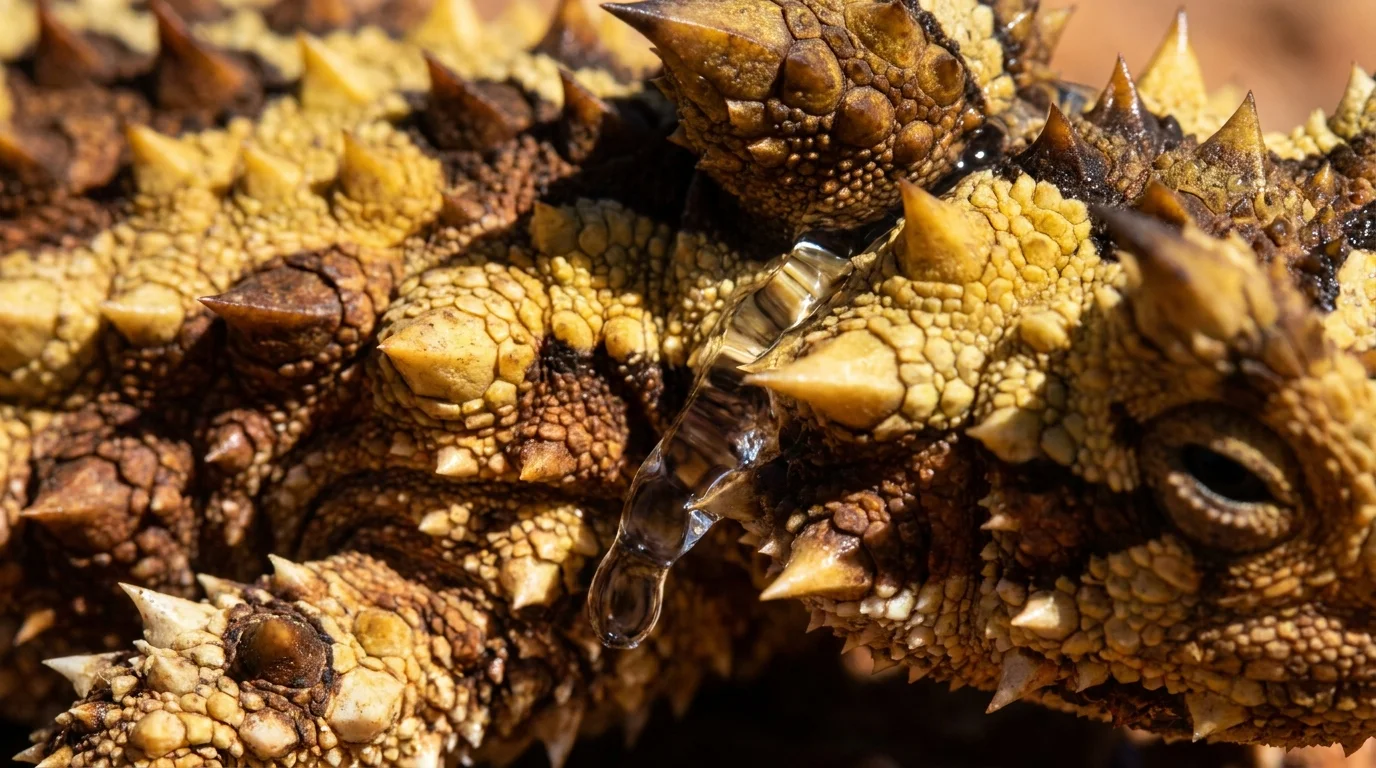
Wandering across the sand and spinifex grasslands of central and western Australia, the thorny devil looks like a miniature relic from the age of dinosaurs . This slow-moving lizard relies on a truly spectacular adaptation to stay hydrated in an environment where rainfall remains incredibly scarce: it drinks through its skin. An intricate network of microscopic grooves covers the thorny devil, located safely between its sharp, cone-shaped scales .
When the morning dew settles, or when a rare rainstorm sweeps across the outback, water hits the lizard’s back and gets trapped in these tiny channels. Through the principle of capillary action, the water travels upward and forward, defying gravity, until it reaches the corners of the lizard’s mouth . If you find yourself in an arid Australian environment, you might witness this lizard performing another ingenious hydration trick. After a light rain, the thorny devil will deliberately bury itself in the moist sand, allowing its highly absorbent skin channels to sponge up the moisture directly from the wet earth .
Its heavily armored exterior serves as a formidable defense mechanism against predators. To further deter attackers, the thorny devil possesses a fleshy, spiked lump on the back of its neck that functions as a false head . When threatened, the lizard lowers its actual head between its front legs, presenting the false head to the predator—a brilliant decoy that makes the lizard incredibly difficult to swallow . Because they feed almost exclusively on ants, they must spend significant time exposed to the harsh elements while hunting . To cope with the shifting desert temperatures, their skin actively changes color; they appear lighter during the heat of the day to reflect sunlight, and turn darker in the cool mornings to absorb vital heat .
The Dromedary Camel: Engineering the Ultimate Desert Vessel
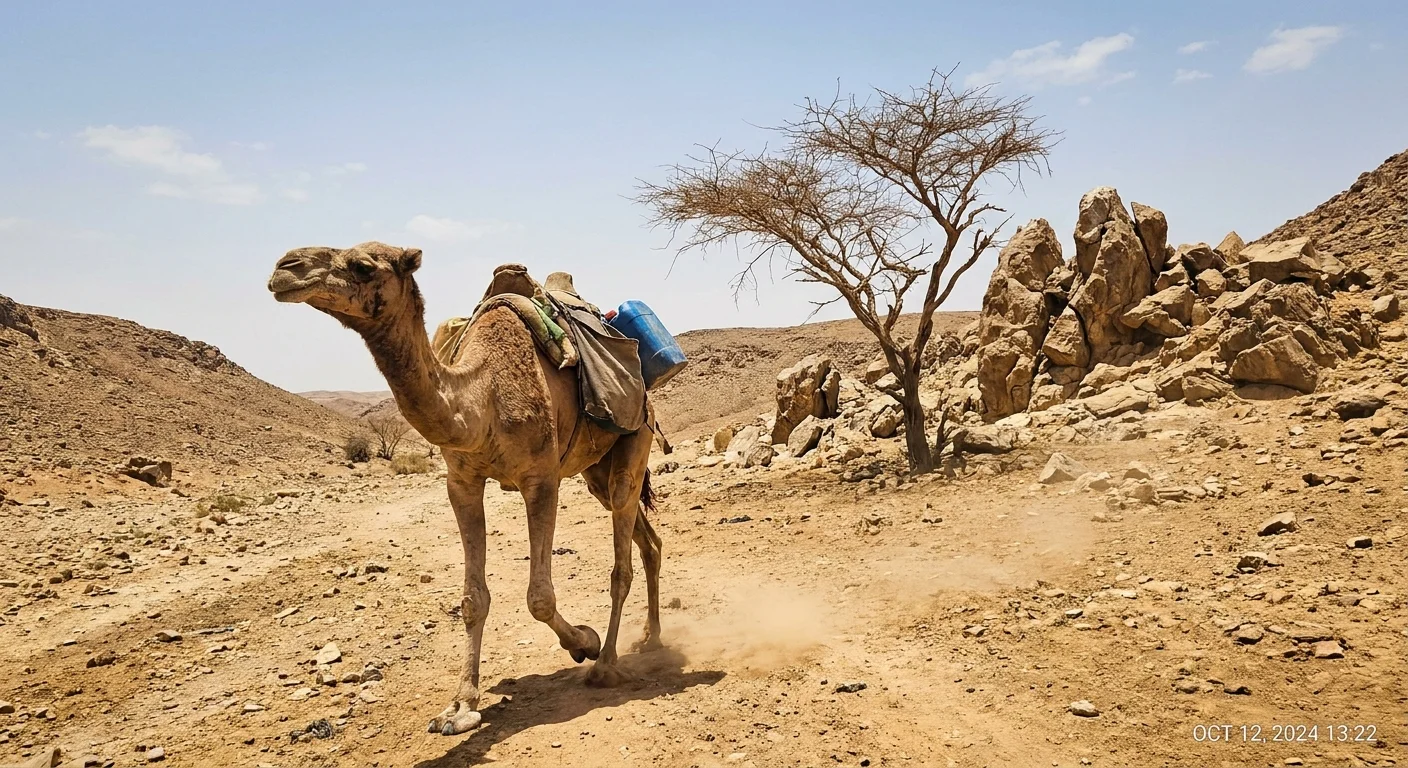
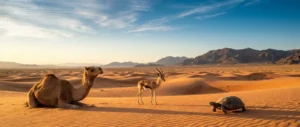
No conversation about arid wildlife is complete without examining the dromedary camel, universally recognized as the ultimate desert vessel. While popular mythology suggests that a camel’s hump stores massive amounts of liquid water, the hump actually holds up to eighty pounds of adipose tissue, or fat. This concentrated energy reserve allows the camel to travel across the harsh Arabian Desert for weeks without a reliable food source. As the camel metabolizes this stored fat, the chemical process generates both vital energy and metabolic water, sustaining the animal through extended periods of extreme drought.
The true secret to the camel’s legendary hydration capabilities lies within its circulatory system. Unlike most mammals, which possess circular red blood cells, camels feature oval-shaped red blood cells. This unique structural adaptation allows the blood to continue flowing smoothly through the capillaries even when the camel becomes severely dehydrated and its blood naturally thickens. Furthermore, these oval cells boast incredible elasticity. When a thirsty camel finally reaches a watering hole, it can consume vast quantities of water in just a matter of minutes. While a sudden influx of fluid would cause standard circular red blood cells to rupture under the extreme osmotic pressure, the camel’s oval cells simply expand, safely absorbing the massive intake of water.
Camels also utilize a dynamic body temperature strategy to conserve moisture. Instead of sweating immediately to cool down, they allow their internal body temperature to rise by several degrees during the heat of the day, only releasing the accumulated heat when the surrounding air cools at night. Beyond their remarkable internal architecture, camels possess a host of physical barriers against the desert environment. They feature dual layers of exceptionally long eyelashes and slit-like nostrils that squeeze completely shut, effectively blocking out blowing sand during fierce dust storms. Their broad, leathery footpads prevent them from sinking into the soft dunes, distributing their massive body weight evenly across the shifting terrain and acting as built-in shock absorbers.
The Namib Desert Beetle: Harvesting Fog from the Air
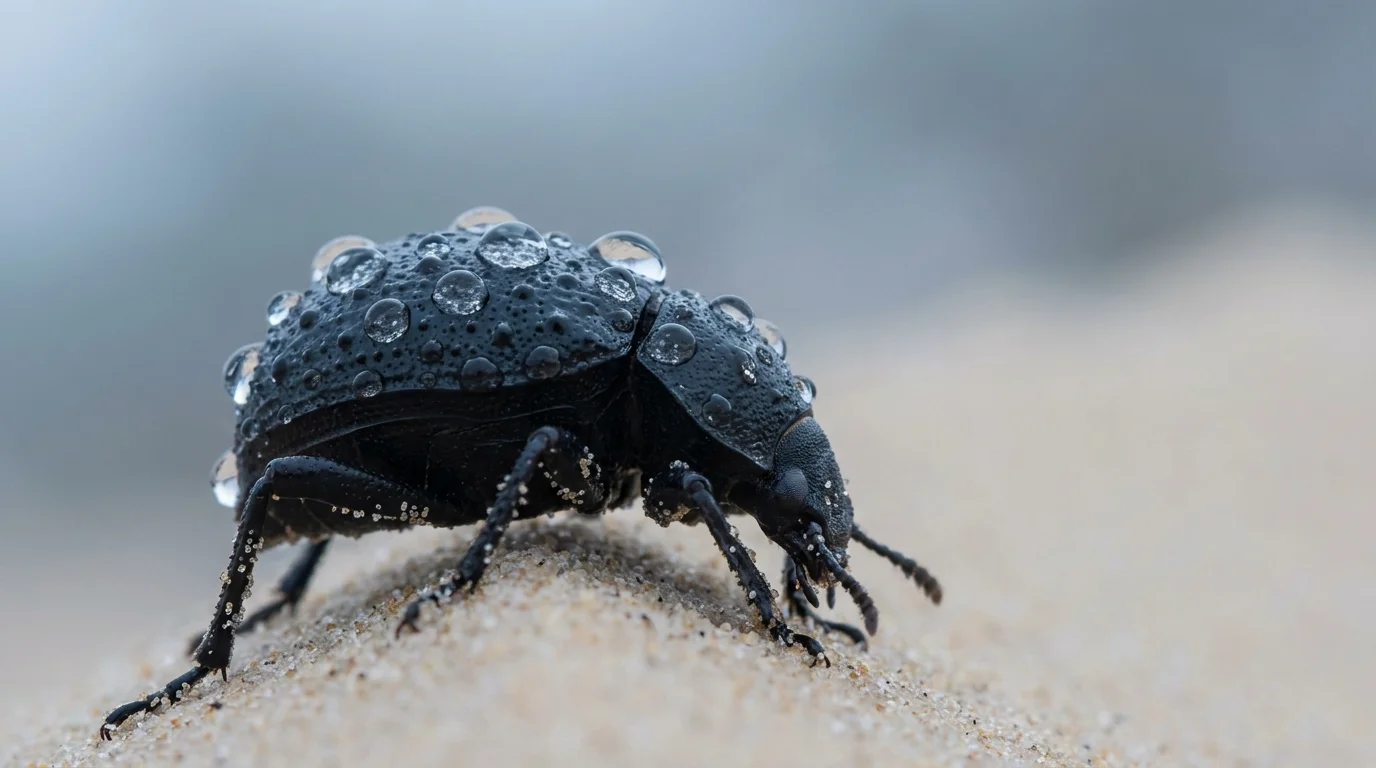
In the hyper-arid Namib Desert of southwestern Africa, annual rainfall frequently totals a mere 1.4 centimeters . To survive this brutal and unforgiving climate, the Namib Desert beetle turns to the dense coastal fog that rolls in from the Atlantic Ocean . This tiny insect, roughly the size of a blueberry, operates as a living water-harvesting machine.
Early in the morning, the beetle climbs to the crest of a sand dune and performs a precise behavioral adaptation known as fog-basking . It points its rear end toward the incoming breeze and angles its body at exactly forty-five degrees . The true marvel lies in the microscopic architecture of its hardened wings, or elytra. A specialized landscape of tiny, hydrophilic (water-attracting) bumps covers the beetle’s shell . Waxy, hydrophobic (water-repelling) troughs entirely surround these bumps .
As the thick fog washes over the insect, microscopic moisture droplets stick directly to the hydrophilic peaks . The droplets flatten upon contact, providing an anchor point for other droplets to attach . As more droplets accumulate, they merge and grow steadily larger. Once a droplet reaches roughly five millimeters in diameter, its physical weight overcomes the electrostatic attraction holding it to the peak . The droplet detaches and rolls smoothly down the hydrophobic valleys, guided perfectly down the beetle’s back and directly into its waiting mouthparts .
By utilizing this passive, zero-energy process, the beetle secures all the vital hydration it needs for the entire day. Today, materials engineers actively study the structural shell of the Namib Desert beetle to design innovative biomimetic surfaces. By replicating this exact pattern of hydrophilic bumps and hydrophobic troughs, scientists successfully create synthetic materials capable of extracting fresh drinking water directly from the air in drought-stricken human communities .
Comparing Desert Survival Strategies
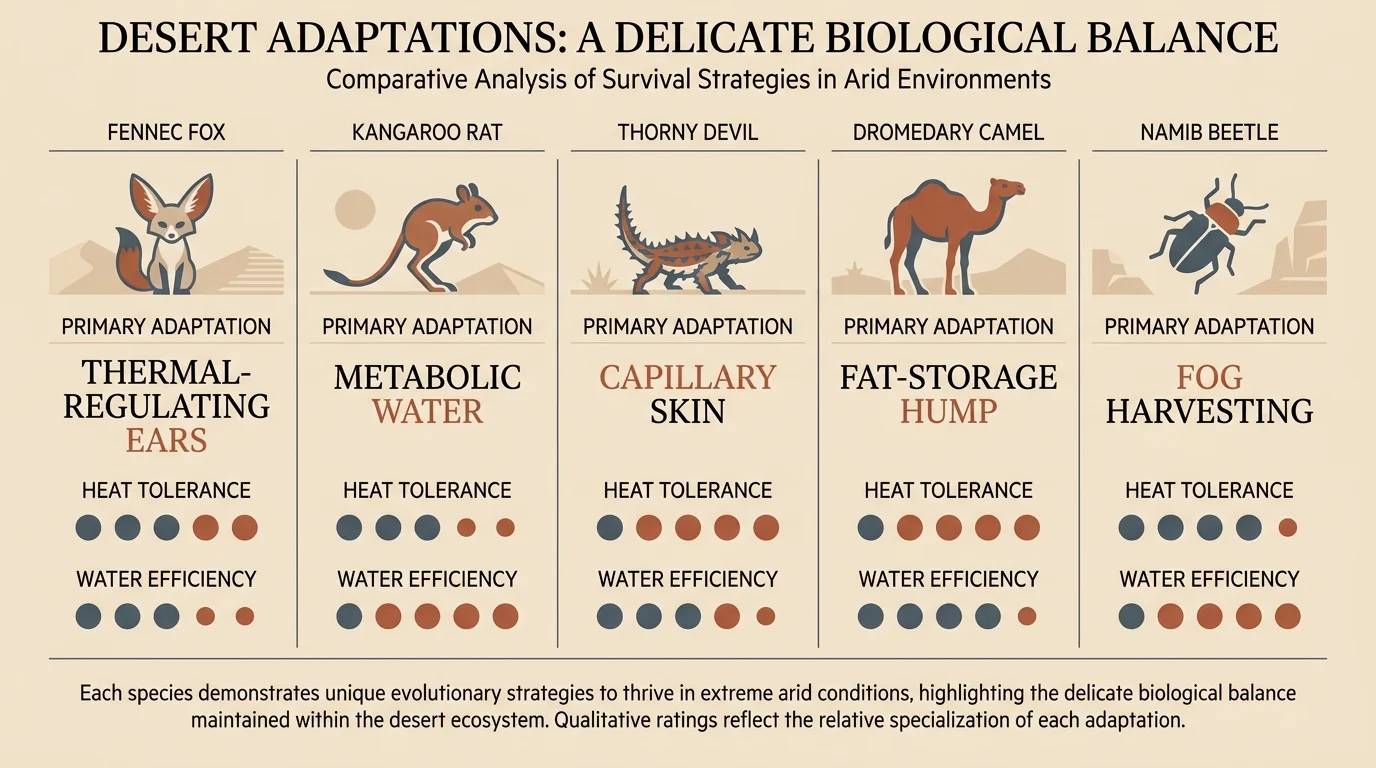
To fully grasp the varied survival strategies across different continents, you can compare these creatures side by side. The following table highlights the unique evolutionary pathways each species takes to solve identical environmental challenges.
| Animal | Native Desert Region | Primary Hydration Strategy | Primary Heat Defense |
|---|---|---|---|
| Fennec Fox | Sahara Desert | Dietary moisture from prey and roots | Radiating heat through oversized ears |
| Kangaroo Rat | North American Deserts | Internal metabolic water from seeds | Nocturnal foraging and cool burrows |
| Thorny Devil | Australian Outback | Capillary action through skin grooves | Color-changing skin to reflect sunlight |
| Dromedary Camel | Arabian Desert | Metabolic water from fat stores | Dynamic core temperature fluctuation |
| Namib Desert Beetle | Namib Desert | Condensing ocean fog on its shell | Reflective shell properties and fog-basking |
The Future of Arid Wildlife
You can learn invaluable lessons by observing how these five species master their extreme environments. Their biological blueprints serve as living proof that life finds a way to endure even the harshest circumstances. As global temperatures continue to rise and desertification threatens new regions, understanding these evolutionary mechanisms becomes increasingly critical. Scientists and engineers already look to creatures like the Namib Desert beetle and the kangaroo rat for inspiration in developing sustainable water-harvesting technologies and advanced cooling systems. By protecting these arid ecosystems and studying their inhabitants, you not only preserve Earth’s biodiversity but also unlock actionable, practical solutions for human survival in a warming world. Respecting and conserving desert wildlife guarantees that these master classes in biological engineering remain available for future generations to study and admire.





1 thought on “5 Desert Animals and Their Survival Adaptations”
The US president raged at NATO allies over defense spending in meeting with the German chancellor, as Israel ordered its military to ‘advance’ in Lebanon