

When you consider the concept of a long life, you probably picture a human reaching a century of survival. Modern medicine and improved living conditions push our average lifespans to roughly 70 or 80 years. Yet, beneath the ocean waves and across remote islands, you can find animals that make a 100-year-old human look like an infant. Several creatures outlive humans by centuries, while a select few measure their ages in millennia.
By exploring long lived animals facts, you uncover a treasure trove of biological secrets. Studying the oldest animals earth has to offer reveals how genetic mutations suppress cancer, how slow metabolisms prevent aging, and how cellular regeneration creates practical immortality. Discovering how animals live long provides more than just engaging trivia; it highlights exactly why you must protect these fragile ecosystems. Because these species grow incredibly slowly, a single careless human action can wipe out centuries of biological history.
Here are 12 fascinating details about the oldest creatures on the planet, along with practical ways you can help ensure their continued survival.
1. The Glass Sponge Can Survive for 11,000 Years
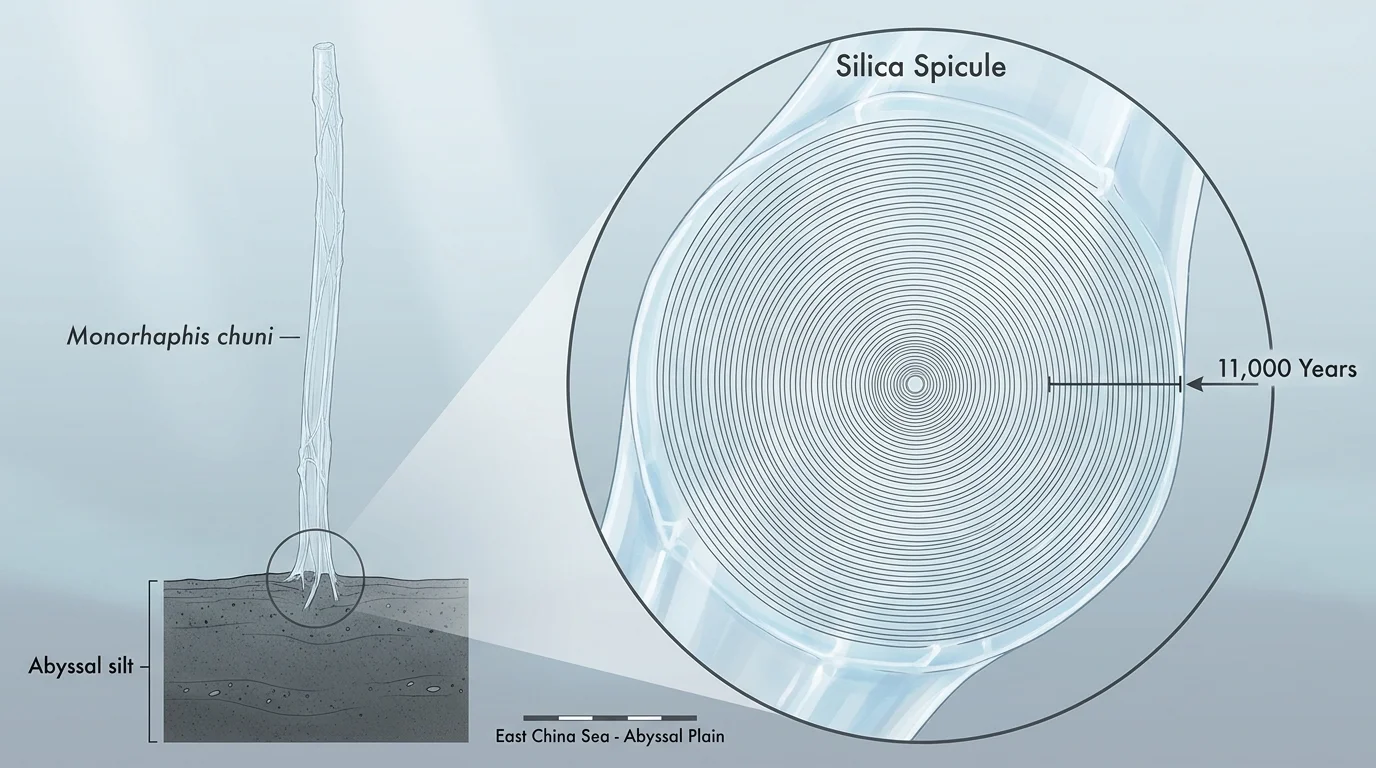
Far below the surface in the East China Sea, a creature resembling a giant underwater reed anchors itself to the soft, muddy abyssal plains. This is the glass sponge (Monorhaphis chuni), an animal that holds the record for the longest-lived non-colonial species on the planet.
Unlike shallow-water sponges that attach to rocks, Monorhaphis chuni extrudes a single massive spicule—a biological glass stalk made of silica—to keep from sinking into the deep-sea silt. As the sponge grows, it adds microscopic concentric rings of silica to its stalk, much like the rings of a tree. A 2012 study by researchers at the Max Planck Institute analyzed the isotopic composition of a giant spicule and determined the sponge had lived for approximately 11,000 years.
Because these sponges lock chemical signatures into their skeletons, they serve as living climate archives. By advocating for the protection of deep-sea habitats from destructive bottom-trawling, you help preserve ancient creatures that hold vital data about our planet’s historic ocean temperatures.
2. Black Corals Predate Ancient Human Civilizations
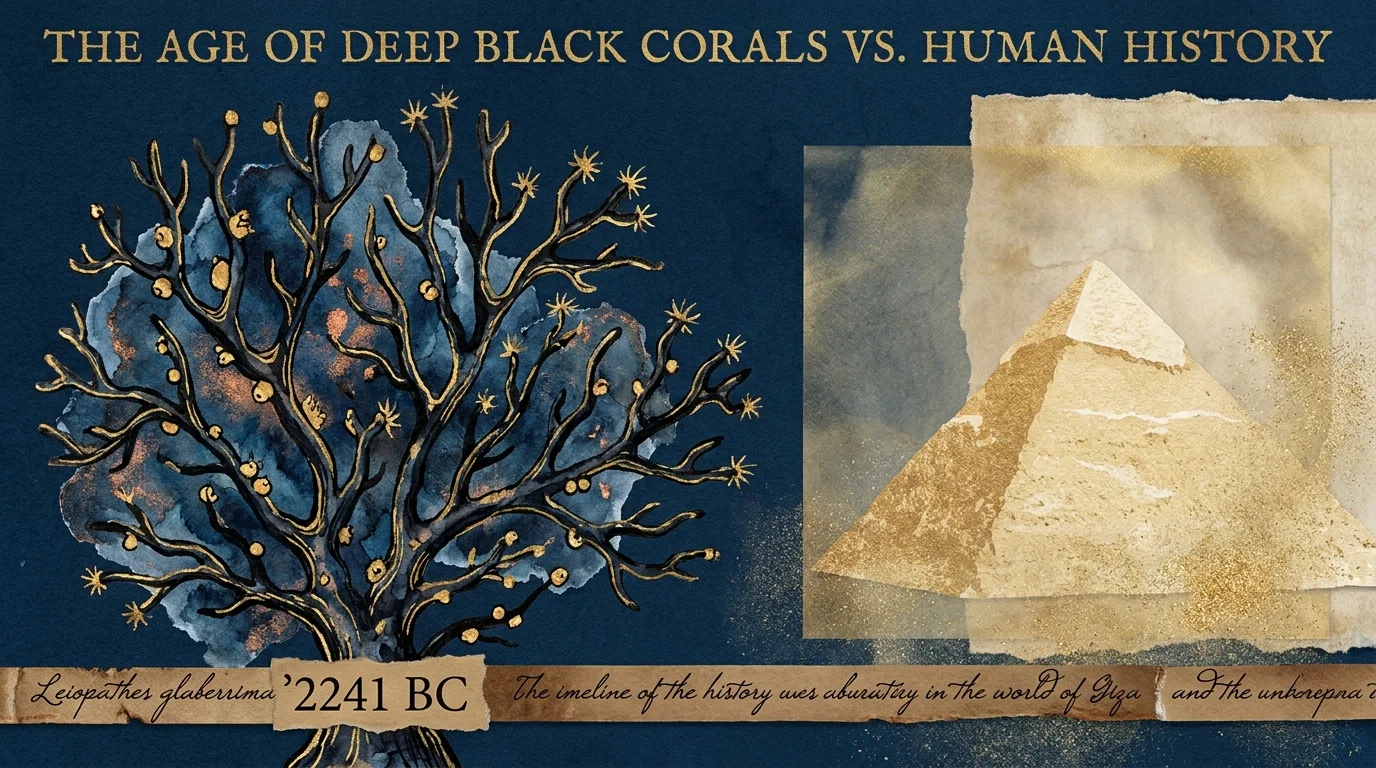
You might mistake coral for colorful marine plants, but corals consist of thousands of tiny invertebrate animals called polyps working together as a single colony. Deep-sea black corals belong to the genus Leiopathes, and they rank among the oldest continuously living organisms ever recorded.
In 2009, scientists using radiocarbon dating examined a specimen of Leiopathes glaberrima found in the deep ocean. They discovered it was roughly 4,265 years old. This means the coral colony began growing shortly after the ancient Egyptians built the Great Pyramid of Giza.
Black corals face severe threats from the jewelry trade and commercial fishing. You can take direct action to protect them by refusing to purchase black coral jewelry and supporting sustainable seafood brands that strictly avoid deep-sea trawling methods.
3. Giant Barrel Sponges Are the Redwoods of the Reef
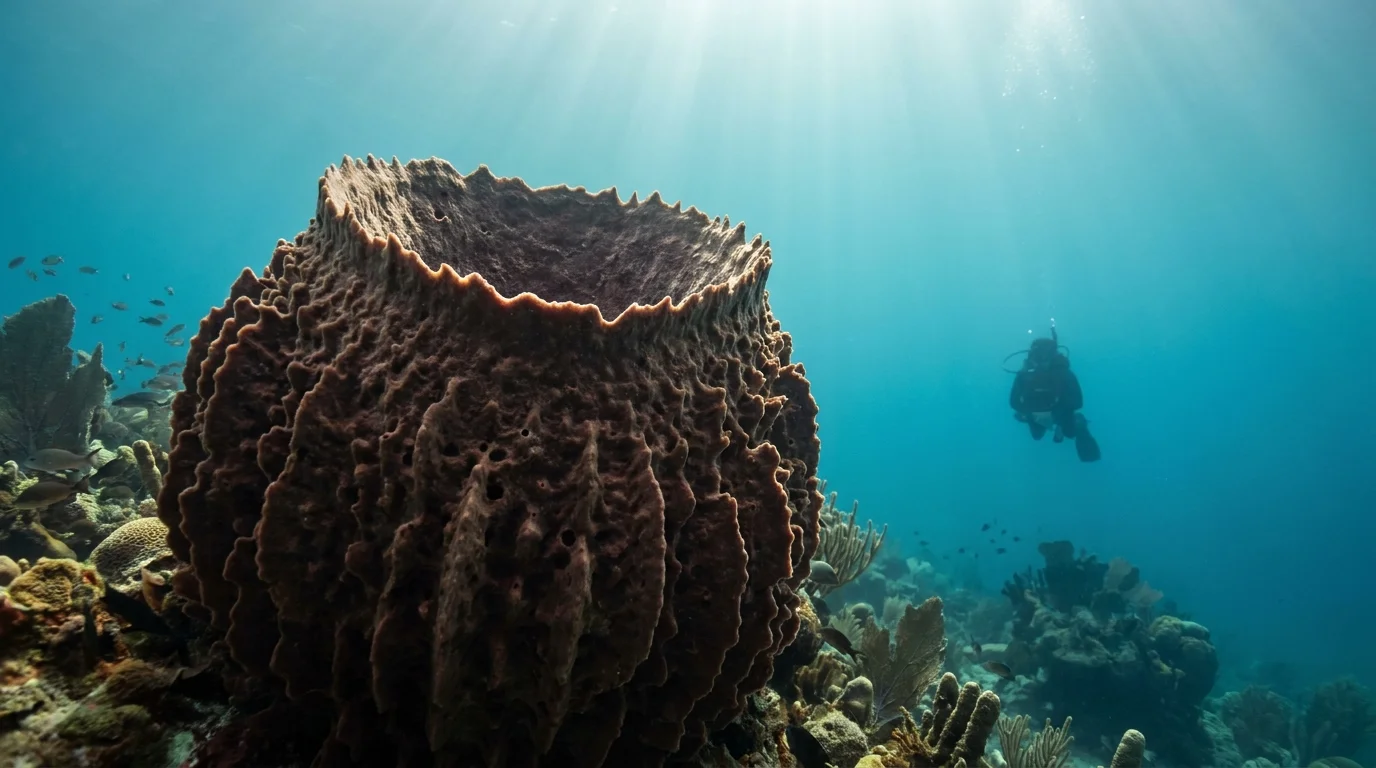
If you scuba dive in the Caribbean, you will likely encounter the giant barrel sponge (Xestospongia muta). These massive, brownish-red structures often grow large enough to fit a human inside, and scientists affectionately call them the redwoods of the reef.
These marine animals grow at an incredibly slow rate. Using mathematical growth models, researchers estimate the largest specimens in the ocean are more than 2,000 years old; one particularly massive sponge found off the coast of Curaçao lived for an estimated 2,300 years.
Giant barrel sponges constantly filter seawater, improving water clarity and supporting the entire coral reef ecosystem. Because their structures are highly fragile, you must practice excellent buoyancy control while diving or snorkeling. A single misplaced fin kick or a carelessly dropped boat anchor can destroy a millennium of growth in an instant.

4. Ocean Quahogs Tell the Story of Historic Oceans
At first glance, the ocean quahog (Arctica islandica) looks like an ordinary edible clam. However, this marine bivalve boasts an extraordinary animal lifespan driven by an exceptionally slow metabolism and high cellular stability.
In 2006, researchers dredging the Icelandic seabed discovered a quahog that broke the Guinness World Record for the oldest non-colonial animal. By counting the annual growth lines on its shell—a science known as sclerochronology—scientists determined the clam was born in 1499. The media quickly dubbed it “Ming,” as it originated during China’s Ming Dynasty. Ming lived for 507 years before researchers collected it for climate studies.
Ocean quahogs remain highly sensitive to changes in ocean chemistry. You can help protect these ancient bivalves by taking steps to lower your personal carbon footprint, which directly combats the ocean acidification that weakens their calcium carbonate shells.
5. The Greenland Shark Does Not Reach Adulthood Until Age 150
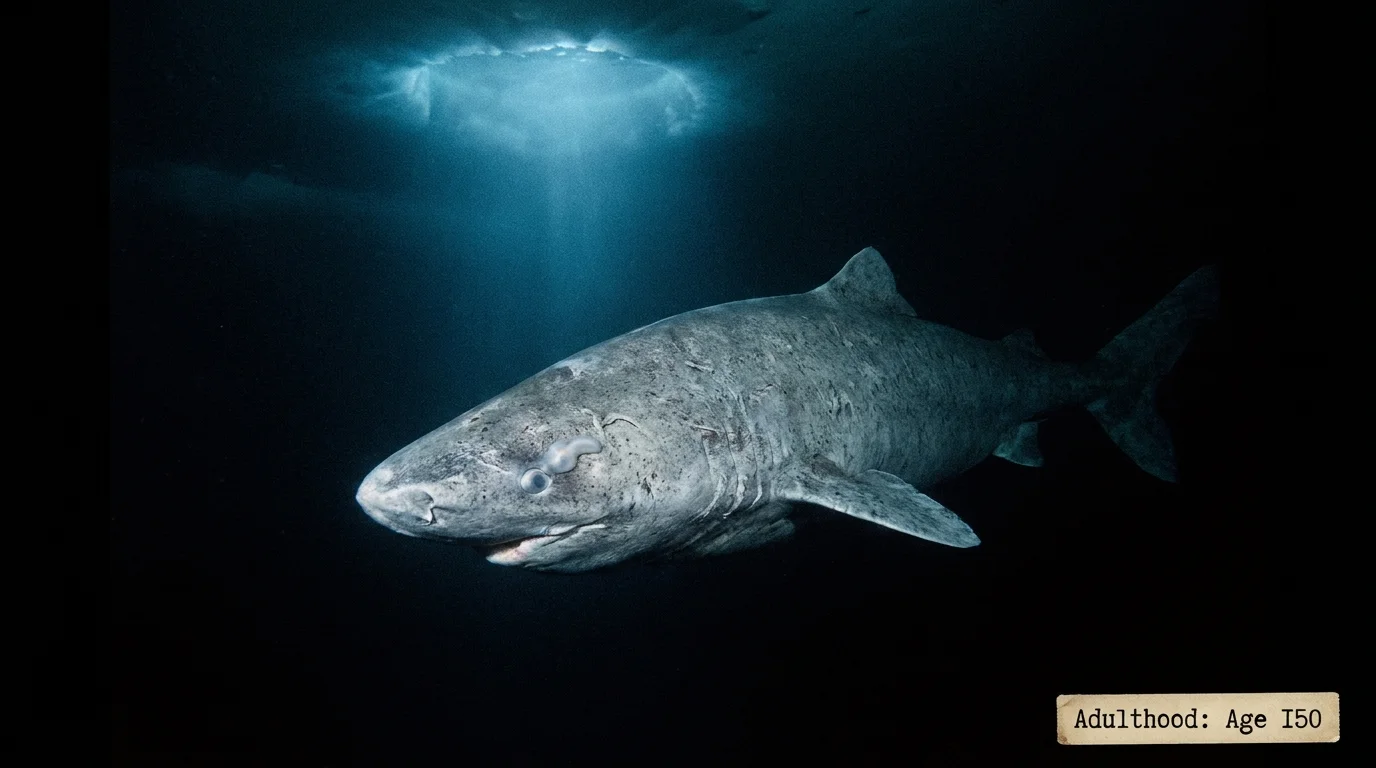
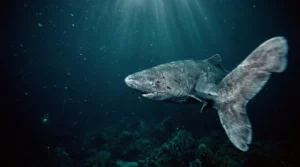
Swimming through the near-freezing waters of the North Atlantic and Arctic Oceans, the Greenland shark (Somniosus microcephalus) lives life in the ultimate slow lane. These massive predators grow less than a centimeter per year and hold the title of the longest-lived vertebrate on Earth.
Because Greenland sharks lack the hard tissues typically used to age fish, scientists turned to radiocarbon dating of proteins inside the sharks’ eye lenses. A landmark study highlighted by NOAA found that a 16-foot female was between 272 and 512 years old. Even more astounding, these sharks do not reach sexual maturity until they hit 150 years of age.
Their late maturity makes them incredibly vulnerable to population collapse. When purchasing seafood, always check for sustainable certifications to ensure you are not inadvertently supporting fisheries that catch these ancient sharks as bycatch.
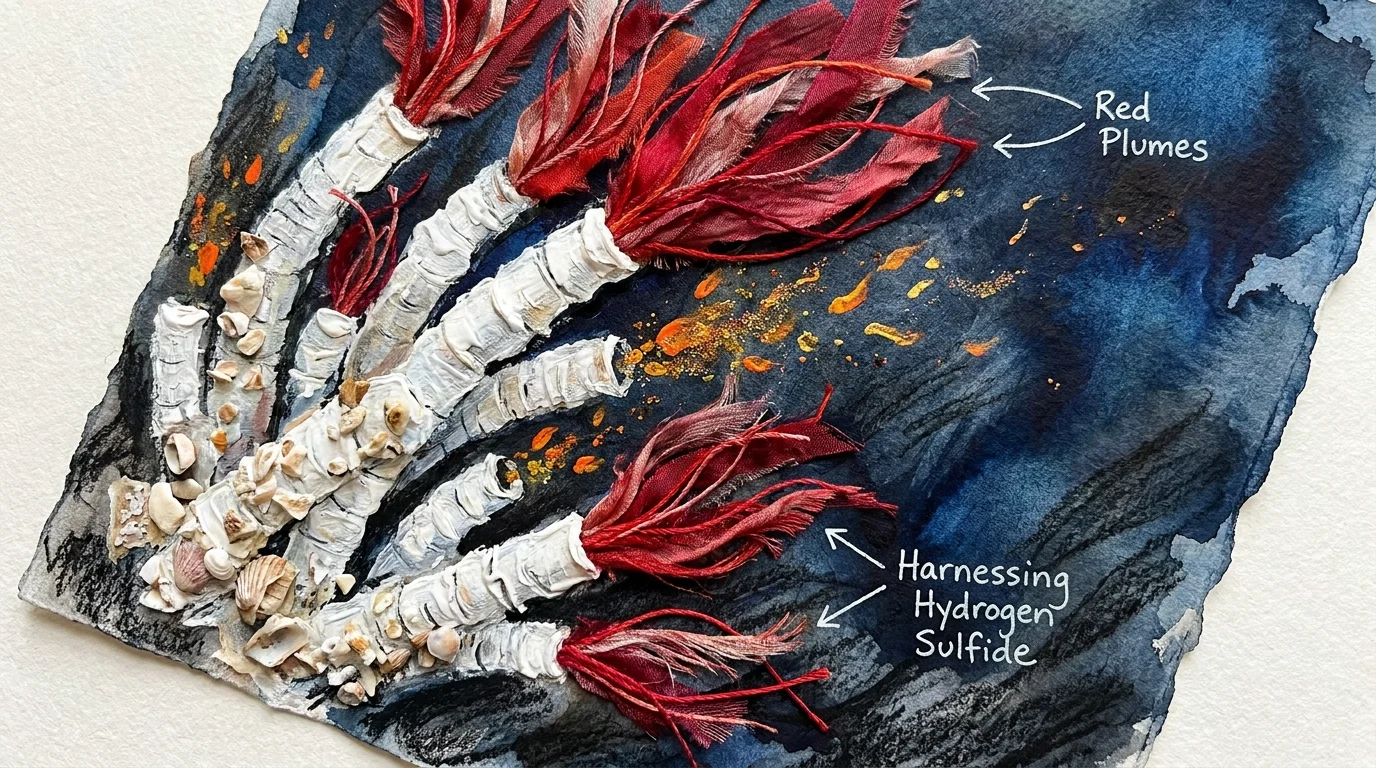
6. Deep-Sea Tube Worms Thrive on Toxic Chemicals for Centuries
In the sunless depths of the Gulf of Mexico, extreme pressure and freezing temperatures create a harsh environment. Yet, the deep-sea tube worm (Escarpia laminata) thrives here, clustering around cold seeps that spew hydrogen sulfide and methane.
Most animals rely on the sun for energy, but tube worms rely on symbiotic bacteria that convert toxic chemicals into food. Because they face almost zero predatory threats in the deep ocean, their natural mortality rate remains incredibly low. Researchers marking and tracking these worms found they regularly live between 100 and 200 years, with larger specimens easily exceeding 300 years of age.
These strange habitats remind us that life finds a way to endure even the most hostile conditions. Supporting marine protected areas in deep-water zones prevents offshore oil and gas drilling from disrupting these delicate, slow-growing communities.
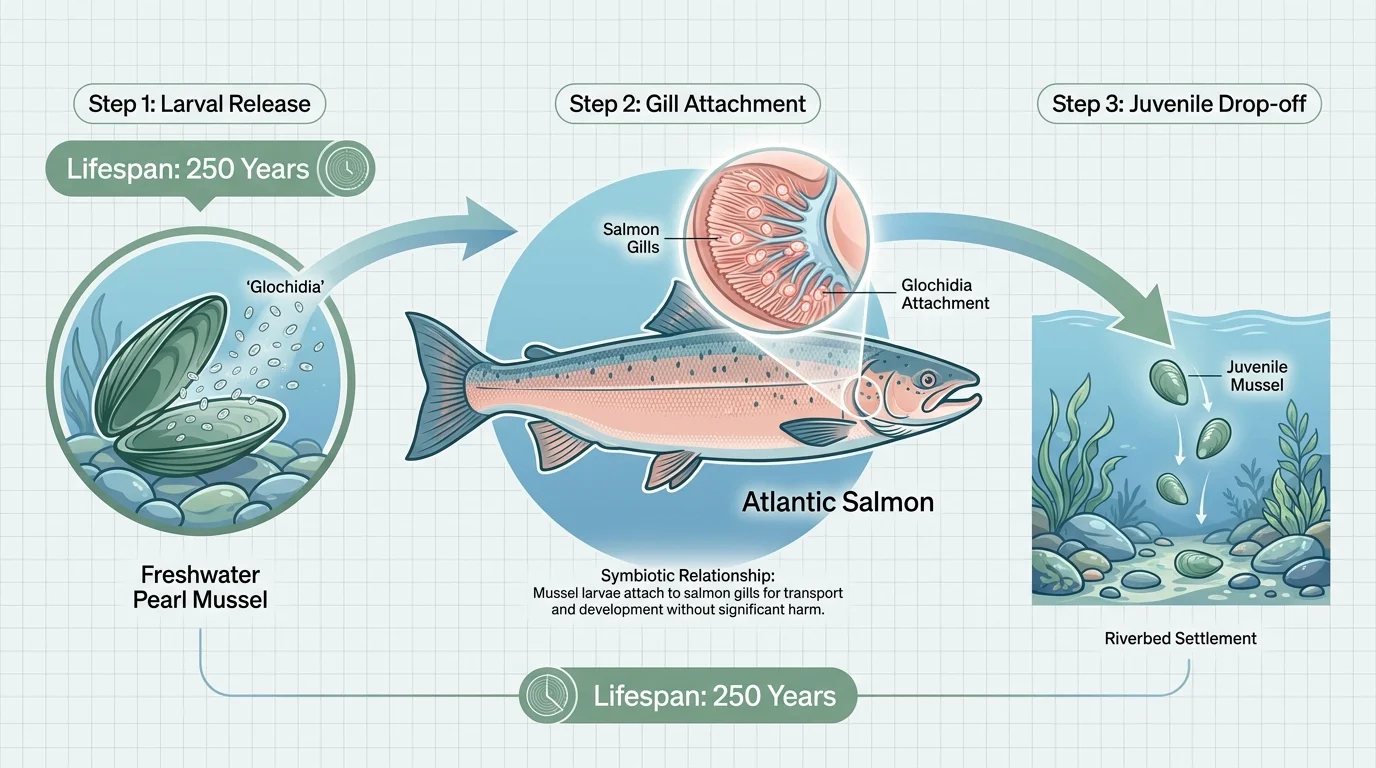
7. Freshwater Pearl Mussels Depend on Salmon to Live 250 Years
You do not have to travel to the bottom of the ocean to find animals that outlive humans. The freshwater pearl mussel (Margaritifera margaritifera) resides in clean, fast-flowing streams across Europe and North America.
According to the IUCN Red List, this globally endangered mussel can live up to 280 years. However, its survival requires a highly complex life cycle; the mussel’s larvae, called glochidia, must attach themselves to the gills of specific host fish—like Atlantic salmon or brown trout—to develop safely. Without healthy salmon populations, the mussels cannot reproduce.
To protect these ancient river dwellers, avoid using harmful agricultural pesticides that run off into local waterways. You can also support local watershed conservation initiatives aimed at removing obsolete dams that block vital salmon migrations.
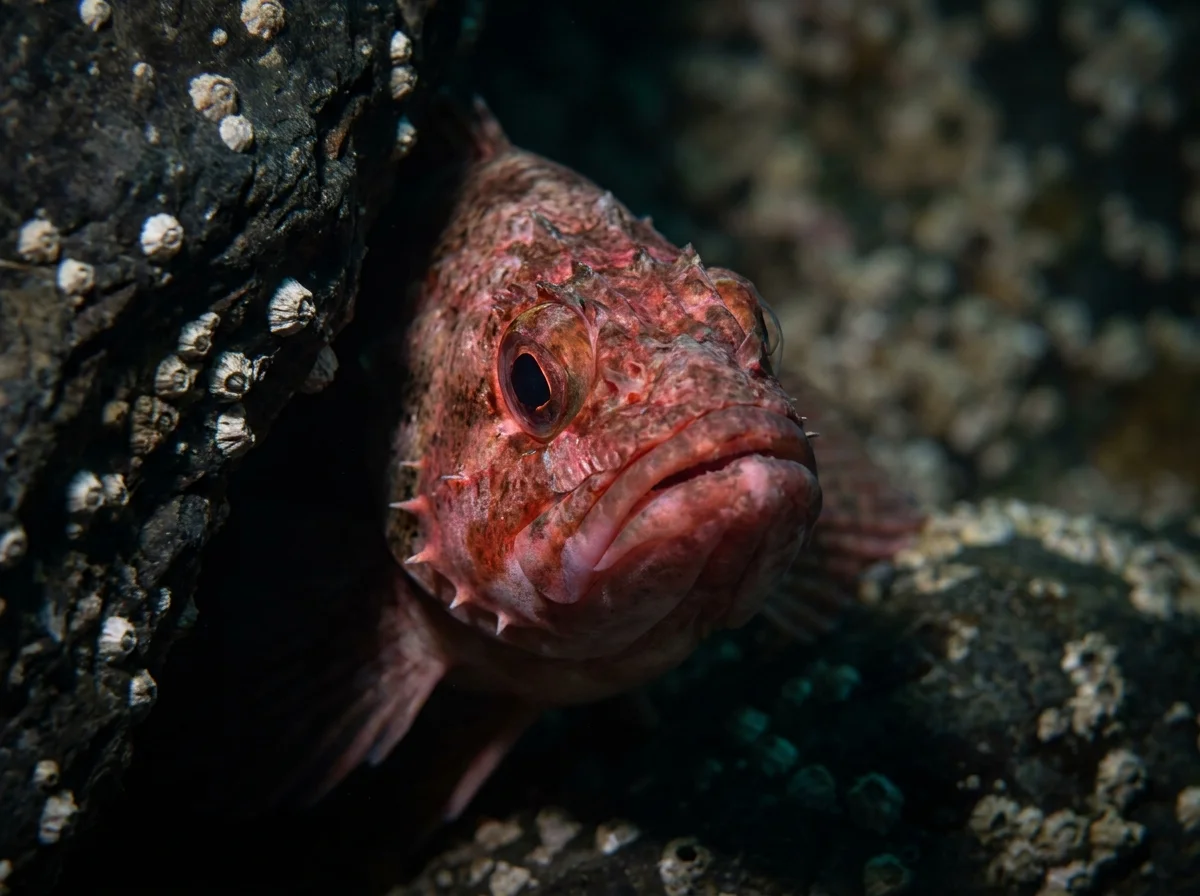
8. The Rougheye Rockfish Boasts a 205-Year Lifespan
In the coastal waters stretching from California to Japan, the rougheye rockfish (Sebastes aleutianus) navigates deep caves and rocky crevices. While many fish live for just a few years, this deepwater species holds a maximum recorded lifespan of 205 years.
Unlike mammals, older rougheye rockfish do not become frail; instead, they produce exponentially more offspring as they age. Unfortunately, when anglers inadvertently catch them and pull them to the surface, the sudden change in water pressure causes severe internal injuries known as barotrauma. The expanding gases can push the stomach out of the fish’s mouth and rupture its swim bladder.
If you fish recreationally, always carry a descending device. These simple, weighted tools allow you to safely return deep-water rockfish to their proper depths, reversing barotrauma and allowing century-old fish to survive and continue breeding.
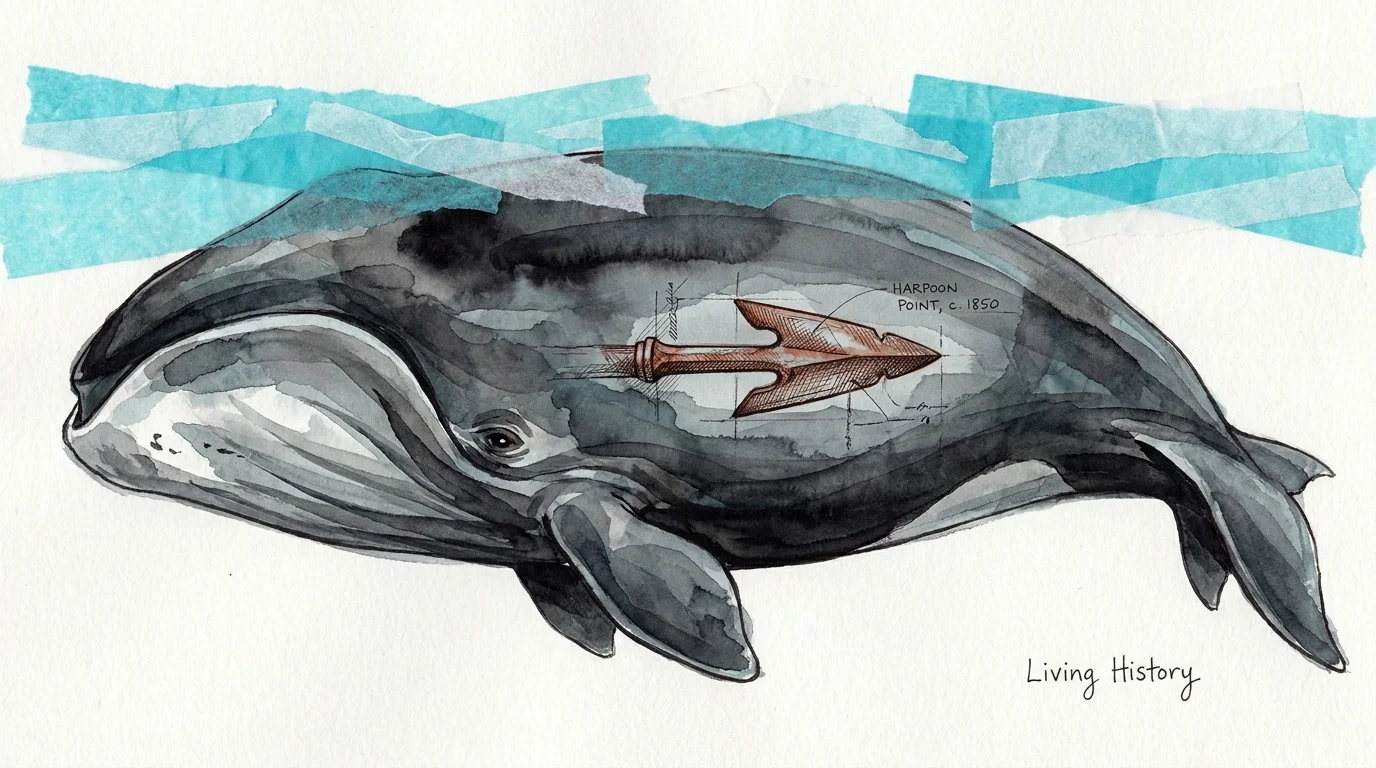
9. Bowhead Whales Carry Century-Old Harpoons
The bowhead whale (Balaena mysticetus) possesses the thickest blubber of any cetacean, allowing it to comfortably crush through Arctic sea ice. It also boasts a lifespan that exceeds 200 years, making it the longest-living mammal known to science.
Proof of their extreme age surfaced in 2007 when Native Alaskan hunters harvested a bowhead and found a fragment of an explosive stone and metal lance embedded in its neck blubber. Historians dated the specific harpoon tip to a factory in New Bedford, Massachusetts, manufactured between 1885 and 1895. This incredible whale had survived a 19th-century whaling encounter and lived another hundred years swimming with the weapon in its body.
Scientists recently sequenced the bowhead’s genome and discovered unique genetic duplications that repair DNA and suppress cancer. By supporting global efforts to curb climate change, you help protect the icy habitats these magnificent, disease-resistant mammals rely on for survival.
10. Red Sea Urchins Defy the Aging Process
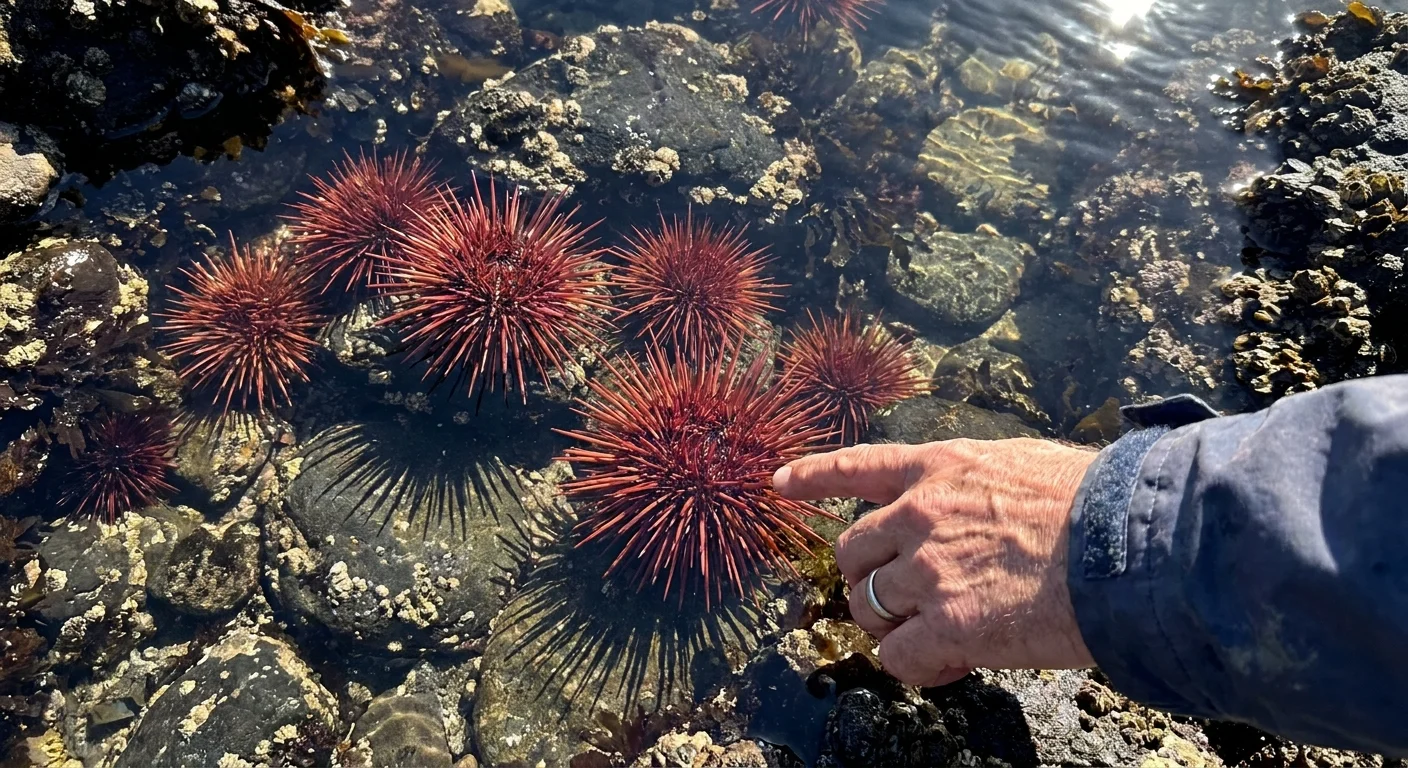
Found along the kelp-rich rocky shores of the Pacific Ocean, the red sea urchin (Mesocentrotus franciscanus) looks like a spiky, burgundy-colored pincushion. While early biologists assumed these invertebrates lived for perhaps a decade, modern biochemical testing tells a much different story.
Red sea urchins grow rapidly in their youth, but their growth slows to a crawl once they reach adulthood. A study published by scientists from Oregon State University measuring carbon-14 levels revealed that some of the largest specimens living off the coast of British Columbia are 200 years old or more. Remarkably, they show almost no signs of senescence—meaning they do not age in the traditional sense and remain highly fertile throughout their extended lives.
Because urchins possess voracious appetites, their populations must be kept in check by natural predators like sea otters and sunflower sea stars. Supporting sea otter conservation directly maintains the balance of kelp forest ecosystems, preventing century-old urchins from overgrazing their habitat.
11. Seychelles Giant Tortoises Outlive Generations of Owners
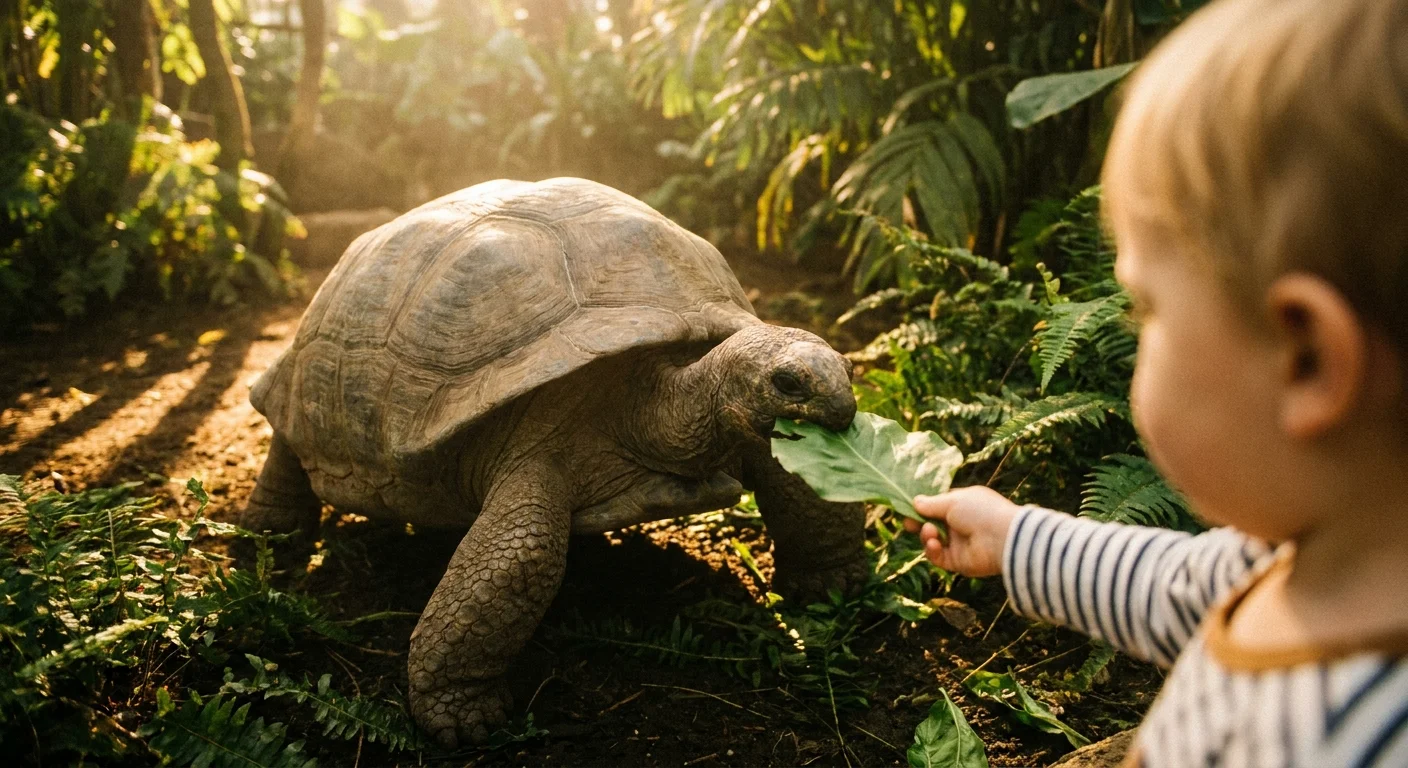
When you look at the oldest animals on earth that live entirely on land, the Seychelles giant tortoise (Aldabrachelys gigantea hololissa) steals the spotlight. Currently, the most famous living example is Jonathan, a massive reptile residing on the remote island of St. Helena.
According to Guinness World Records, Jonathan hatched around 1832. He arrived on St. Helena as a fully mature 50-year-old gift to the governor in 1882. Today, at well over 190 years old, Jonathan has lived through the reigns of eight British monarchs and the administration of more than 30 local governors. Although cataracts have taken his sight and he has lost his sense of smell, his hearing remains sharp, and dedicated veterinarians hand-feed him a nutritious diet of carrots, cucumbers, and apples.
You can aid global tortoise populations by never buying exotic reptiles caught in the wild. Always report illegal wildlife trafficking, as the pet trade severely threatens slow-growing species that take decades to replace their numbers.
12. The Immortal Jellyfish Can Hit the Reset Button
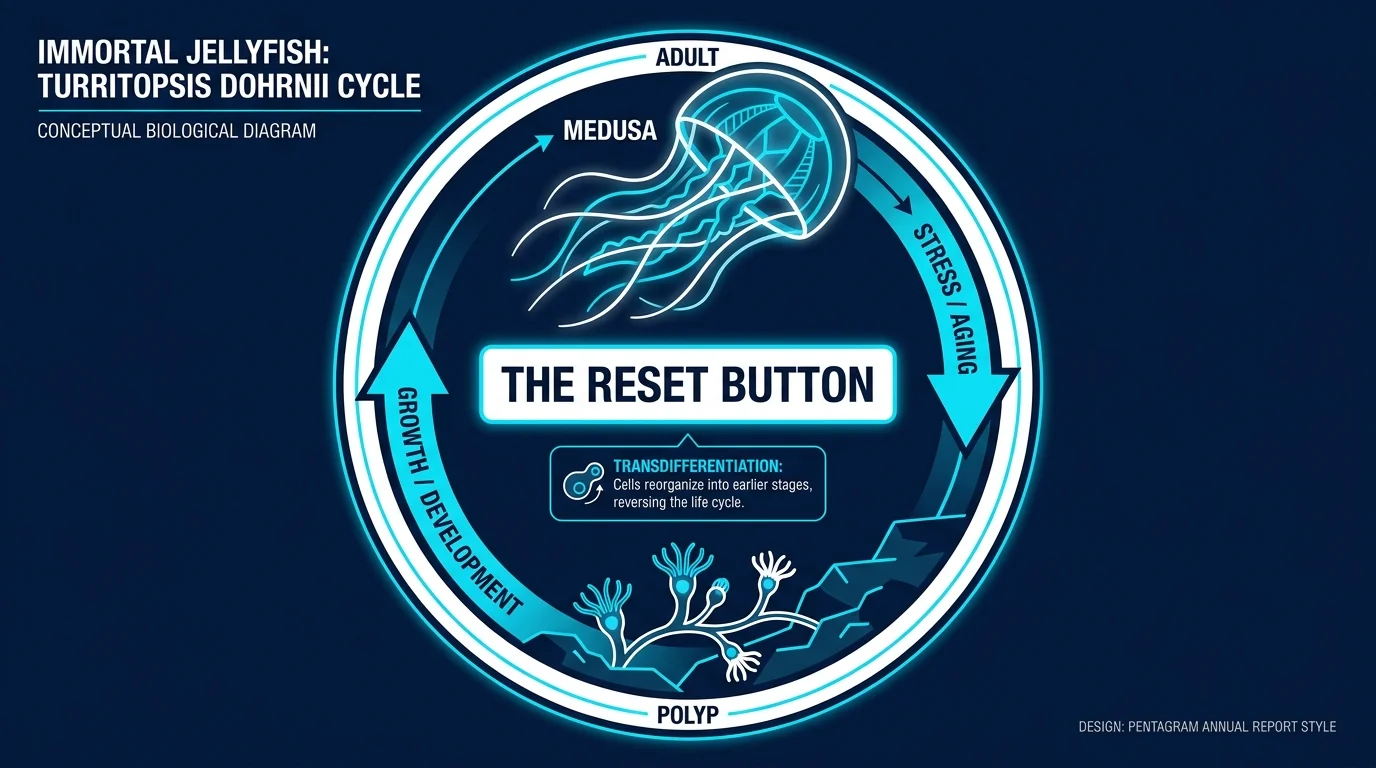
Most animals experience a one-way ticket through the aging process, but the immortal jellyfish (Turritopsis dohrnii) rewrites the rules of biology. Measuring just a fifth of an inch across, this tiny, transparent creature possesses an extraordinary survival skill.
When the adult jellyfish faces physical damage, starvation, or extreme environmental stress, it undergoes a cellular process called transdifferentiation. It absorbs its own tentacles, sinks to the seafloor, and reverts entirely to its juvenile polyp stage. From this born-again polyp colony, it buds off genetically identical clones of itself, effectively hitting the reset button on its life cycle.
While they are biologically immortal, these fragile creatures frequently succumb to predators and disease in the wild. They also easily hitch rides in the ballast water of large cargo ships, spreading across the globe. You can support organizations advocating for strict regulations on maritime ballast water treatment, which prevents invasive species from overtaking local marine ecosystems.
At a Glance: Creatures That Outlive Humans
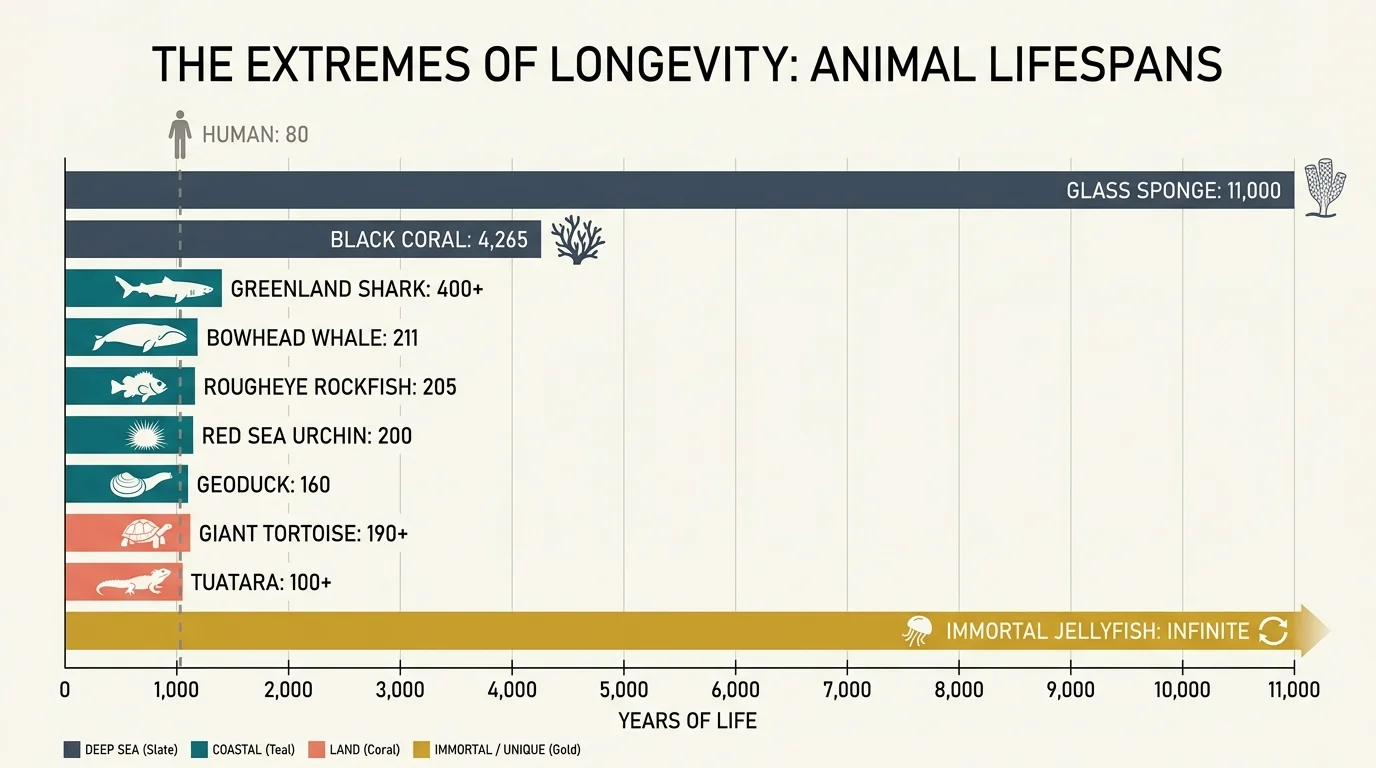
To put these extraordinary animal lifespans into perspective, review the data below. Notice how the marine environment—with its stable, cold temperatures—dominates the list of the longest-lived creatures.
| Animal Species | Estimated Maximum Lifespan | Primary Habitat |
|---|---|---|
| Glass Sponge (Monorhaphis chuni) | 11,000+ years | Deep-sea abyssal plains |
| Black Coral (Leiopathes glaberrima) | 4,265+ years | Deep-water ocean zones |
| Giant Barrel Sponge (Xestospongia muta) | 2,300+ years | Caribbean coral reefs |
| Ocean Quahog (Arctica islandica) | 507+ years | North Atlantic seabeds |
| Greenland Shark (Somniosus microcephalus) | 400+ years | Arctic and North Atlantic Oceans |
| Deep-Sea Tube Worm (Escarpia laminata) | 300+ years | Gulf of Mexico cold seeps |
| Freshwater Pearl Mussel (Margaritifera margaritifera) | 280 years | Clean, fast-flowing rivers |
| Rougheye Rockfish (Sebastes aleutianus) | 205 years | North Pacific coastal waters |
| Bowhead Whale (Balaena mysticetus) | 200+ years | Arctic Ocean |
| Red Sea Urchin (Mesocentrotus franciscanus) | 200+ years | Pacific Ocean rocky shores |
| Seychelles Giant Tortoise (Aldabrachelys gigantea hololissa) | 190+ years | Island ecosystems |
| Immortal Jellyfish (Turritopsis dohrnii) | Biologically Immortal | Temperate to tropical coastal waters |
Preserving the habitats of these ancient creatures requires immediate and sustained effort. When you advocate for clean oceans, support sustainable fisheries, and reduce your carbon footprint, you directly protect the animals that hold the secrets to longevity. Every piece of plastic removed from the beach and every sustainable seafood choice you make ensures these remarkable species can continue their centuries-long journeys. The biological wonders of our planet rely on your daily choices to thrive for generations to come.




1 thought on “12 Fascinating Facts About Animals That Live Longer Than Humans”
Very interesting article. Other than tortoises, I was not aware of these other long-lived creatures. Learned something new today!