
Parenting in the wild goes far beyond simply laying an egg or raising a calf. When you look closely at how animals raise their young, you will quickly spot striking reflections of your own family dynamics. From coordinating grueling work shifts and relying on multi-generational wisdom to organizing daycares and providing hands-on tutoring, many species tackle the chaos of child-rearing with strategies that feel incredibly human. You might assume humans have a monopoly on extended childhoods or community babysitting, but nature proves otherwise. Whether it is an ocean matriarch guiding her grandchildren or a dedicated fish producing its own version of breast milk, these creatures prove that the exhausting work of raising offspring demands universally clever solutions.
1. Orangutans: The Long Haul of Childhood
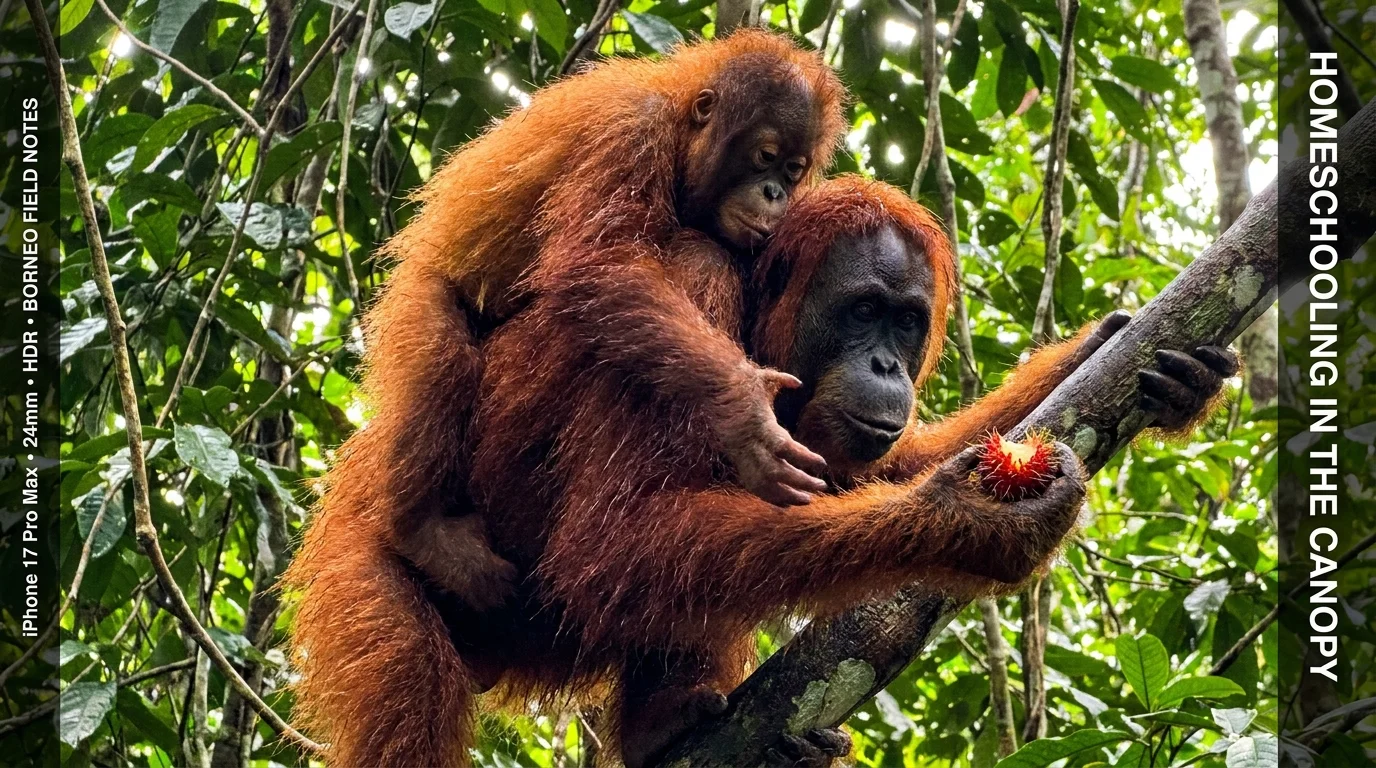
Orangutans act as the ultimate hands-on parents of the primate world. While many species push their young out of the nest as quickly as possible, orangutan mothers enforce an incredibly long dependency period. If you have ever felt exhausted by the physical demands of raising a toddler, consider the stamina required to carry a growing ape through the dense rainforest canopy for almost a decade. Because male orangutans do not participate in child-rearing, the mother shoulders the entire burden of survival and education.
Wild orangutans nurse their young for up to eight years, and they will even extend this nursing period during times of food scarcity. Researchers tracking barium levels in primate teeth—a method that records maternal milk intake similarly to reading tree rings—uncovered this extraordinary commitment. As reported by Smithsonian Magazine, this marks one of the longest nursing periods of any wild mammal. This extended reliance provides crucial nutrition and immune support, but the mother’s job extends far beyond physical nourishment.
She operates as a solo educator in a highly unforgiving environment. An orangutan must memorize a vast mental map of the jungle, tracking which fruits ripen during specific seasons. Mothers actively teach their infants how to differentiate between safe, nutrient-dense fruits and toxic plants. They also demonstrate the intricate engineering required to build a sturdy sleeping nest out of branches every single night. The offspring observes and mimics these behaviors for years. Without a decade of intensive homeschooling, a young orangutan simply would not possess the foundational skills to survive alone.
2. Meerkats: Active Tutoring and Scaffolding
When you teach a child a complex skill, breaking the process into manageable steps builds confidence and ensures safety. You would never hand a sharp chef’s knife to a preschooler. Meerkats apply this exact concept of educational scaffolding to teach their pups how to hunt some of the deadliest prey in the Kalahari Desert.
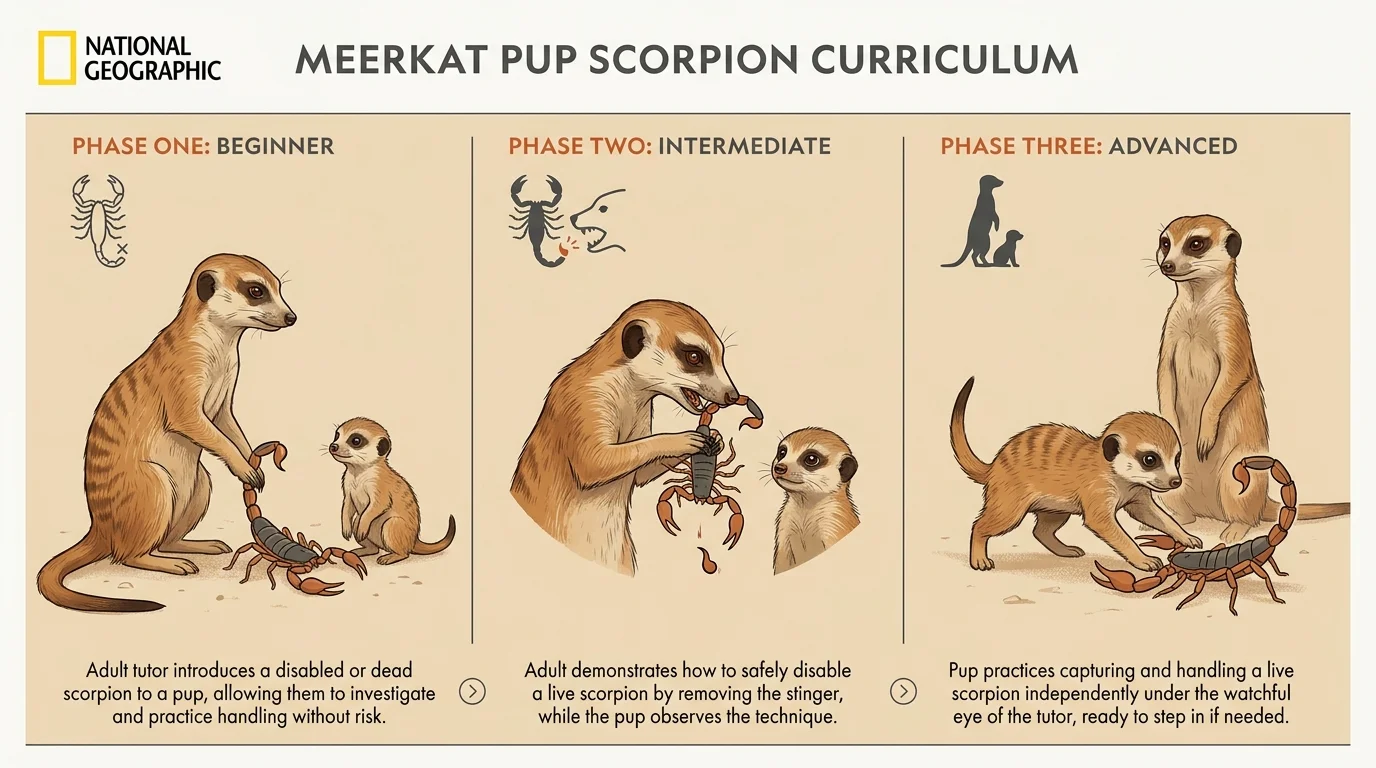
Adult helper meerkats serve as dedicated tutors for the next generation. A meerkat’s diet consists heavily of venomous scorpions, which present a massive threat to an inexperienced pup. Rather than tossing a live scorpion at a juvenile and hoping for the best, the adults follow a strict, phased curriculum tailored to the pup’s age and competence. As the pups grow and change their vocalized begging calls, the adults adjust the difficulty of the lesson.
- Phase One: Beginner. When the pups are very young, the adult tutor kills the scorpion outright. They bring the dead prey to the pup, allowing the young meerkat to safely taste the food and familiarize itself with the shape and texture of the animal without any danger.
- Phase Two: Intermediate. As the pups mature, the adults capture a live scorpion but meticulously bite off the venomous stinger before delivering it. The pup practices wrestling, pinning, and killing the disabled prey without the risk of a lethal strike.
- Phase Three: Advanced. Finally, the adults bring a fully intact, live, and dangerous scorpion. The adult stands closely by, observing the pup’s technique and intervening only if the pup loses control of the prey or is at imminent risk of being stung.
This hands-on instruction demonstrates that meerkats actively evaluate their students’ progress and adjust their teaching methods accordingly; it is a pedagogical strategy you usually only expect to see in a human classroom.
3. Orcas: The Grandmother Effect
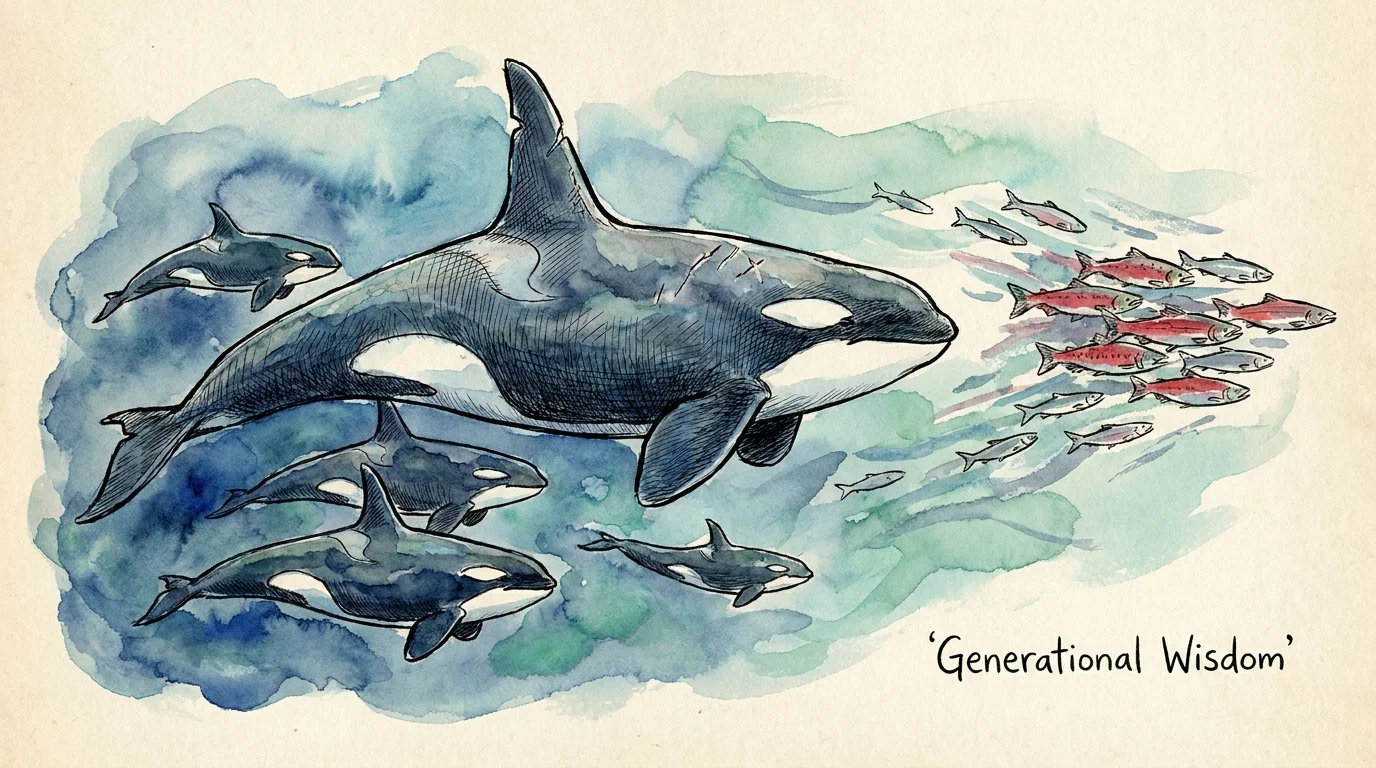
Valuing the knowledge of older generations strengthens your entire family structure. For killer whales, this multi-generational support is literally a matter of life and death. Only a handful of species on Earth experience menopause: humans, short-finned pilot whales, narwhals, belugas, and killer whales. Female orcas stop reproducing in their late thirties or forties, yet they frequently live well into their eighties or nineties. This long post-reproductive lifespan creates a matriarchal society where older females shift their focus entirely toward the success of their extended family.
Older female orcas act as the repositories of ecological wisdom for their pods. They memorize the ocean’s intricate geography and the seasonal movements of fish. During difficult years when salmon populations drop and food becomes scarce, these grandmothers take the lead. They guide their pods to alternative foraging grounds, ensuring the entire family survives the famine. Furthermore, grandmothers will directly share the fish they catch with younger relatives, prioritizing the nutrition of their grandcalves over their own intake.
A comprehensive study published by the Proceedings of the National Academy of Sciences measured the exact impact of this behavior. Researchers discovered that when a grandmother orca dies, the mortality rate of her grandoffspring skyrockets to 4.5 times higher than that of calves with a living grandmother. By removing themselves from the breeding pool, these older females eliminate competition for resources with their own daughters and redirect their energy into a dynamic that drastically improves the survival odds of the next generation.
4. Flamingos: Equal Co-Parenting and Organized Daycare
Sharing household and childcare responsibilities equally prevents burnout, and flamingos model this perfect division of labor. Balancing a full-time job while managing childcare presents a universal stressor for modern parents, but flamingos solve this problem through rigorous 50/50 co-parenting and a highly organized community daycare system. Long before a chick even hatches, flamingo pairs work as equal partners. Both the male and the female gather mud and stones to build a tall, volcano-shaped nest that protects their single egg from the caustic, alkaline waters of their habitat. They then split the incubation shifts perfectly, allowing each partner time to rest and feed.
Once the egg hatches, flamingos exhibit a remarkable trait that blurs the line between bird and mammal. Both the mother and father produce a nutrient-dense secretion called crop milk from their upper digestive tracts. This milk comes packed with proteins, fats, and the red and yellow carotenoid pigments derived from their crustacean diet. Pumping these pigments into the crop milk physically drains the parents of their vibrant pink color. By the time the chick is ready to leave the nest, the devoted parents are left pale and exhausted—a dramatic physical transformation that beautifully illustrates the sacrifices of parenthood.
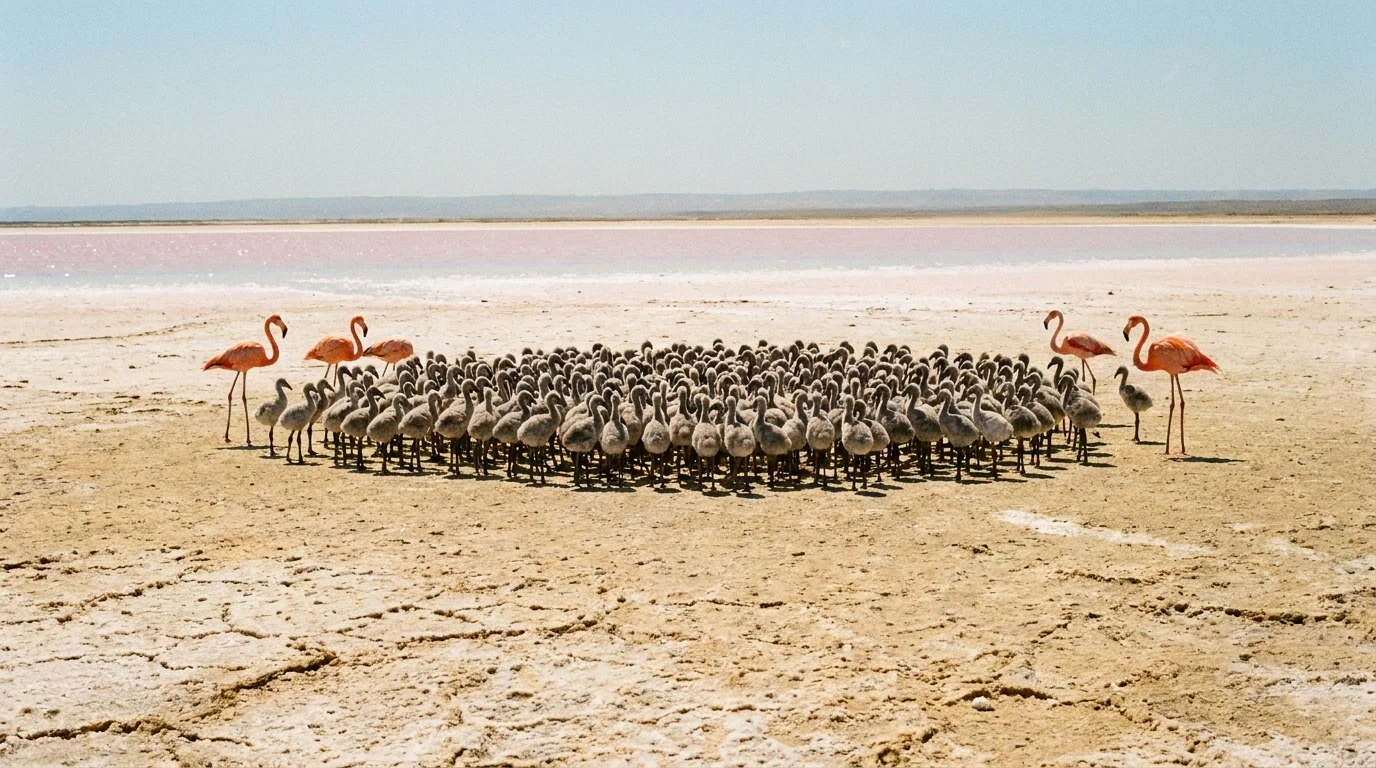
When the chicks grow strong enough to walk, flamingos implement their community childcare strategy. According to the San Diego Zoo Wildlife Alliance, parents group the young birds into massive crèches, which function exactly like a daycare. A few adult chaperones stay behind to supervise hundreds, or even thousands, of fuzzy gray chicks. This system frees up the rest of the adults to forage efficiently. When it is time to eat, parents return to the crèche and use distinct vocalizations to call their specific chick out of the chaotic crowd, ensuring their hard-earned crop milk goes strictly to their own offspring.
5. Discus Fish: Biparental Breastfeeding
Fish rarely receive recognition for attentive parenting. The vast majority of aquatic species employ a broadcast spawning strategy, scattering thousands of eggs into the water and immediately abandoning them to fate. The Amazonian discus fish, however, completely defies this cold reputation. They care for their fry with an intensity that closely mimics mammalian breastfeeding.
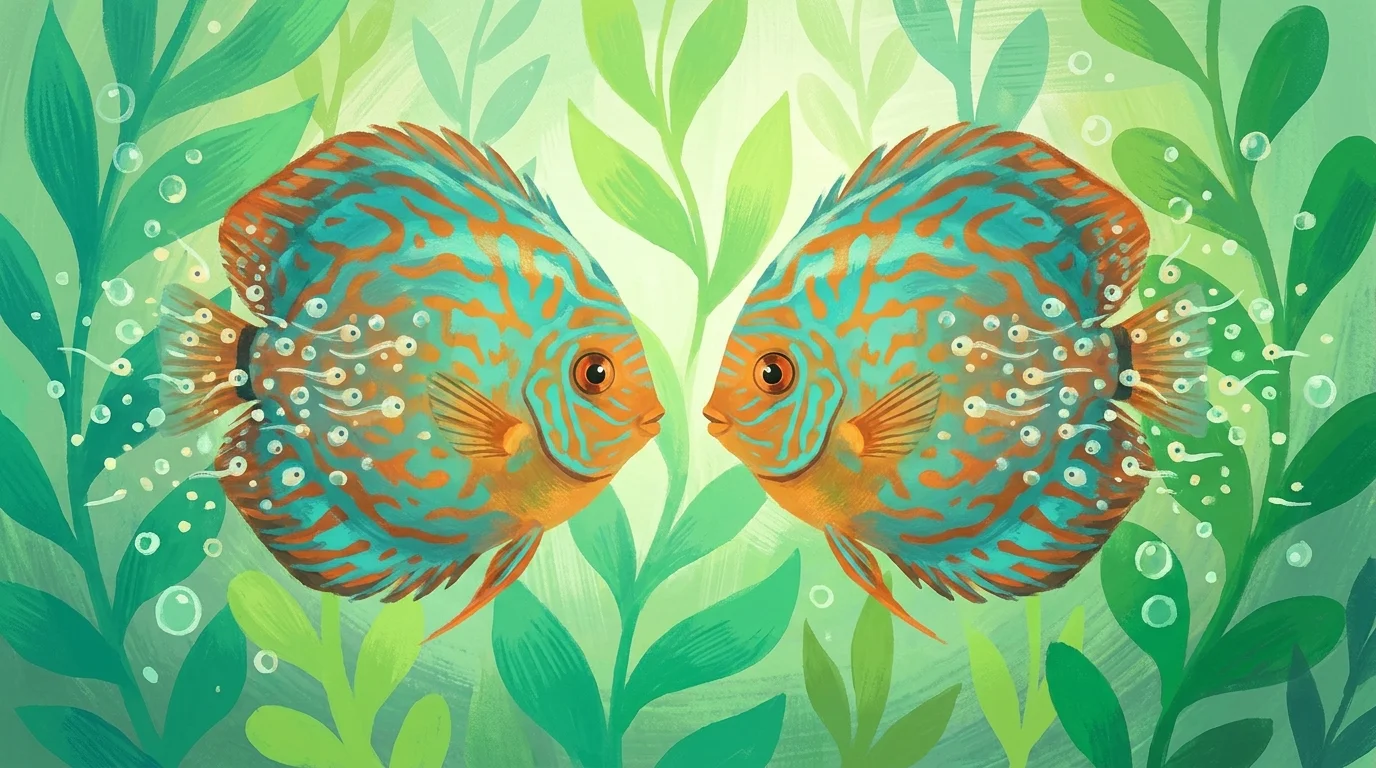
After a discus pair cleans a breeding site and guards their fertilized eggs from predators, the true work begins. When the fry hatch, they do not swim off to hunt microscopic plankton. Instead, both the mother and the father undergo a hormonally driven biological change. Their skin secretes a thick, highly nutritious mucus. The fry swarm their parents, grazing directly on this mucosal coating as their primary source of food.
Just like mammalian milk, this mucus functions dynamically. Its composition changes as the fry grow, arriving heavily laden with antibodies and proteins during the first few days to jumpstart the young fishes’ immune systems. The parents share the physical toll of this constant feeding through a coordinated maneuver. When one parent needs a break from the biting swarm, they swim close to their partner and abruptly flick their body, seamlessly transferring the cloud of hungry fry to the other parent.
As the weeks progress, the parents initiate a weaning process. Around the third week, the adult discus begin swimming away from the fry for brief periods, forcing the young fish to explore the water column and hunt for independent food sources. This gradual push toward independence mirrors the weaning conflicts seen in mammals, proving that complex, nurturing behavior thrives beneath the water’s surface.
6. Emperor Penguins: The 50/50 Shift Work
Raising a child requires a reliable schedule, and no animal exemplifies grueling shift work better than the Emperor penguin. Few environments test the limits of life like the Antarctic winter. With temperatures plummeting to negative 60 degrees Fahrenheit and wind speeds reaching 120 miles per hour, keeping a chick alive demands extreme endurance and a perfectly synchronized division of labor between partners.
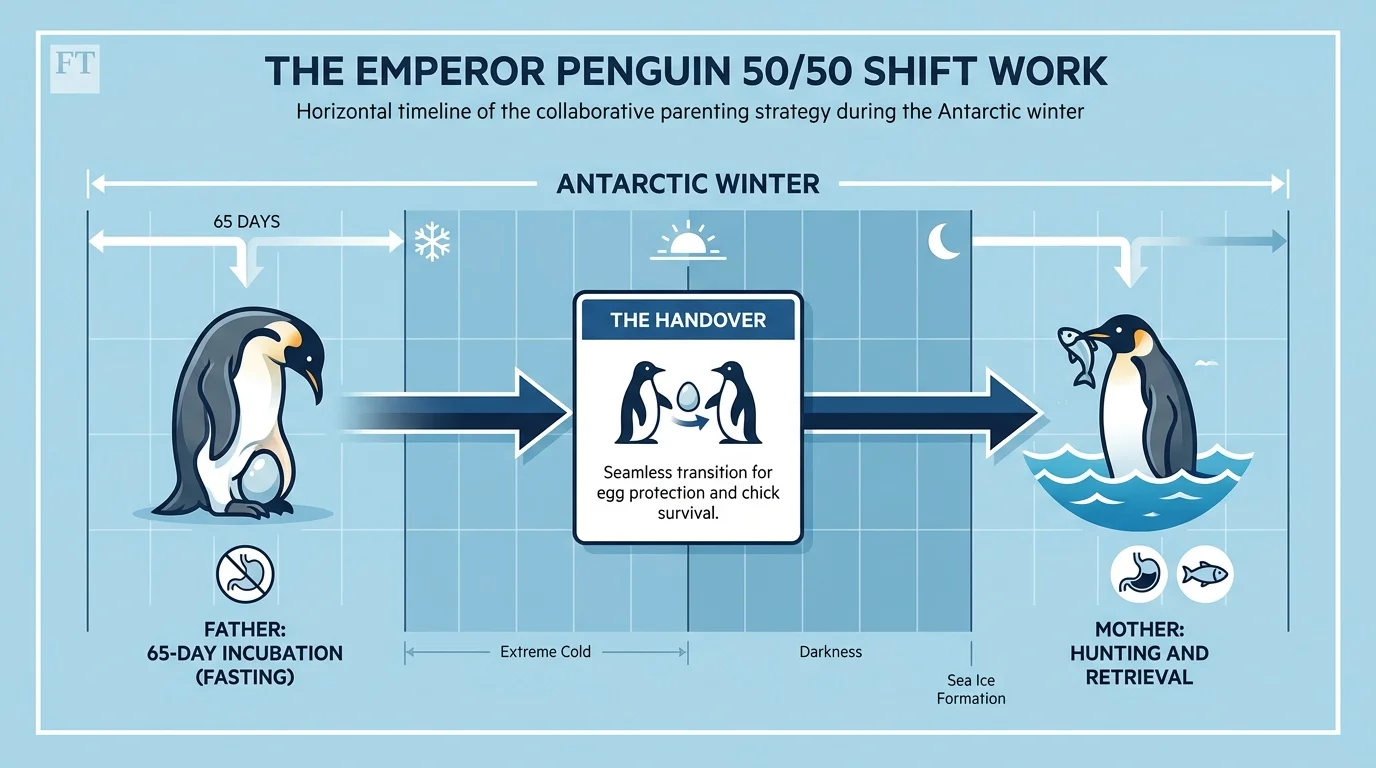
After the female lays a single egg, her energy reserves hit absolute zero. She must return to the ocean to feed, but leaving the egg exposed to the ice for even a few seconds would freeze it solid. In a delicate, highly coordinated dance, she rolls the egg from her feet onto the male’s feet, where he tucks it safely under a warm fold of abdominal skin called a brood pouch.
The mother then embarks on a treacherous trek—sometimes up to 50 miles across the ice—to reach the open ocean. Meanwhile, the father remains behind in the darkness of the polar winter. He balances the egg on his feet for over two months, huddling with thousands of other males for warmth and fasting the entire time. By the time the female returns, the father may have lost up to half of his body weight.
Timing remains critical. The mother arrives just as the chick hatches, regurgitating the fish she stored in her stomach to provide the newborn’s first meal. The parents then swap shifts. The exhausted father finally heads to the sea to break his 115-day fast, while the mother takes over childcare duties. This brutal, alternating rhythm ensures the chick’s survival against all odds.
7. African Elephants: It Takes a Village
Building a reliable support system dramatically reduces parental burnout. Human parents often repeat the proverb that it takes a village to raise a child, and African elephants live by this rule every single day. Elephant herds operate as deeply bonded, matriarchal societies where the responsibility of raising a calf never falls solely on the mother. Instead, the entire herd participates in a collaborative childcare system known as alloparenting.
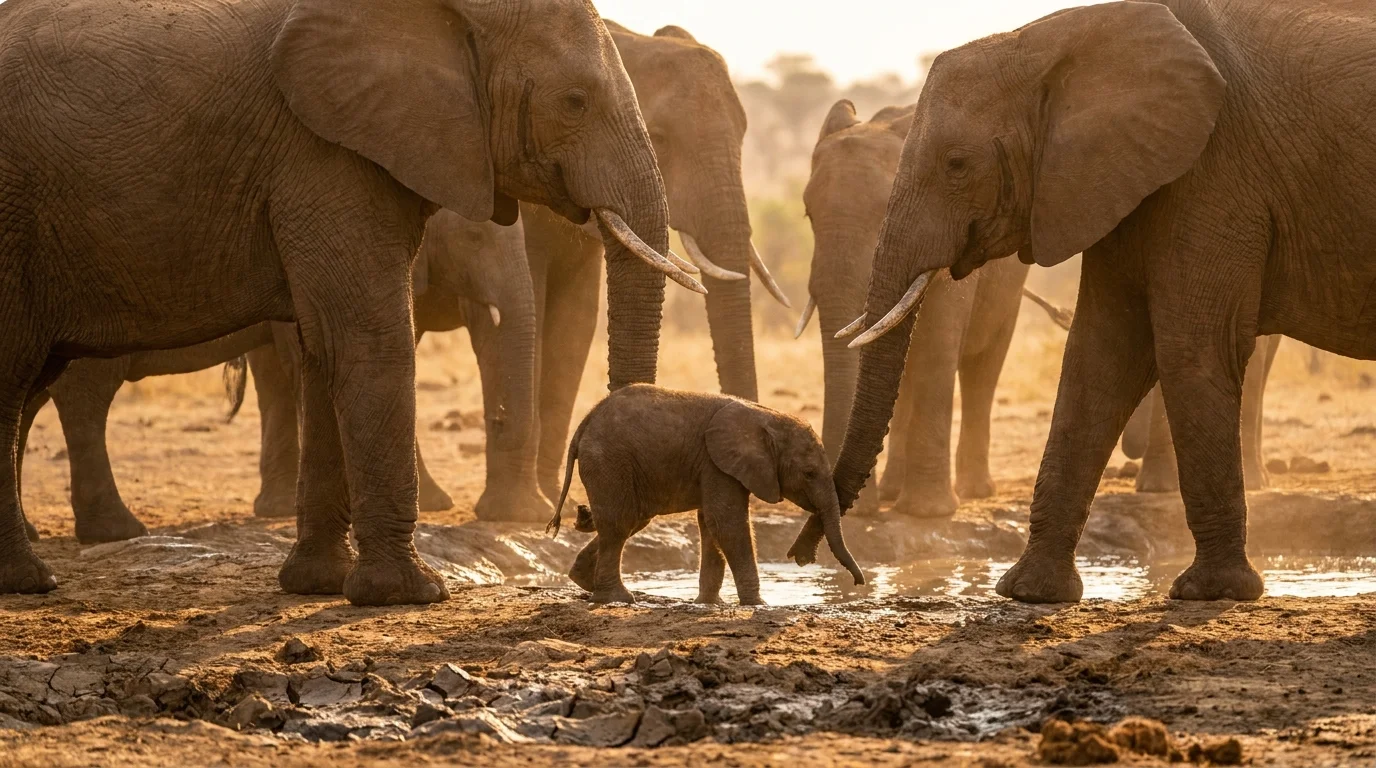
When a calf is born, it is instantly surrounded by a network of female relatives—aunts, older sisters, and grandmothers—who act as dedicated babysitters. As noted by the World Wildlife Fund, elephants fiercely protect their vulnerable newborns from predators. If a calf becomes stuck in a slippery mud pit, the aunts immediately rush in to wedge their trunks beneath the baby and lift it to safety. On blisteringly hot savanna days, you will often see older elephants intentionally positioning their massive bodies to cast a cooling shadow over the sleeping calves.
This community approach serves a highly practical dual purpose. It gives the exhausted mother a necessary break to forage and rest, which keeps her milk production flowing. Simultaneously, it acts as a critical training ground for adolescent females. Teenage elephants eagerly take on babysitting duties, learning the complex nuances of calf-rearing long before they give birth to their own young. If you have ever relied on a trusted sibling or a neighbor to watch your kids so you could catch your breath, you share a fundamental parenting strategy with the largest land mammals on Earth.
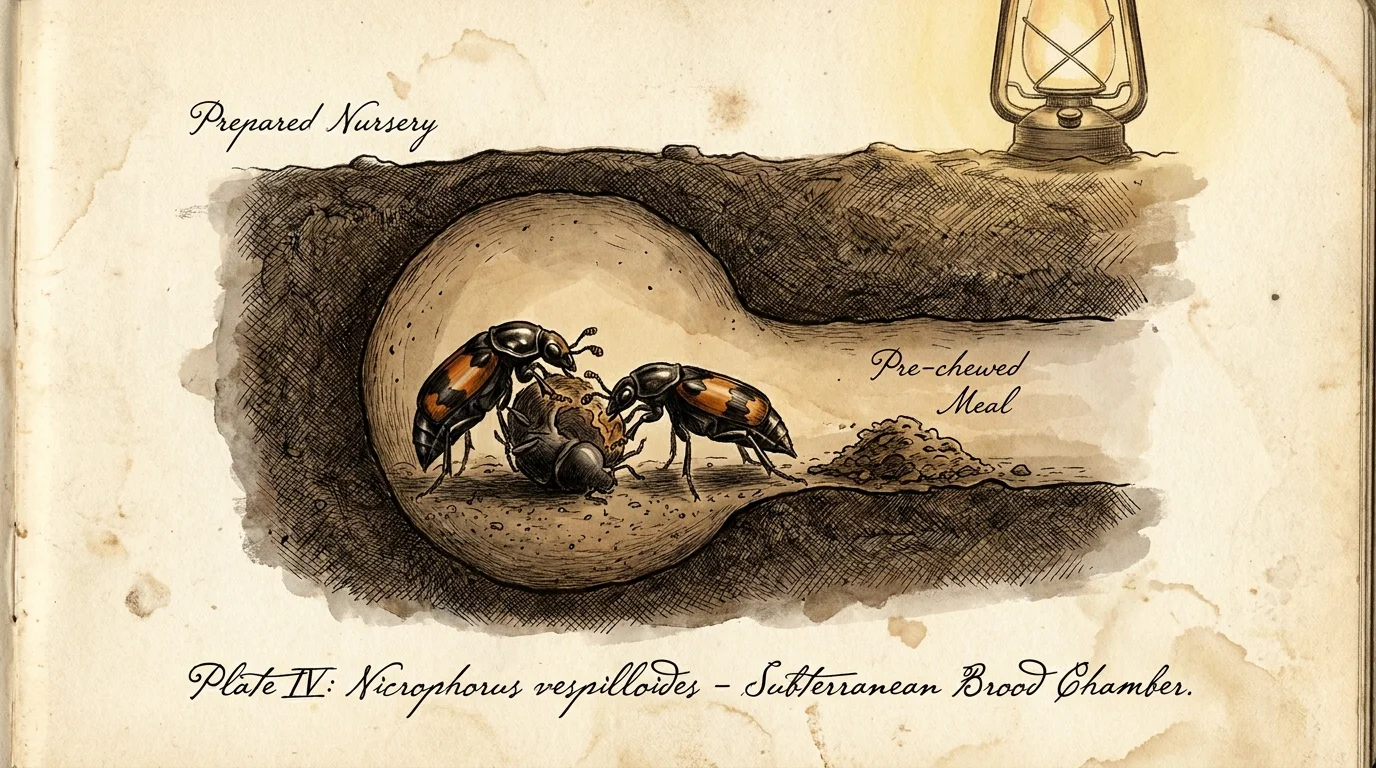
8. Burying Beetles: Preparing the Nursery and Pre-Chewing Meals
It feels easy to project human-like parenting traits onto apes, whales, or elephants, but finding those same qualities in an insect feels genuinely shocking. The burying beetle (Nicrophorus vespilloides) completely abandons the hands-off approach typical of most bugs. When a male and female pair up, they behave remarkably like a couple setting up a nursery and meticulously preparing baby food for their newborns.
The process begins when the beetles locate a small animal carcass, such as a dead mouse or bird. Working together, they excavate the soil beneath the body, slowly burying it to hide their prize from scavengers. Once underground, the parents strip away the fur or feathers and roll the meat into a tight ball. They then coat the carcass in special antimicrobial secretions that delay decomposition, effectively creating a sterile, long-lasting food pantry.
When the larvae hatch, the parents do not just leave them to feast in the dark. The adult beetles actively pre-chew the meat, partially digesting it before regurgitating it directly into the mouths of their begging larvae. This mouth-to-mouth feeding accelerates the grubs’ growth and ensures they receive the exact nutrients they need.
To guarantee the parents remain focused on this demanding childcare, the female beetle implements a brilliant biological boundary. She releases an anti-aphrodisiac chemical signal that temporarily suppresses the male’s mating drive. This forces him to abandon any reproductive distractions and dedicate all his energy to co-parenting. It serves as an extreme but highly effective way of ensuring both partners pull their weight around the nursery.
Observing the natural world reveals that the trials of parenting cross the boundaries of species, geography, and evolution. Whether it involves teaching crucial life skills, enduring grueling physical sacrifices, or relying on the support of an extended community, the strategies animals use to raise their young echo our own human experiences. The next time you find yourself exhausted by the demands of caring for your family, take comfort in knowing you are participating in a deeply rooted biological tradition. From the rainforest canopy to the freezing ice of Antarctica, the beautiful, chaotic work of raising the next generation requires unparalleled dedication, and nature proves that the instinct to nurture is a universal force.