
[
Rest is a universal biological need, but the way wildlife catches some rest is anything but standard. You might assume eight hours of uninterrupted sleep is a strict rule of nature, yet countless species break it daily. Survival in unforgiving environments drives animals to evolve brilliant strategies to recharge without being eaten, drowning, or starving. From birds that nap while flying over the open ocean to desert creatures that hit the snooze button for years at a time, extreme sleepers redefine rest. If you want to understand how life adapts to constant danger, look closely at how it powers down. These nine animals have mastered the art of the bizarre biological nap.
1. Bottlenose Dolphins: The Half-Brain Sleepers
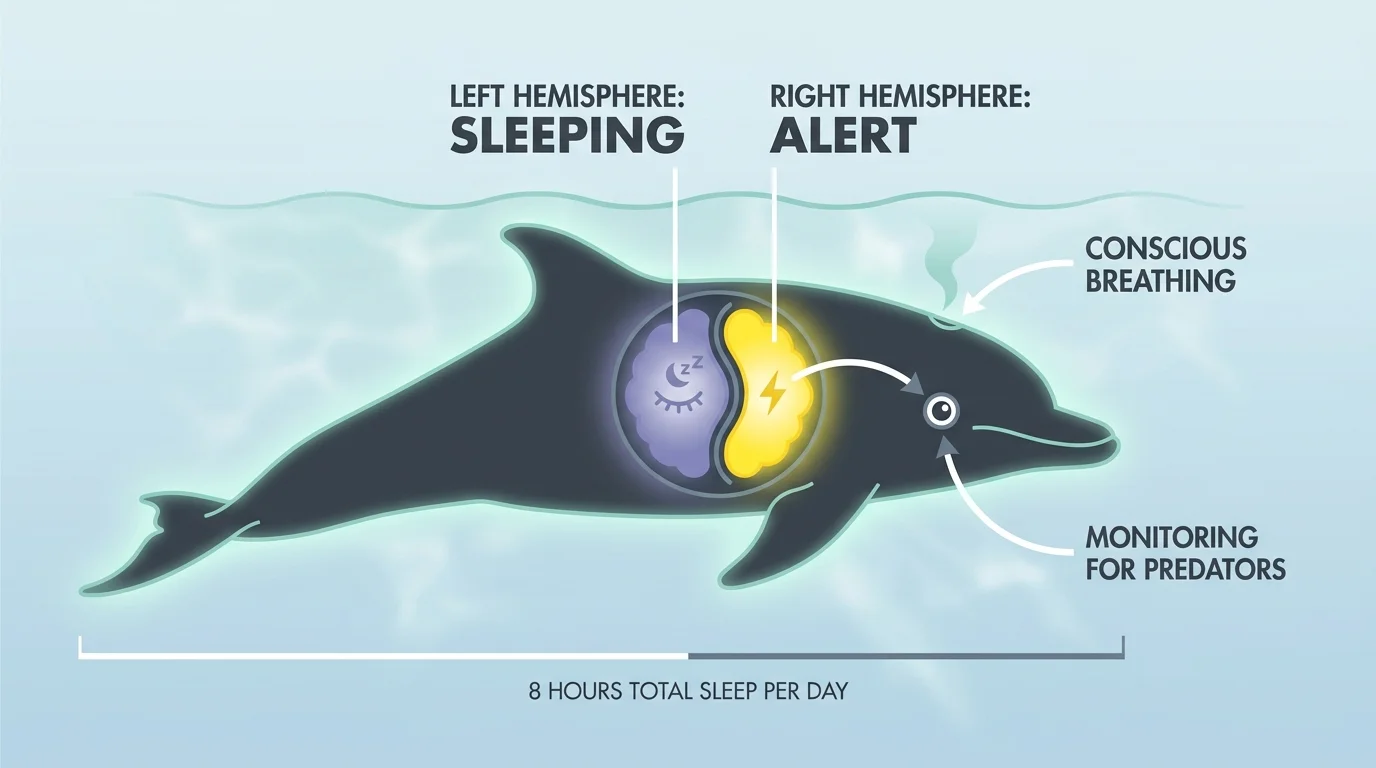
Bottlenose dolphins face a massive biological challenge: they are conscious breathers [2.6]. If a dolphin falls completely asleep, it stops breathing and drowns. To solve this, dolphins utilize a fascinating evolutionary trick called unihemispheric slow-wave sleep. They literally shut down one hemisphere of their brain at a time.
While the left side of the brain catches up on rest, the right side stays alert to regulate breathing, monitor the environment, and keep the dolphin swimming toward the surface. During this state, the eye opposite the sleeping hemisphere remains open, allowing the dolphin to scan for predators like sharks or killer whales. After a couple of hours, they switch sides, closing the other eye and resting the opposite brain hemisphere. This allows them to log roughly eight hours of sleep a day without ever losing total consciousness. Researchers have even observed captive dolphins continuing to perform complex tasks using their awake hemisphere while the other half rests. You can learn more about this incredible adaptation from Whale and Dolphin Conservation.
2. Great Frigatebirds: Napping on the Wing
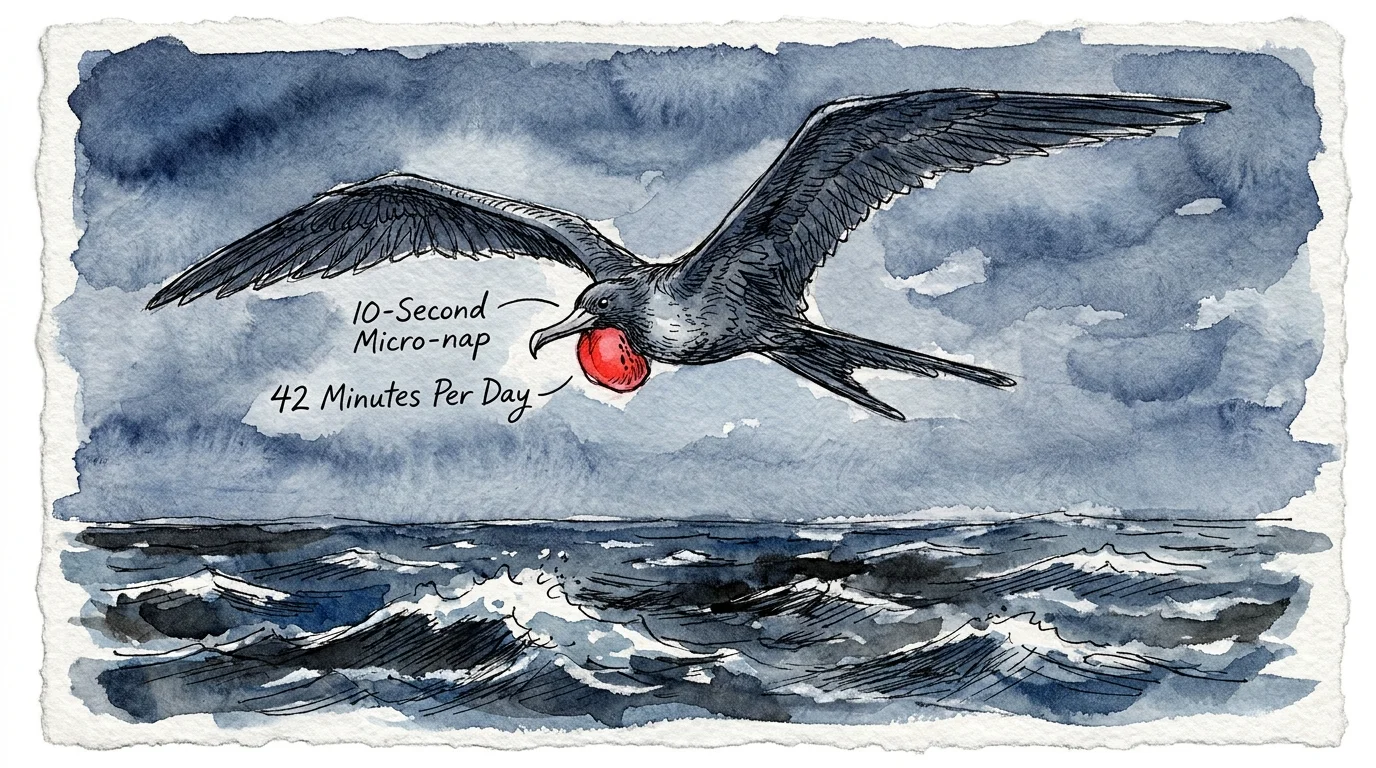
Can you imagine sleeping while piloting an aircraft across the ocean? Great frigatebirds do exactly that. These massive seabirds possess impressive wingspans but lack the waterproof oils that keep other marine birds buoyant. Landing on the water to rest would be a fatal mistake, as they would quickly become waterlogged and drown. To survive, they stay aloft for up to two months straight while hunting for fish over the open ocean.
Researchers tracking these birds discovered that frigatebirds sleep while flying, utilizing brief micro-naps that last just ten seconds. In flight, they sleep an average of only 42 minutes per day. They usually catch these tiny bursts of rest while riding thermal updrafts to high altitudes, relying on aerodynamics to prevent themselves from falling from the sky. Depending on the air currents, they can sleep with one hemisphere of their brain awake to watch their flight path, or completely shut down both hemispheres for a few seconds of deep rest. Once they return to land, frigatebirds crash hard; they sleep for over 12 hours a day to recover their immense sleep debt. Read more about the first evidence of sleep in flight to see how scientists successfully tracked this high-altitude phenomenon.
3. Walruses: The 84-Hour Awake Marathoners
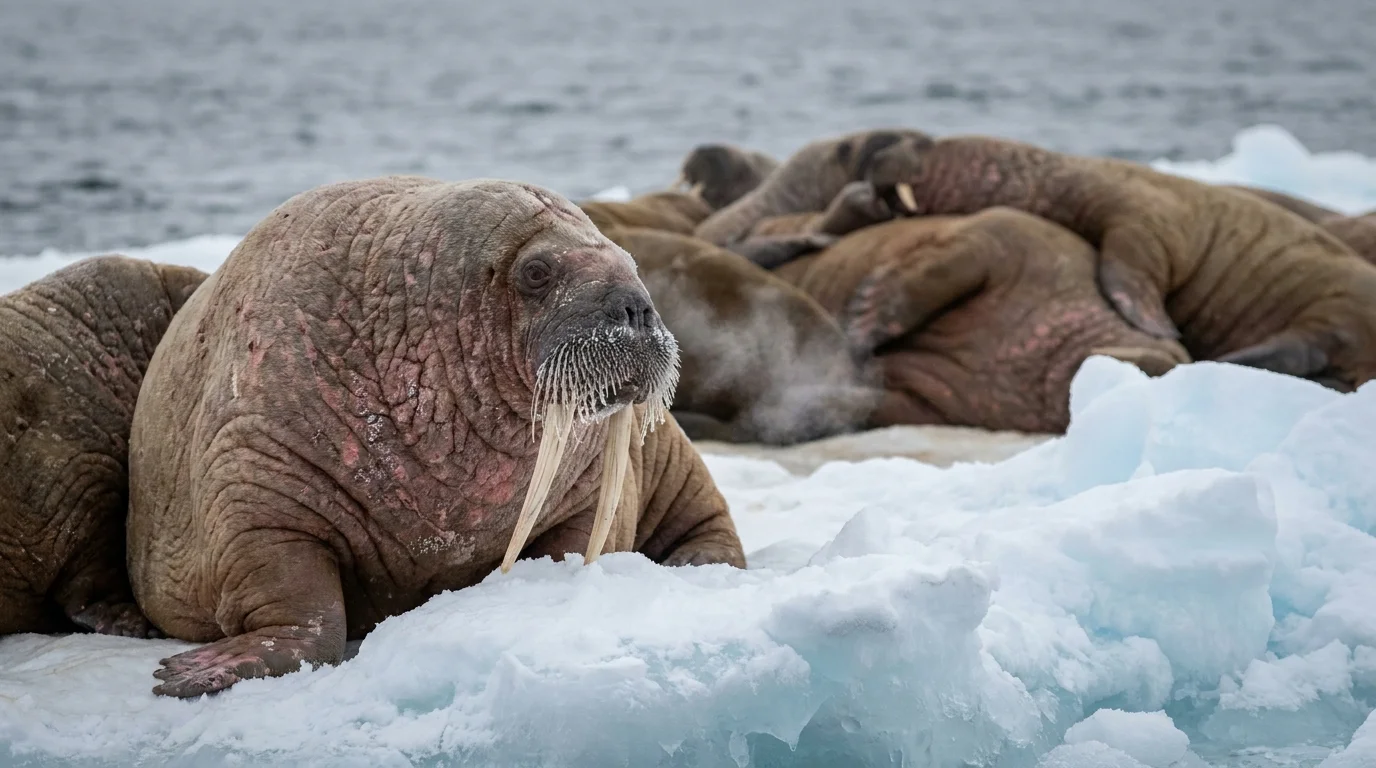
When walruses need to travel or hunt, they display extreme physical endurance. They can stay awake and swim continuously for up to 84 hours, traveling massive distances to locate fresh feeding grounds. When they finally decide to power down, they are not picky about where they make their bed.
Walruses can sleep lying flat on the seafloor, holding their breath for minutes at a time before instinctively bobbing up to the surface for air. They also sleep floating at the surface. Their most bizarre sleeping habit, however, involves the frozen sea ice of the Arctic. To keep from drifting away in strong ocean currents, a walrus will frequently hook its massive ivory tusks over the edge of an ice floe. This biological anchor holds their heavy, blubber-filled bodies steady, allowing them to enter a deep sleep without worrying about waking up miles away from their protective pod.
4. Little Brown Bats: Upside-Down Energy Savers
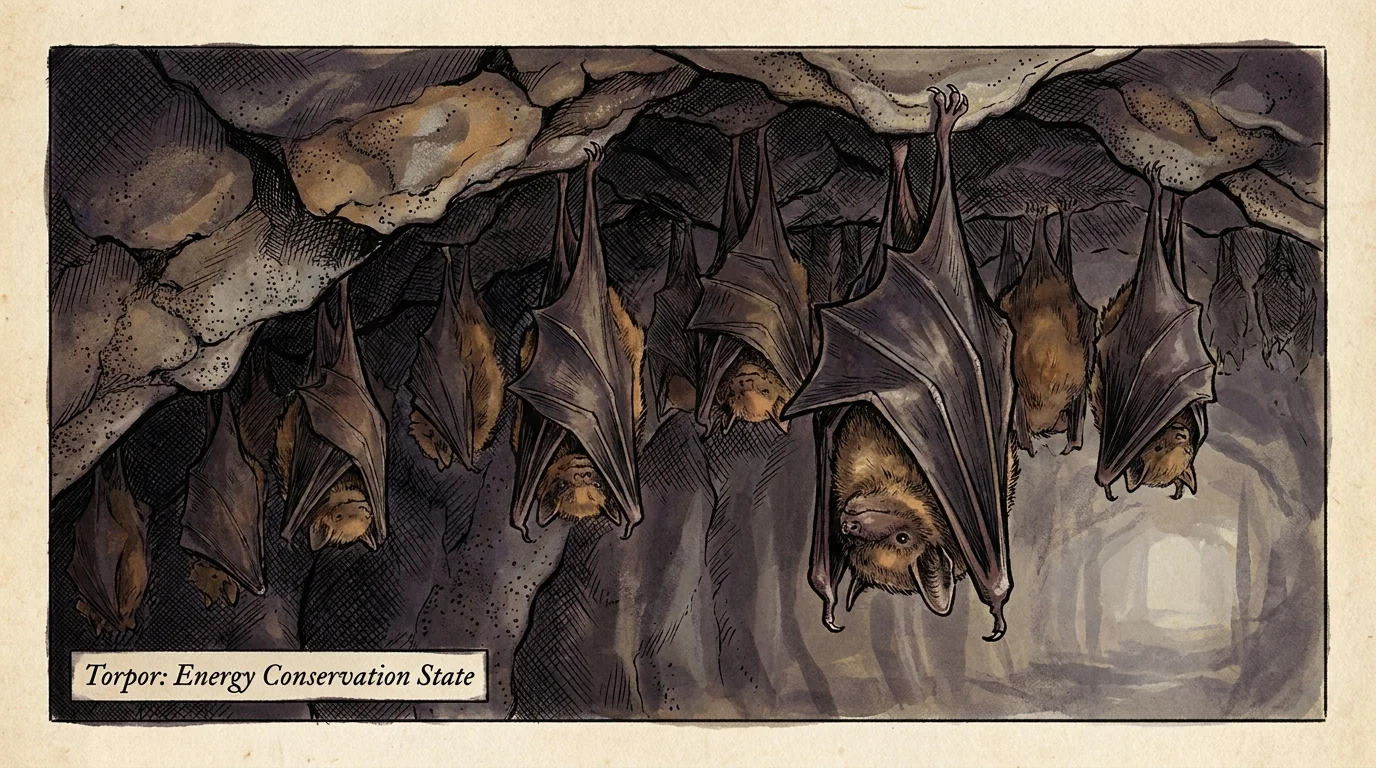
For the little brown bat, sleep is a strict matter of biological energy conservation. Flying requires an enormous amount of metabolic energy, and insect hunting is exhausting work. To offset the calories burned during their nightly foraging flights, these small mammals sleep for roughly 20 hours a day.
They roost upside down in caves, hollow trees, or attics. Hanging upside down requires almost no muscle exertion for bats; the weight of their body naturally pulls their specialized foot tendons closed, locking their sharp claws securely into place. This allows them to relax completely without the risk of falling. During winter months when insect populations disappear, they take their extreme sleep habits a step further by entering a deep hibernation called torpor. According to the Massachusetts Division of Fisheries and Wildlife, their heart rate can plummet from over 1,000 beats per minute during flight down to less than ten beats per minute, allowing them to survive freezing temperatures for months without consuming a single meal.
5. Sea Otters: Holding Paws to Stay Together
Sea otters live, eat, and sleep in the harsh, chilly waters of the northern Pacific Ocean. Lacking the thick layer of insulating blubber found in seals and whales, they rely entirely on the densest fur in the animal kingdom and a roaring metabolism to stay warm. Because of this, they must rest frequently to conserve calories—but sleeping in the open ocean carries a high risk of drifting apart, washing ashore, or floating into predator-heavy waters.
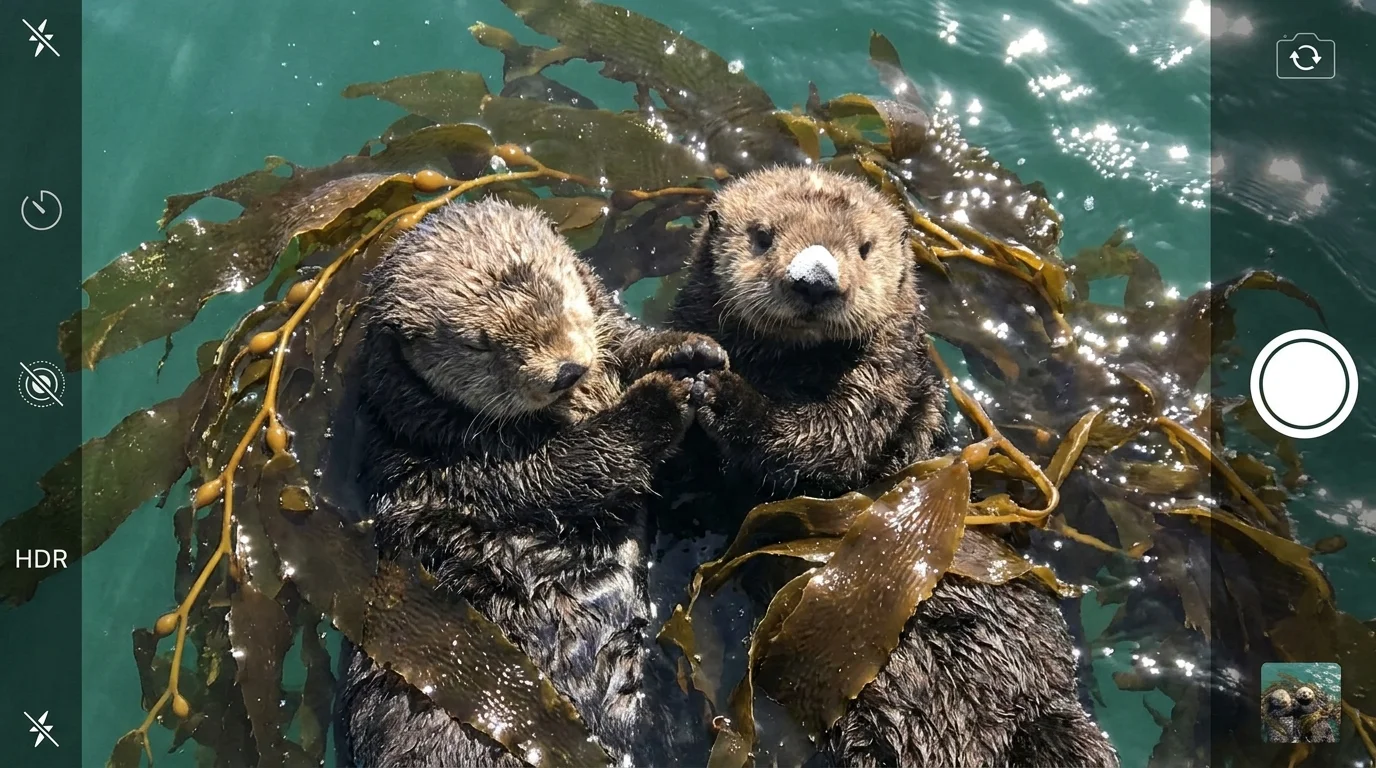
To prevent this from happening, sea otters sleep floating flat on their backs, frequently holding paws with another otter. This creates a large, connected raft of sleeping otters that drift together as a single unit, providing safety in numbers. When they rest alone or in smaller groups, they employ another incredibly clever strategy: they spin in the water to wrap themselves tightly in thick strands of giant kelp. According to NOAA, the kelp is anchored safely to the seafloor, effectively tying the otter in place so they can sleep securely despite the aggressively rolling waves.
6. African Elephants: Power Napping on the Run
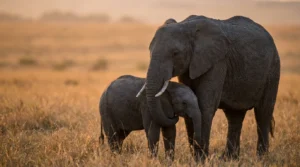
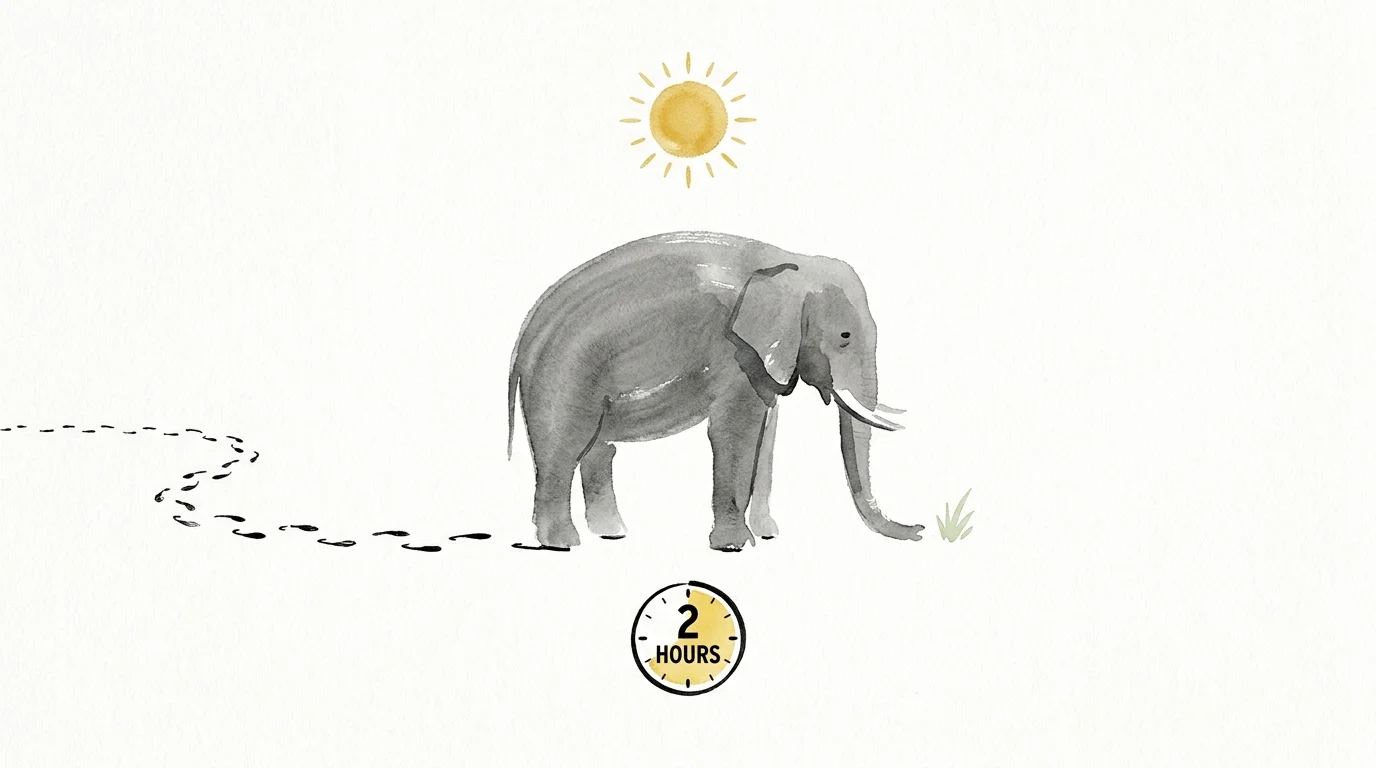
As the largest land animals on Earth, African elephants have incredibly demanding diets to fuel their massive frames. An adult elephant must consume hundreds of pounds of vegetation daily, which forces them to spend the vast majority of their day foraging. Because of this endless quest for food, they have very little time left over for rest. In the wild, African elephants average just two hours of sleep a day.
For the most part, elephants sleep standing up. Their incredible body weight makes lying down and standing back up a slow, strenuous process that leaves them highly vulnerable to ambush predators like lions. They simply lock their leg joints and doze off under the shade of a tree. However, all mammals need rapid eye movement (REM) sleep for deep physiological rest and memory consolidation, and REM sleep requires complete muscle relaxation. To achieve this necessary state, wild elephants will lie down—but usually only once every three or four days, and only for short bursts of about 30 minutes at a time. The rest of their sleep is heavily segmented to ensure the herd remains safe and well-fed.
7. Sperm Whales: Vertical Pod Naps
Sperm whales possess one of the strangest and most awe-inspiring sleep postures in the entire animal kingdom. Rather than sleeping horizontally at the surface like many other whales, these massive marine mammals engage in a communal behavior known to marine biologists as drift diving.
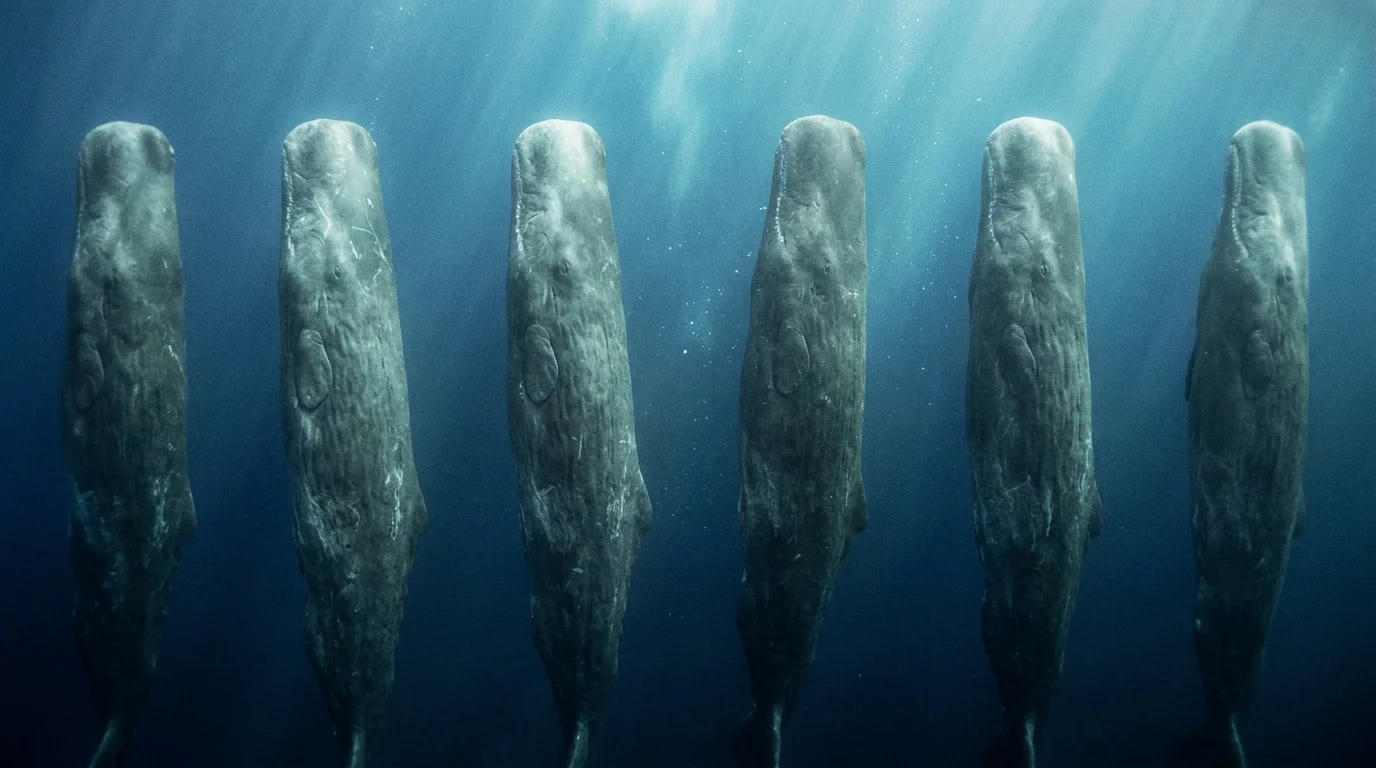
When the whales need to sleep, they take a deep breath, dive down about 45 feet, and passively orient their bodies into a vertical position—with their heads pointing straight up toward the surface or straight down into the abyss. Entire pods will sleep vertically together, perfectly still, resembling a quiet, eerie forest of giant monoliths suspended in the water column. Unlike dolphins, sperm whales seem to enter a deep, bihemispheric sleep where both sides of their brain rest simultaneously. They only sleep for roughly 10 to 15 minutes at a time, remaining completely unresponsive to approaching boats or predators until they naturally awaken to surface for a breath. Over an entire 24-hour period, sperm whales spend just seven percent of their time asleep, making them one of the most sleep-deprived mammals in the ocean.
8. Desert Snails: Hitting Snooze for Years
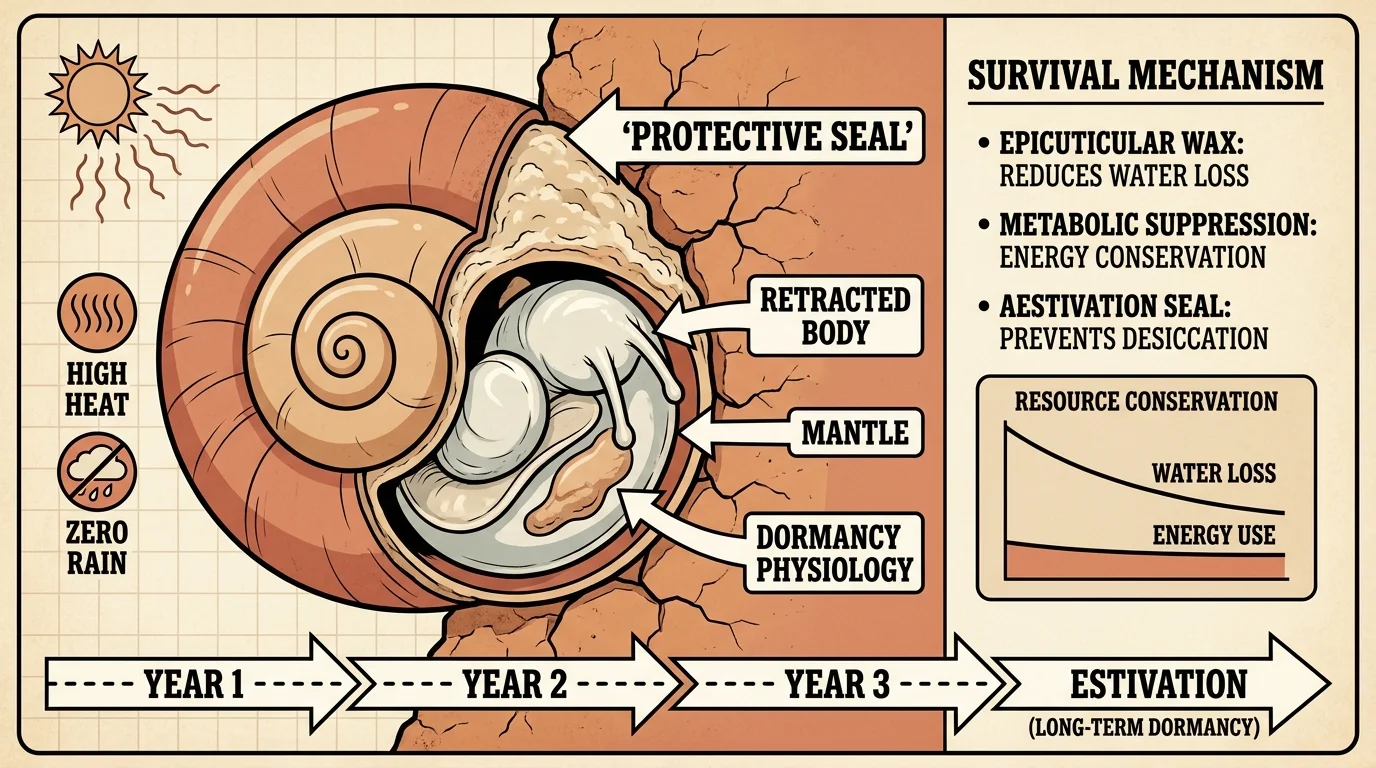
Not all extreme sleep habits belong to massive marine mammals or marathon flyers. The tiny desert snail possesses a remarkable evolutionary survival tool called aestivation—a type of deep summer sleep designed specifically to outlast periods of extreme heat and prolonged drought.
When environmental temperatures spike and life-giving moisture vanishes from the desert, the snail retreats entirely into the safety of its shell. It secretes a thick layer of biological mucus across the shell’s opening, which rapidly hardens into a waterproof, protective seal. This tough barrier traps the snail’s internal moisture and completely blocks out the punishing desert sun. While sealed inside, the snail’s metabolism drops to near zero, stopping all normal bodily functions. It can remain in this state of suspended animation for an astonishing three years. As soon as heavy rain returns and rehydrates the arid landscape, the snail breaks its seal and emerges, ready to frantically eat and reproduce before the harsh, dry weather returns.
9. Giraffes: The Kings of the Micro-Nap
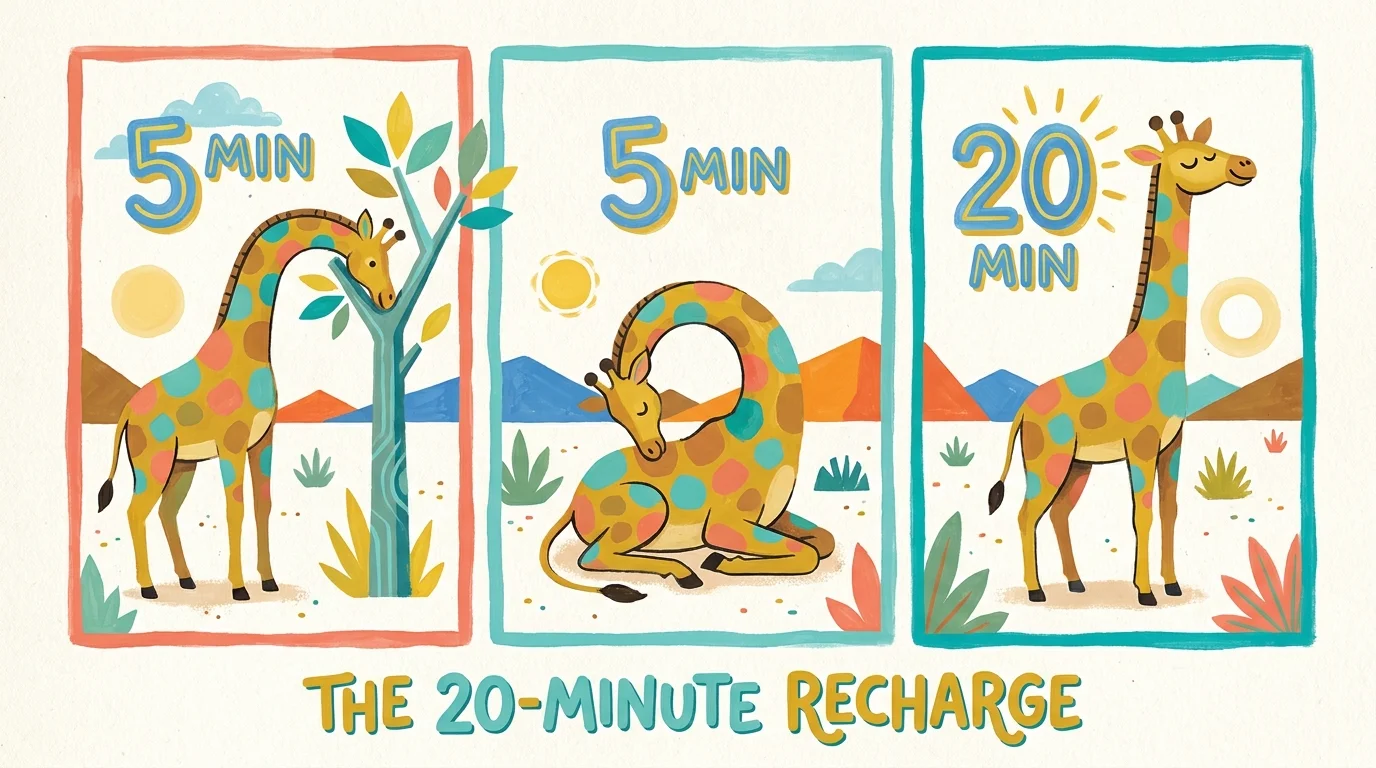
Tall, awkward, and highly visible from miles away, wild giraffes are walking targets for apex predators like lions and hyenas. Because lying down or getting back up requires awkward, time-consuming maneuvering with their long limbs, a sleeping giraffe is incredibly vulnerable on the open savanna. Consequently, giraffes sleep for less than two hours a day in the wild to ensure they are never caught entirely off guard.
Instead of sleeping in one long, continuous stretch, giraffes rely heavily on polyphasic sleep—a series of tiny micro-naps lasting just five minutes each. They usually take these naps standing up, with their eyes half-open and their ears constantly swiveling to listen for the rustle of approaching danger. When a giraffe absolutely needs a deeper phase of sleep, it will fold its long legs beneath its body and curl its towering neck backward to rest its head on its own hip. This deep sleep rarely lasts more than a few minutes before the animal stands back up to survey the landscape. Captive giraffes, free from the constant threat of predators, sleep much longer and more frequently lying down, proving just how much survival dictates their natural resting habits.

Comparing the Sleep Habits of These 9 Animals
To put these fascinating routines into perspective, review the following comparison of their daily sleep durations and unique physiological mechanisms.
| Animal | Average Daily Sleep | Primary Sleep Strategy |
|---|---|---|
| Bottlenose Dolphin | ~8 hours (in alternating halves) | Unihemispheric sleep; one brain half rests while the other stays awake. |
| Great Frigatebird | ~42 minutes (in flight) | 10-second micro-naps while soaring on updrafts. |
| Walrus | Varies (can stay awake 84 hours) | Hooks tusks into ice floes to anchor themselves in the water. |
| Little Brown Bat | ~20 hours | Hangs upside down to conserve energy; enters deep torpor. |
| Sea Otter | ~11 hours | Holds paws or wraps in kelp to prevent drifting away. |
| African Elephant | ~2 hours | Sleeps standing up; lies down every 3-4 days for REM sleep. |
| Sperm Whale | ~1.7 hours (7% of the day) | Sleeps vertically in the water column in short 10-15 minute bursts. |
| Desert Snail | Up to 3 years | Aestivates by sealing its shell with mucus to survive extreme drought. |
| Giraffe | < 2 hours | Polyphasic 5-minute micro-naps, primarily standing up. |
Why These Bizarre Sleep Habits Matter
Every strange quirk of animal sleep is an evolutionary masterclass in problem-solving. By studying these wild creatures, researchers gain vital scientific insights into the ultimate purpose and biological mechanics of sleep—including how our own human brains handle critical functions like rest, memory consolidation, and physical recovery. The more you learn about the natural world, the more you realize that survival rarely follows a single, rigid formula. Nature molds behavior to fit the environment.
If you struggle with your own daily sleep habits, you can take a highly practical cue from the animal kingdom: optimize your environment to suit your unique biological needs. Evaluate the temperature, noise level, and lighting of your room. While you certainly do not need to wrap yourself in giant kelp like a floating sea otter, or hang upside down in a cave like a little brown bat, establishing a safe, dark, and perfectly comfortable space is the human equivalent of creating a flawless biological anchor. Limit your screen time to avoid suppressing your natural sleep cycles, and aim for a consistent routine that signals your brain it is time to power down. Respect the diverse and brilliant ways wildlife survives against all odds, and remember that high-quality rest is never just a luxury—it is the ultimate, non-negotiable foundation for a healthy life.