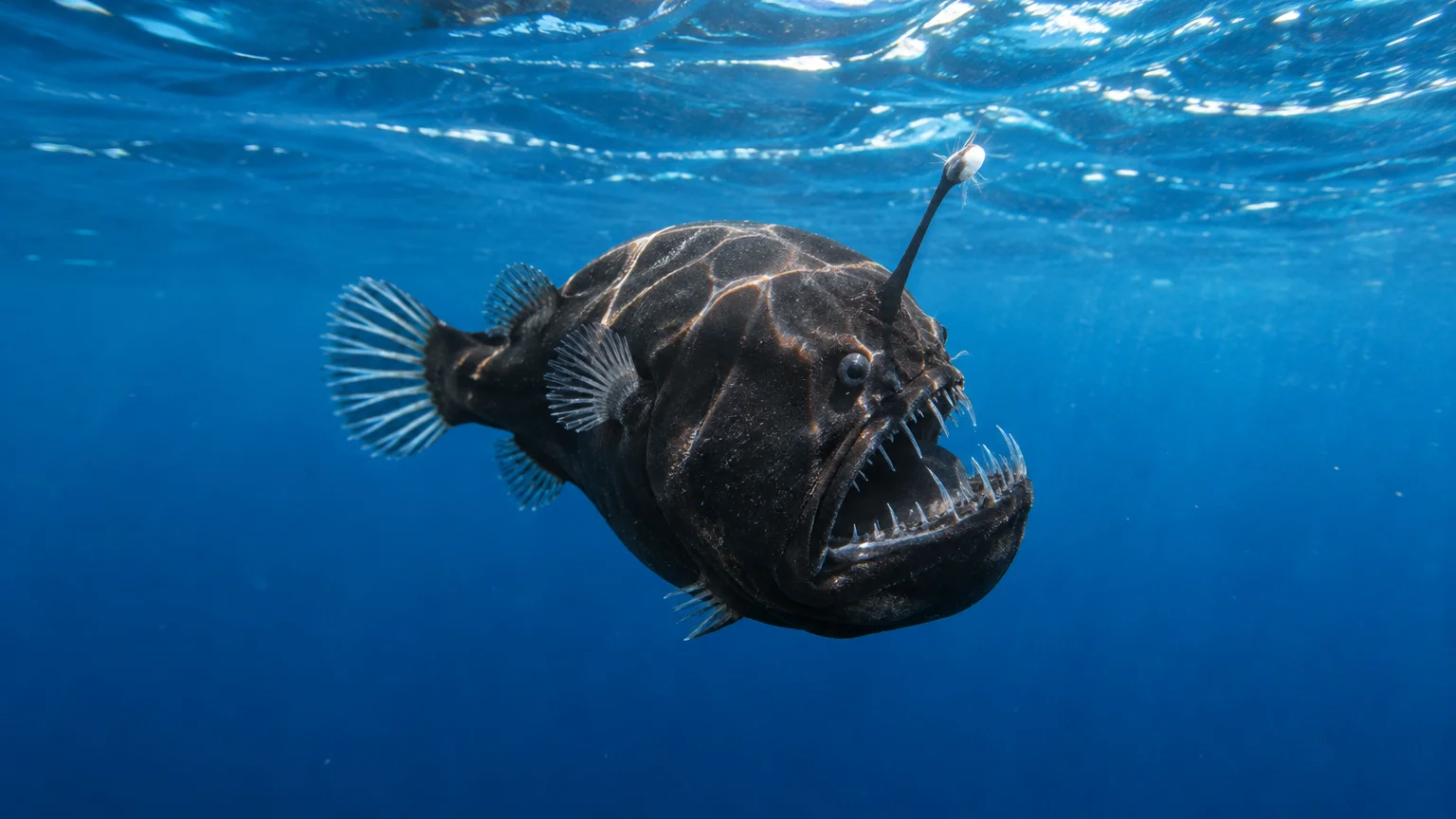
You usually picture an anglerfish hunting in complete darkness thousands of feet under the sea. In early 2025, a team of researchers spotted one swimming right at the sunlit surface off the Canary Islands.
Biologists filmed the rare deep-sea predator alive near Tenerife in broad daylight. This encounter marks a possible world first for marine science, offering you an unprecedented look at ocean wildlife from the abyss.
Seeing a deep-sea hunter near the surface puzzles researchers because these animals cannot survive long in warm, sunlit waters. Here is how scientists documented this rare event and what it reveals about our oceans.
In This Briefing06 Sections ▾
A Rare Daylight Encounter off Tenerife
On January 26, 2025, marine biologist Laia Valor and her team traveled aboard the research vessel Glaucus. They were surveying local shark populations off the southwest coast of Tenerife.
About one to two kilometers offshore, wildlife photographer David Jara Boguñá noticed a strange, pitch-black shape. It was moving just beneath the sunlit surface of the water.
The crew from the conservation group Condrik Tenerife watched the animal swim vertically near their boat. They recorded video footage before sharing it online in early February 2025.
The animal was an adult female black seadevil anglerfish, known scientifically as Melanocetus johnsonii. It struggled in the warm upper ocean layer and died within two hours.
Identifying the Elusive Black Seadevil
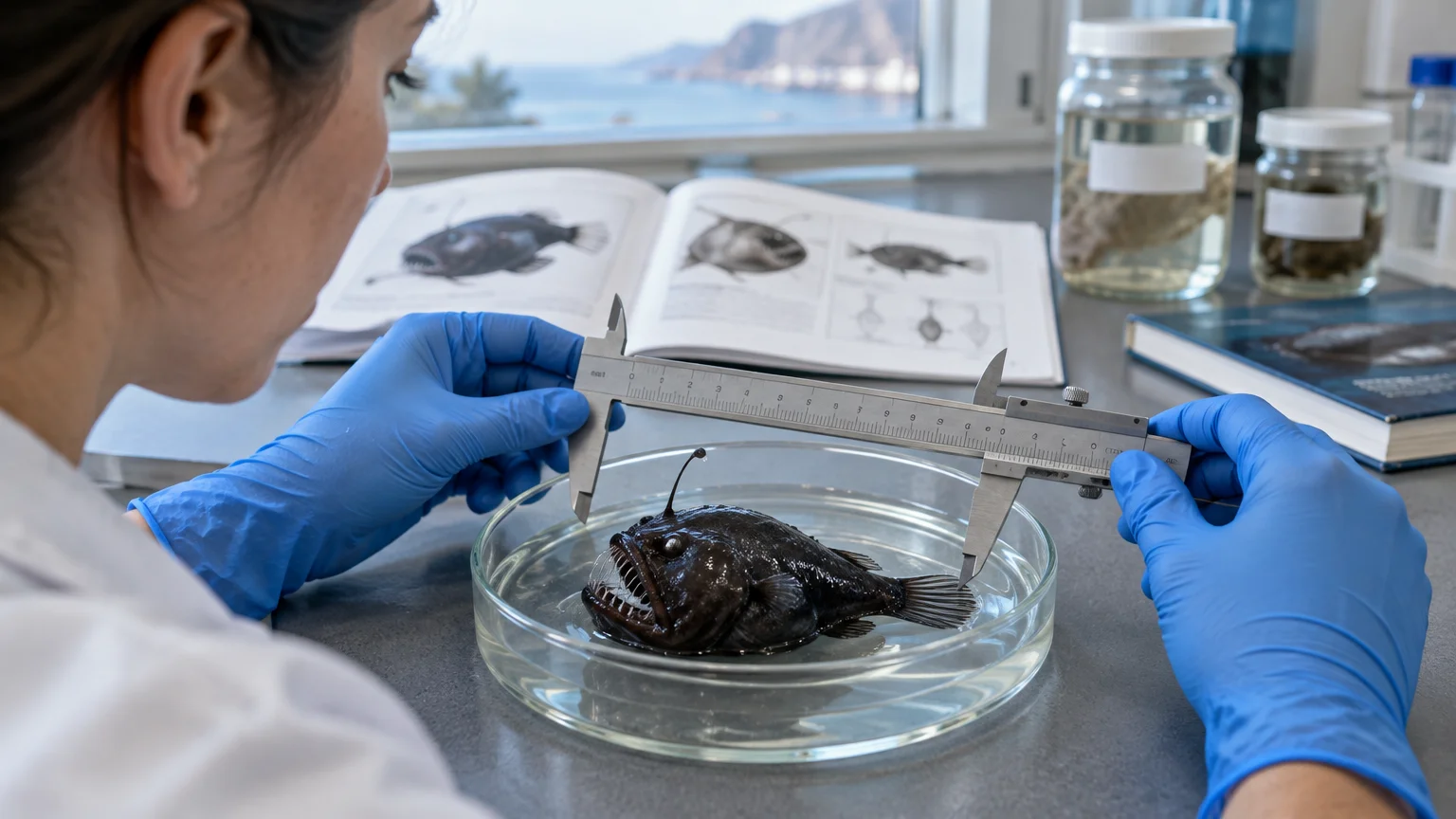
The researchers carefully brought the lifeless fish to shore for scientific study. They donated the specimen to the Museum of Nature and Archaeology in Santa Cruz de Tenerife.
Marine biologist Alejandro de Vera Hernández examined the fish using taxonomic keys. He confirmed that the small, round predator was indeed a female humpback anglerfish.
While adult females of this species can reach eighteen centimeters, this individual measured just seven centimeters long. You could easily hold it inside your cupped hand.
Tiny male anglerfishes grow to only three centimeters and lack the famous glowing lure. You can explore how animals adapt to extreme depths through NOAA Ocean Exploration reports.
Females hunt by using a modified spine tipped with a glowing bulb. Symbiotic bacteria called Enterovibrio escacola generate light inside the bulb to attract prey in the darkness.
A Major Milestone for Marine Science
You might know shallow-water anglerfishes, like frogfishes, from coastal coral reefs. Divers and snorkelers film those shallow species in clear daylight all the time.
A deep-sea anglerfish swimming at the surface in full sun is an entirely different story. Biologists believe this encounter could be the first recorded daylight surface sighting of a live adult.
Earlier surface records of this species only documented drifting larvae or dead adults. Live adults almost never cross above the ocean twilight boundary.
In November 2014, scientists at the Monterey Bay Aquarium Research Institute filmed a live female using a robotic submarine. That deep encounter took place at a depth of 580 meters.

Why Did an Abyss Creature Leave the Depths?
You might wonder why a creature built for total darkness would move toward the sun. Marine biologists stress that this fish did not travel upward as part of a regular migration.
Experts believe an unusual physical event pushed the fish out of its normal home. The specimen had no bite marks or broken bones, which rules out an attack by a predator.
Biologists suggest several possible explanations for the ascent. Powerful ocean upwelling currents or rising warm water from volcanic fissures could have swept the small fish upward.
The fish may have also swallowed prey with a gas-filled swim bladder. As the prey drifted up, expanding gas could have pulled the anglerfish toward the surface against its will.
A severe illness or parasite infection could have also disoriented the animal. Once it entered warm surface water, thermal shock likely prevented it from swimming back down.
Contrasting Surface Waters and the Deep Ocean
To understand why the anglerfish could not survive at the surface, you must look at its natural home. The ocean changes dramatically as you descend into deep water.
The table below shows how conditions at the surface compare to the deep waters where black seadevils normally live.
| Environmental Condition | Tenerife Surface Waters | Bathypelagic Abyss Zone |
|---|---|---|
| Typical Depth | 0 to 5 meters | 200 to 2,000+ meters |
| Water Temperature | Roughly 19°C to 22°C | Roughly 4°C to 10°C |
| Sunlight Level | Direct, intense sunlight | Perpetual darkness |
| Water Pressure | 1 atmosphere | Over 20 to 200 atmospheres |
| Typical Inhabitants | Seabirds, surface fish, turtles | Anglerfishes, lanternfishes, squids |
According to Britannica’s anglerfish overview, roughly 160 deep-sea anglerfish species inhabit midnight ocean zones across the globe.
Global wildlife records from the IUCN Red List help researchers monitor deep marine species and observe how ocean warming affects them over time.
What You Can Learn From This Historic Sighting
This remarkable anglerfish discovery reveals how little we still know about deep waters. Modern deep sea exploration often relies on robotic submarines, but lucky surface observations still provide fresh insight.
Staff at the museum in Tenerife preserved the specimen for ongoing genetic research. They placed the anglerfish on public display in late February 2025 so people could inspect it closely.
Documenting unusual sightings helps ocean scientists track environmental changes and shifting currents. Your awareness of these deep-sea wonders helps support vital marine research worldwide.