
North America is home to a staggering array of bird species, and many have evolved bizarre, brilliant strategies to survive the continent’s most brutal environments. From songbirds that plunge into freezing rapids to tiny owls that bait insects with mammal dung, the ingenuity of American birdlife reveals exactly what it takes to thrive in the wild. You might think you know the birds visiting your local parks and trails, but beneath their feathers lie complex physiological tricks and ruthless behavioral adaptations. Discover how some of the most extraordinary native birds America has to offer outsmart predators, endure freezing winters, and secure their next meal.
The Clark’s Nutcracker Plants Entire Forests With Its Memory
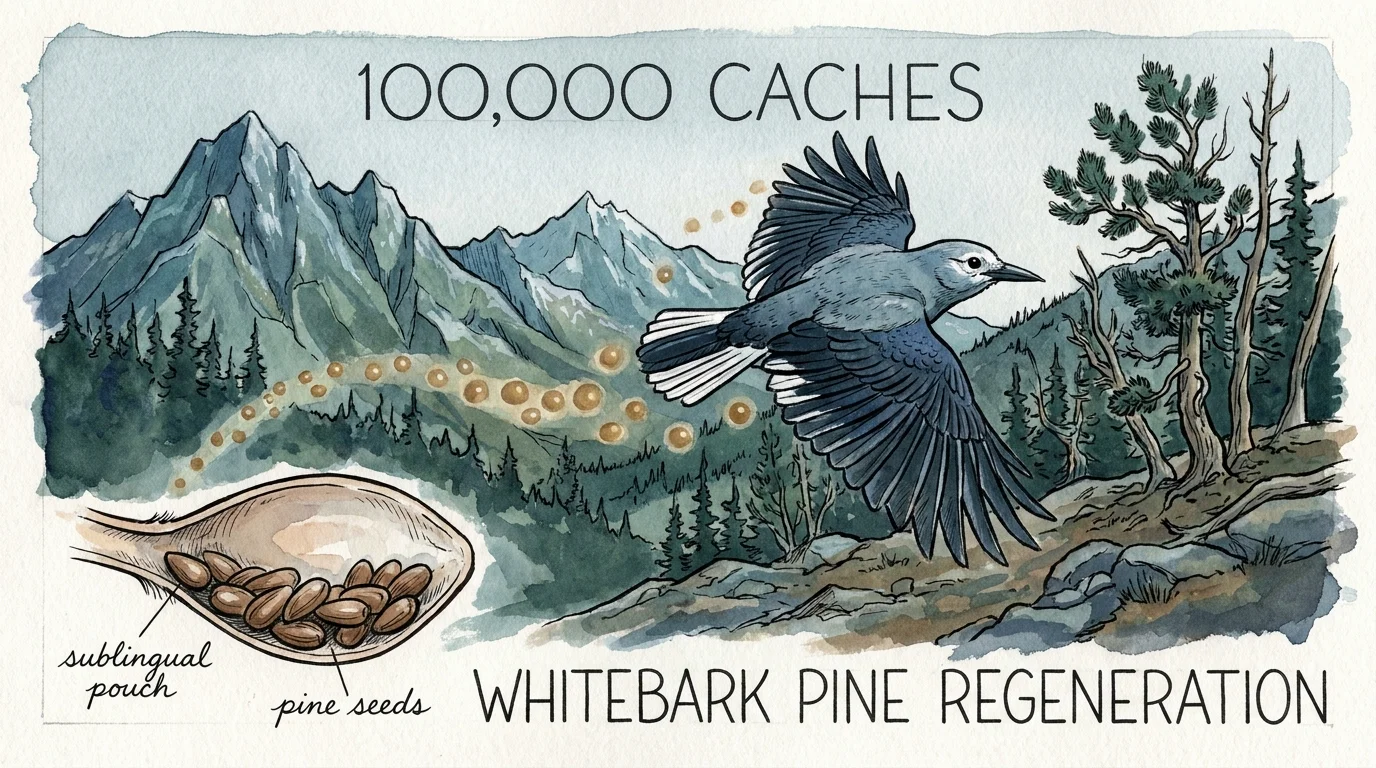
Living in the high-elevation conifer forests of the western United States, the Clark’s nutcracker relies entirely on pine seeds to survive the bitter subalpine winters. Because fresh food becomes buried under feet of snow, this striking gray and black member of the corvid family spends its late summer aggressively harvesting. Using a specialized sublingual pouch located under its tongue, a single bird can transport up to 100 seeds at a time across vast mountainous territories.
Over a single season, one nutcracker caches an astonishing 100,000 pine seeds in thousands of different locations. To retrieve these hidden meals months later, the bird utilizes an unparalleled spatial memory; it triangulates the exact coordinates of its caches using physical landmarks like boulders, cliff faces, and tree trunks. Crucially, the nutcracker never recovers every single seed. Those forgotten stashes eventually germinate, meaning this single bird acts as a primary forester for fragile alpine species like the whitebark pine.
The Greater Roadrunner Uses Solar Power to Survive the Desert
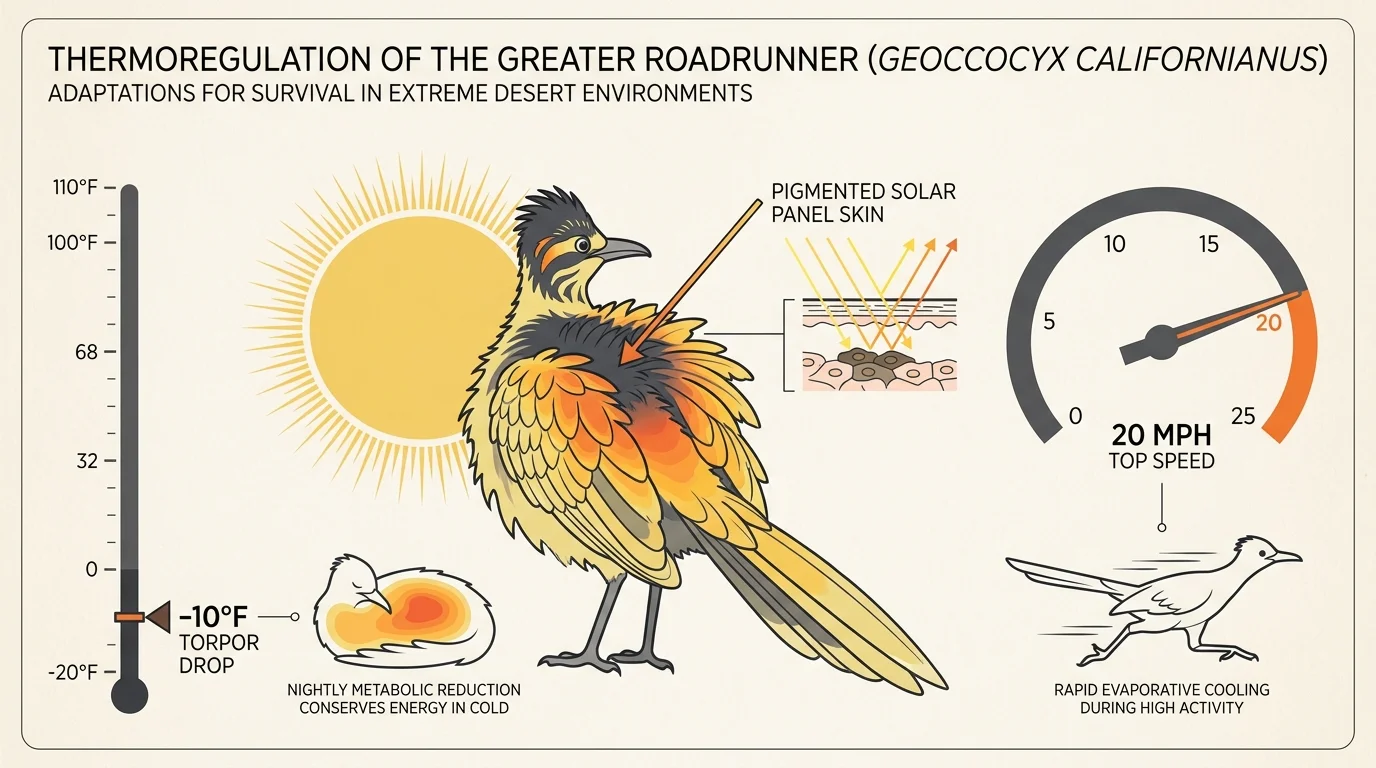
Famous for its cartoon counterpart, the greater roadrunner serves as a real-life desert predator with an appetite for venomous snakes, scorpions, and lizards. As a highly adapted member of the cuckoo family, it features zygodactyl feet—two toes pointing forward and two pointing backward—which grant it the extreme traction required to sprint across arid scrubland at speeds reaching 20 miles per hour.
Surviving the massive temperature swings of the American Southwest requires phenomenal thermoregulation. To conserve energy during frigid desert nights, the roadrunner drops its core body temperature by roughly 10 degrees Fahrenheit, entering a mild state of torpor. When the sun rises, the bird must quickly warm up without burning precious calories. It achieves this by turning its back to the sun, fluffing its feathers, and exposing a patch of dark, heavily pigmented skin located between its wings. This built-in solar panel absorbs radiation, rapidly raising the bird’s internal temperature so it can begin its morning hunt.
The Loggerhead Shrike Impales Its Prey on Barbed Wire
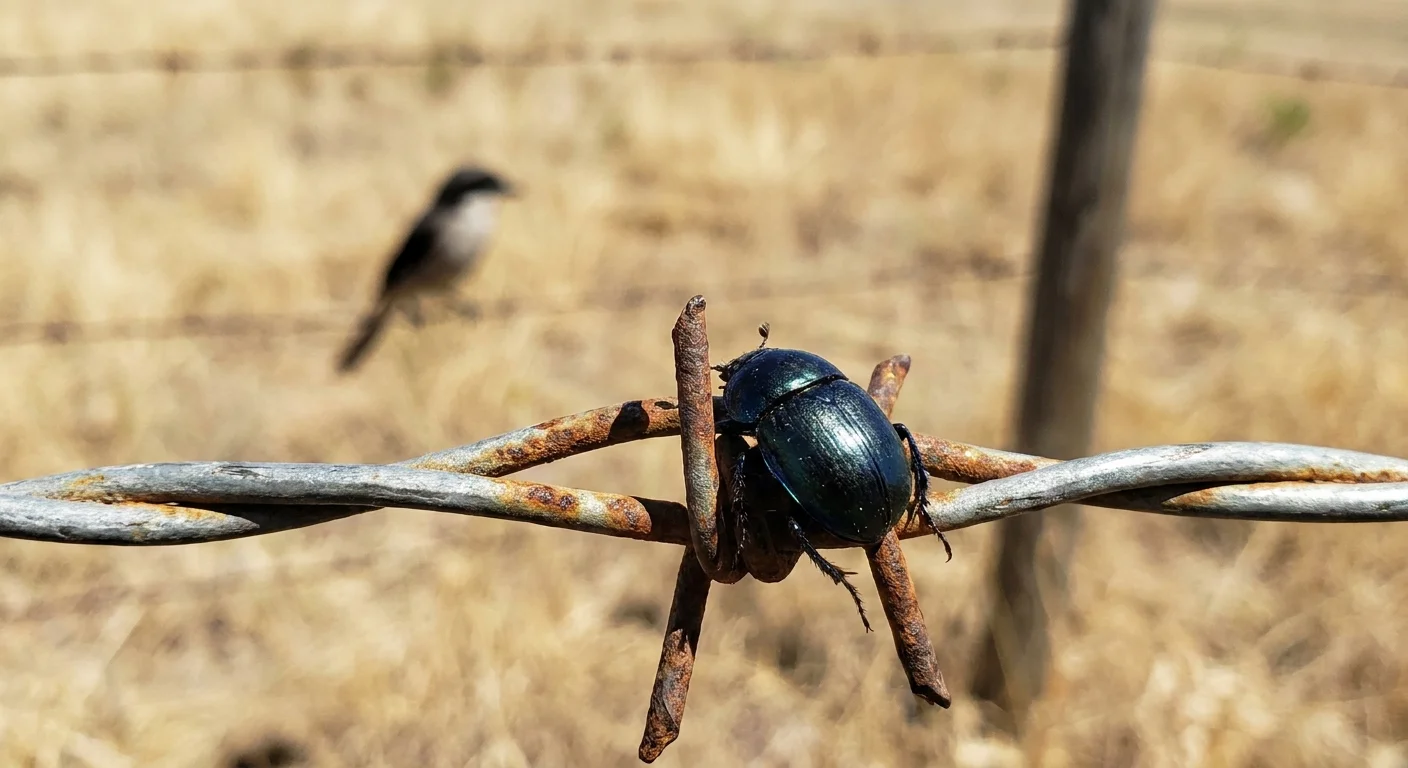
If you are looking for unbelievable American wildlife facts, the loggerhead shrike provides a grisly example. Roughly the size of an American robin, this songbird possesses the predatory instincts of a fierce raptor. However, it completely lacks the powerful, gripping talons that hawks and falcons use to hold their prey while tearing flesh. To compensate for its weak feet, the shrike developed a macabre workaround.
After catching an insect, lizard, or small rodent, the shrike carries the victim to a thorny bush or a barbed-wire fence. It violently impales the creature on a sharp point, securing the body so the bird can use its hooked beak to rip off bite-sized chunks. A specialized tomial tooth allows the shrike to quickly snap the spinal cords of its victims. This behavioral adaptation allows the shrike to build a visible larder of stored food to attract mates. Furthermore, impaling toxic prey like monarch butterflies allows the poisons to degrade over a few days, transforming a deadly insect into a safe, edible snack.
The Killdeer Fakes a Broken Wing to Protect Its Young
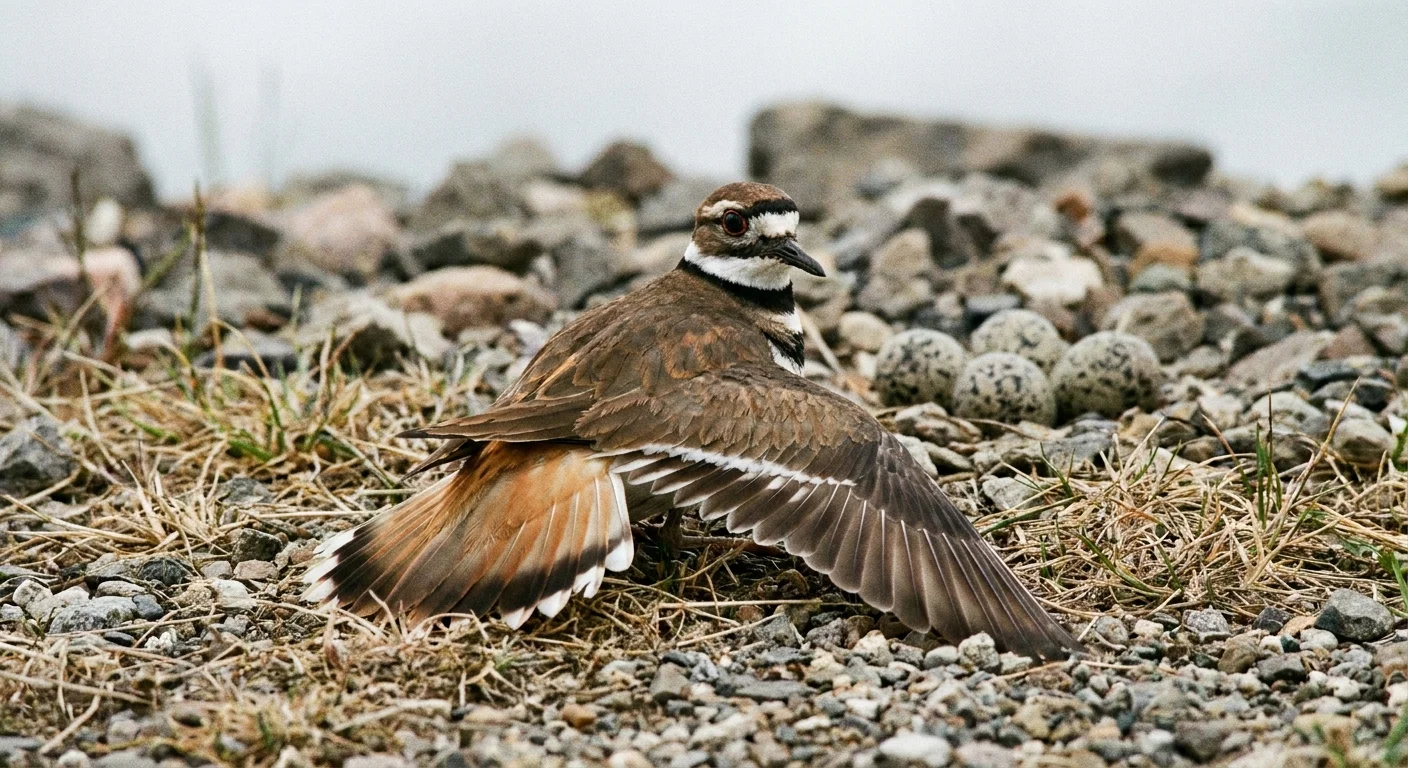
Unlike many shorebirds, the killdeer frequently nests far inland, choosing highly exposed areas like gravel driveways, golf courses, and open pastures. Laying eggs directly on the ground leaves the nest extremely vulnerable to hungry predators like foxes, raccoons, and feral cats. To counter this constant threat, the killdeer employs a highly choreographed distraction display known as the broken-wing act.
When a predator wanders too close to the nest, the adult killdeer springs into action. The bird limps away from the eggs, dragging one wing awkwardly along the ground while fanning its tail to expose a bright orange rump. It shrieks in distress, convincing the predator that it has found an easy, injured meal. The predator instinctively follows the adult bird, completely ignoring the camouflaged eggs sitting out in the open. Once the killdeer leads the threat a safe distance away, it miraculously heals, takes flight, and leaves the confused predator empty-handed.
The Brown-headed Cowbird Outsourcers Parenting to Other Species
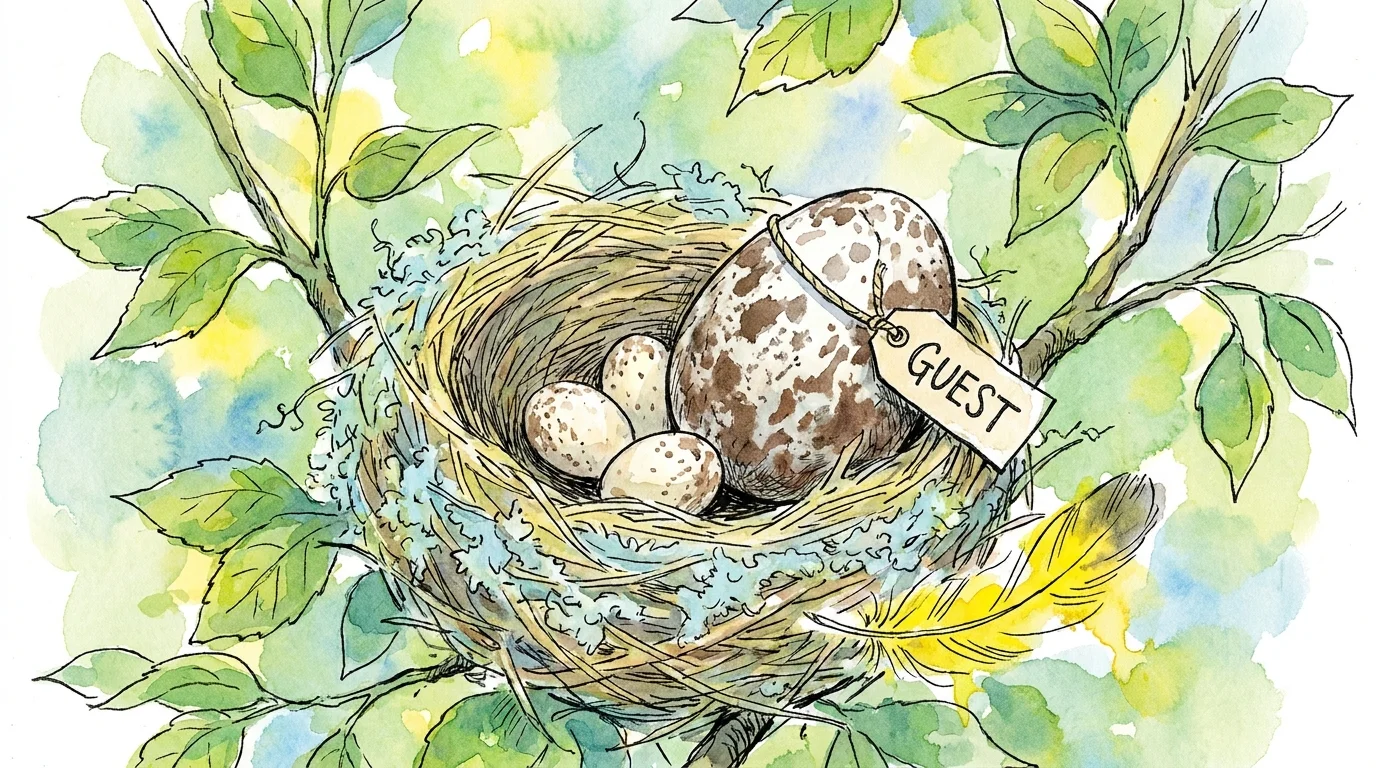
The brown-headed cowbird survives through an evolutionary strategy known as obligate brood parasitism. This means the cowbird never builds its own nest, incubates its own eggs, or feeds its own chicks. Instead, it aggressively outsources the exhausting labor of parenting to entirely different bird species, allowing the adult cowbird to conserve energy and reproduce continuously throughout the season.
A female cowbird carefully observes the nesting behavior of smaller songbirds, such as warblers and sparrows. Once she spots a target, she waits for the host parents to leave the nest. She then swoops in, removes or destroys one of the host’s eggs, and lays her own. Research from the National Audubon Society notes that cowbird eggs have slightly thicker shells to prevent cracking when dropped quickly into the nest. Because the cowbird chick usually hatches a day earlier than its adoptive siblings, it grows faster, begs louder, and ultimately monopolizes the food brought by the unwitting foster parents.
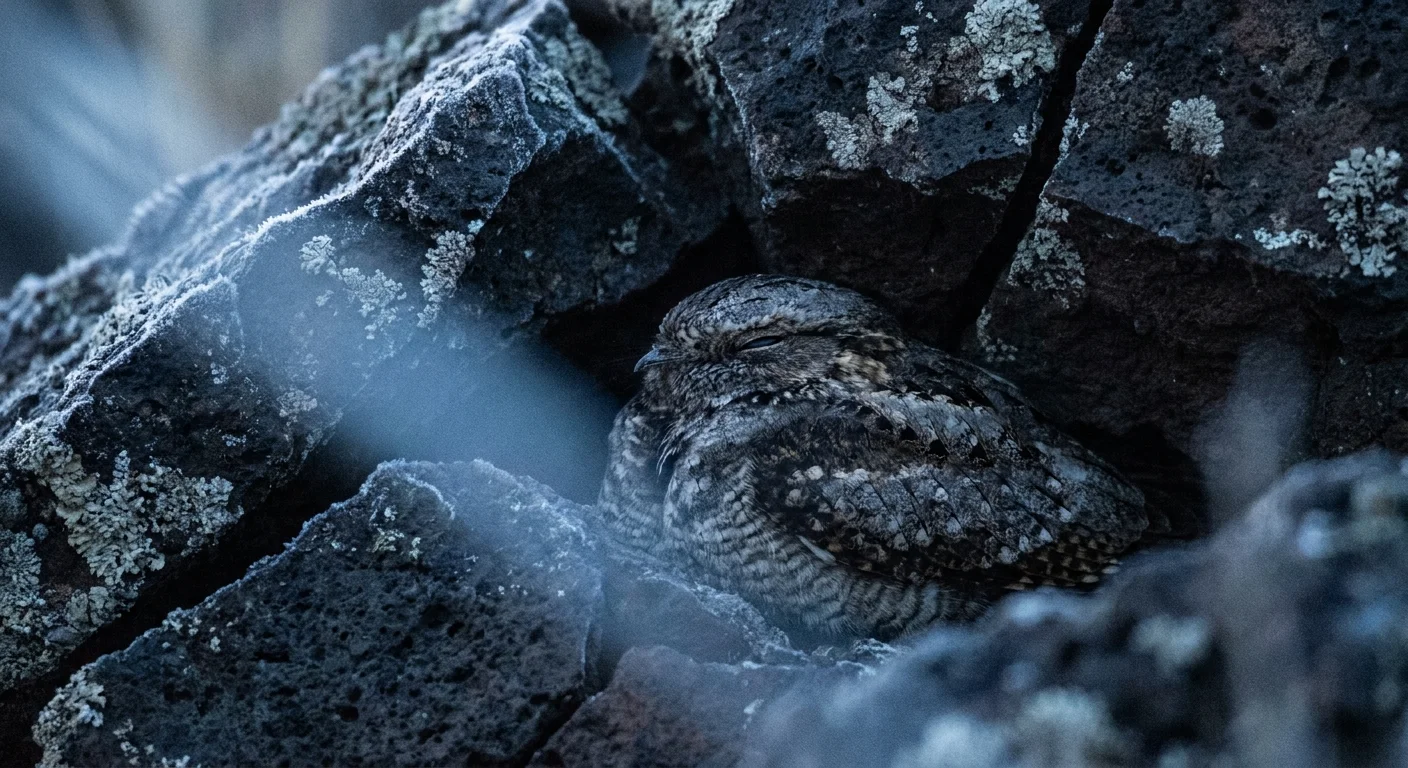
The Common Poorwill Enters a Deep Winter Hibernation
When freezing temperatures wipe out local insect populations, most insect-eating birds migrate south to find food. The common poorwill, a nocturnal bird native to the dry scrublands of the western United States, takes an entirely different approach. It wedges itself into a shallow rock crevice and shuts its body down, becoming the only bird in the world known to enter a true, prolonged state of hibernation.
Indigenous Hopi tribes observed this behavior long before modern science documented it, naming the bird the Sleeping One. During winter, the poorwill’s breathing becomes almost imperceptible, and its heart rate slows to a crawl. Its internal body temperature plummets from a normal 106 degrees Fahrenheit to as low as 41 degrees. By entering this profound torpor, the bird can survive for weeks or even months without a single meal, burning only a fraction of an ounce of stored fat until the warm weather returns and insects reemerge.
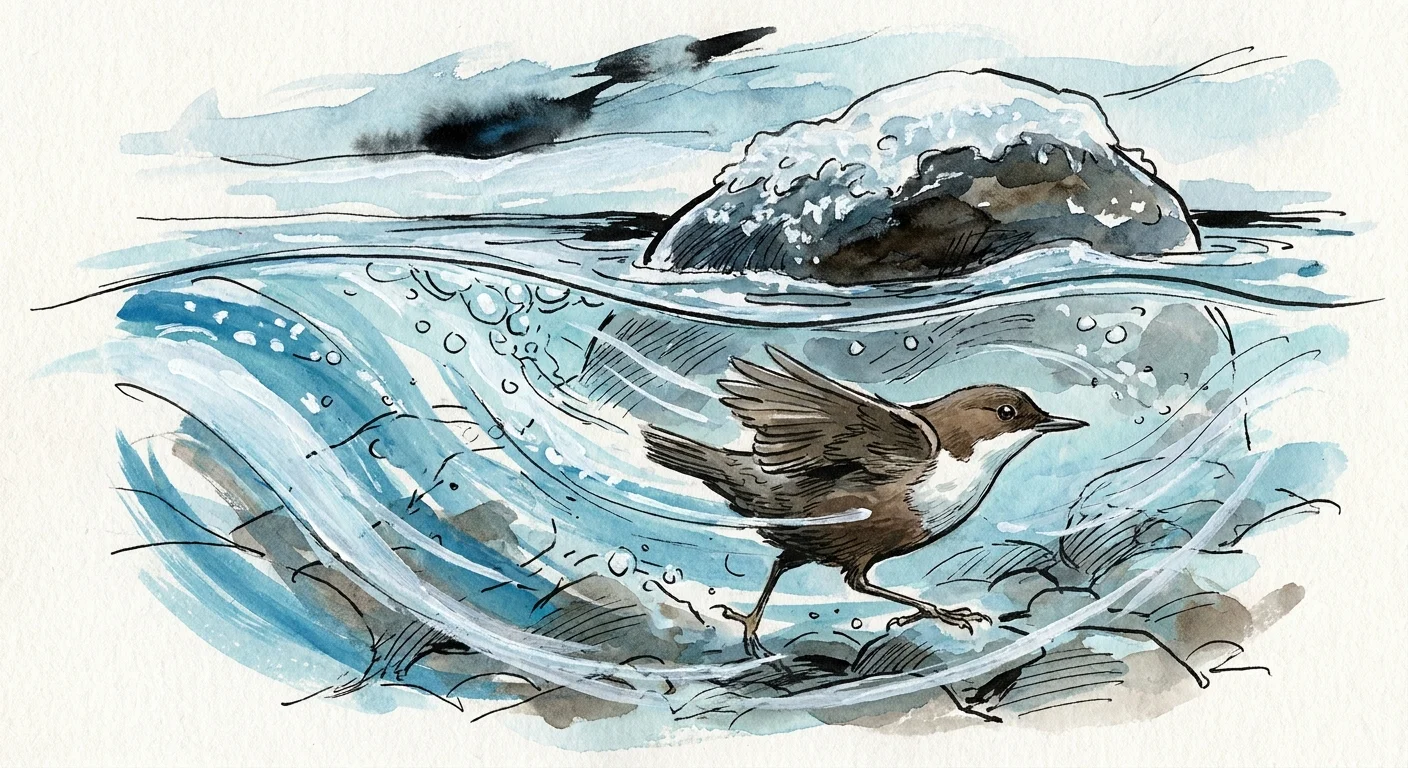
The American Dipper Swims Underwater in Freezing Rapids
If you hike along the fast-flowing mountain streams of the American West, you might witness a small, slate-gray bird plunge headfirst into the freezing rapids. The American dipper ranks as the continent’s only truly aquatic songbird, and it survives by foraging for aquatic insects, fish eggs, and larvae directly on the riverbed.
The National Park Service notes that these remarkable bird survival strategies prove that you do not need webbed feet to swim. The dipper utilizes short, highly muscular wings to essentially fly underwater against turbulent currents. To survive submerged in icy water, the bird relies on a massive preen gland that secretes waterproofing oil, coating a layer of feathers far denser than those of terrestrial birds. Physiologically, the dipper possesses specialized blood with extra hemoglobin, maximizing oxygen storage for extended dives. A set of scaly flaps automatically closes over its nostrils when submerged, while a transparent third eyelid acts as a built-in pair of goggles to spot prey among the submerged pebbles.
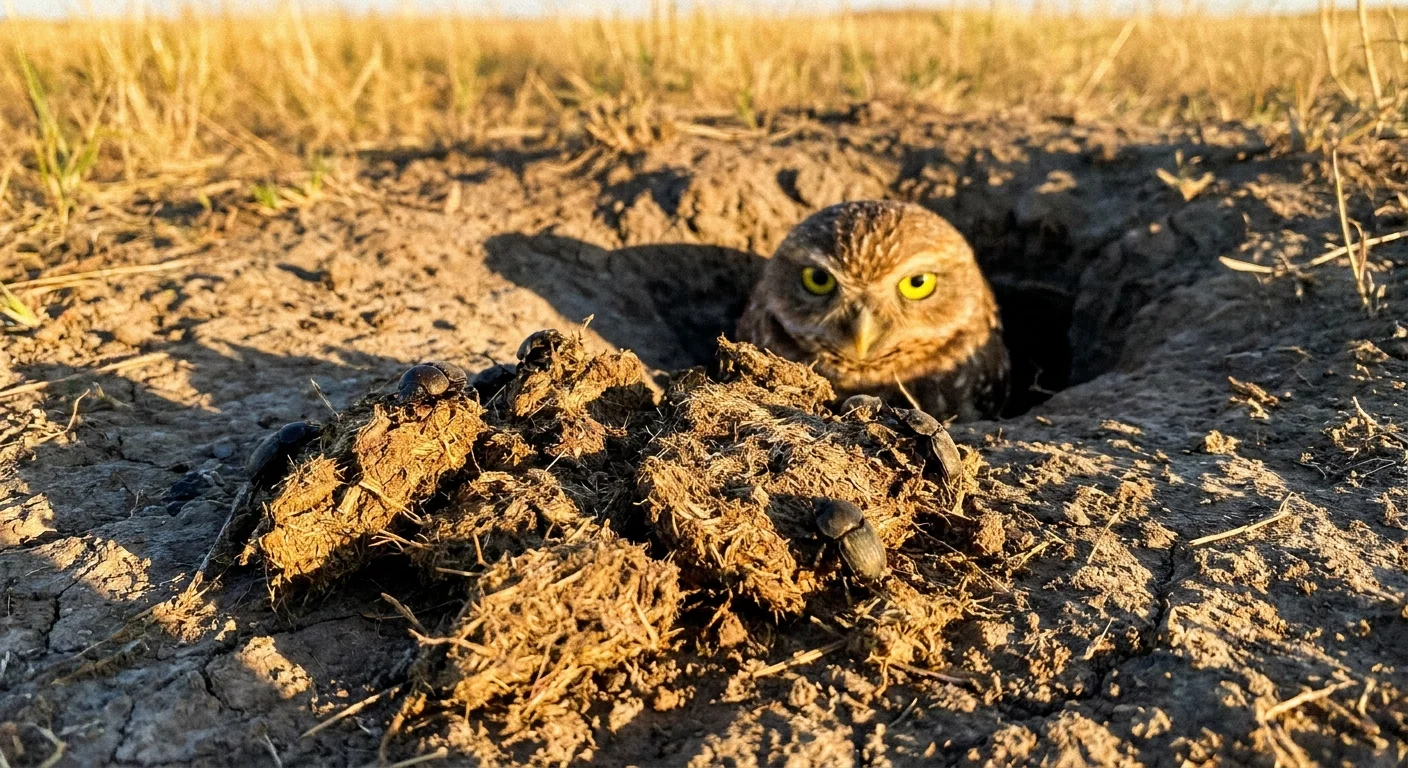
The Burrowing Owl Uses Manure as Beetle Bait
Most owls nest high in the forest canopy, but the burrowing owl makes its home exclusively underground. Found in the open prairies and deserts of North America, this long-legged owl frequently takes over abandoned prairie dog or ground squirrel tunnels. Because life on the ground exposes them to coyotes and badgers, the owl chicks have developed a brilliant defense mechanism; they mimic the exact sound of a rattling rattlesnake to terrify intruders away from the burrow entrance.
Even more fascinating is how the adults secure their meals. The U.S. Fish and Wildlife Service confirms that these owls actively collect pieces of mammal dung—such as horse or cow manure—and strategically scatter it around their front door. This foul-smelling carpet acts as irresistible bait for dung beetles and other large insects. Rather than expending energy hunting across the prairie, the burrowing owl essentially orders delivery, waiting at the tunnel entrance to snatch up the bugs drawn directly to the trap.
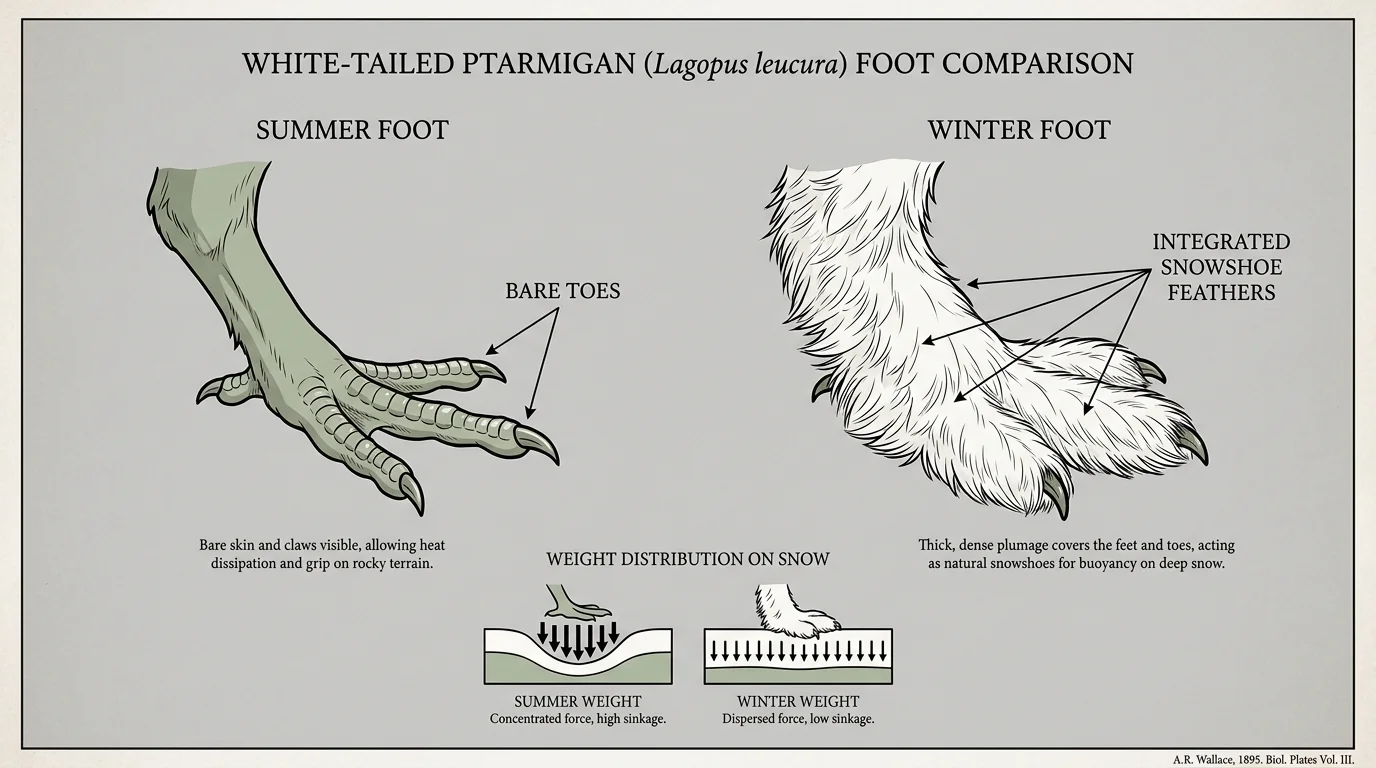
The White-tailed Ptarmigan Grows Its Own Snowshoes
Standing out as one of the most fascinating birds USA alpine hikers can encounter, the white-tailed ptarmigan spends its entire life above the treeline. While other animals flee the high elevations before the brutal winter sets in, this tough little grouse stays put, relying on a series of extreme morphological changes to endure the deep freeze.
According to the Cornell Lab of Ornithology, the ptarmigan molts its speckled brown summer feathers for a coat of pure, dazzling white, rendering it practically invisible against the snow. To navigate the deep drifts, the bird grows a thick layer of dense feathers all the way down to its toes. These feathered feet act as built-in snowshoes, drastically increasing the bird’s surface area so it can walk on top of the snowpack without sinking. When the wind chill drops to deadly levels, the ptarmigan simply dives into a snowbank, hollowing out a small, insulated snow cave to safely wait out the blizzard.
The Gray Catbird Memorizes Its Eggs to Thwart Invaders
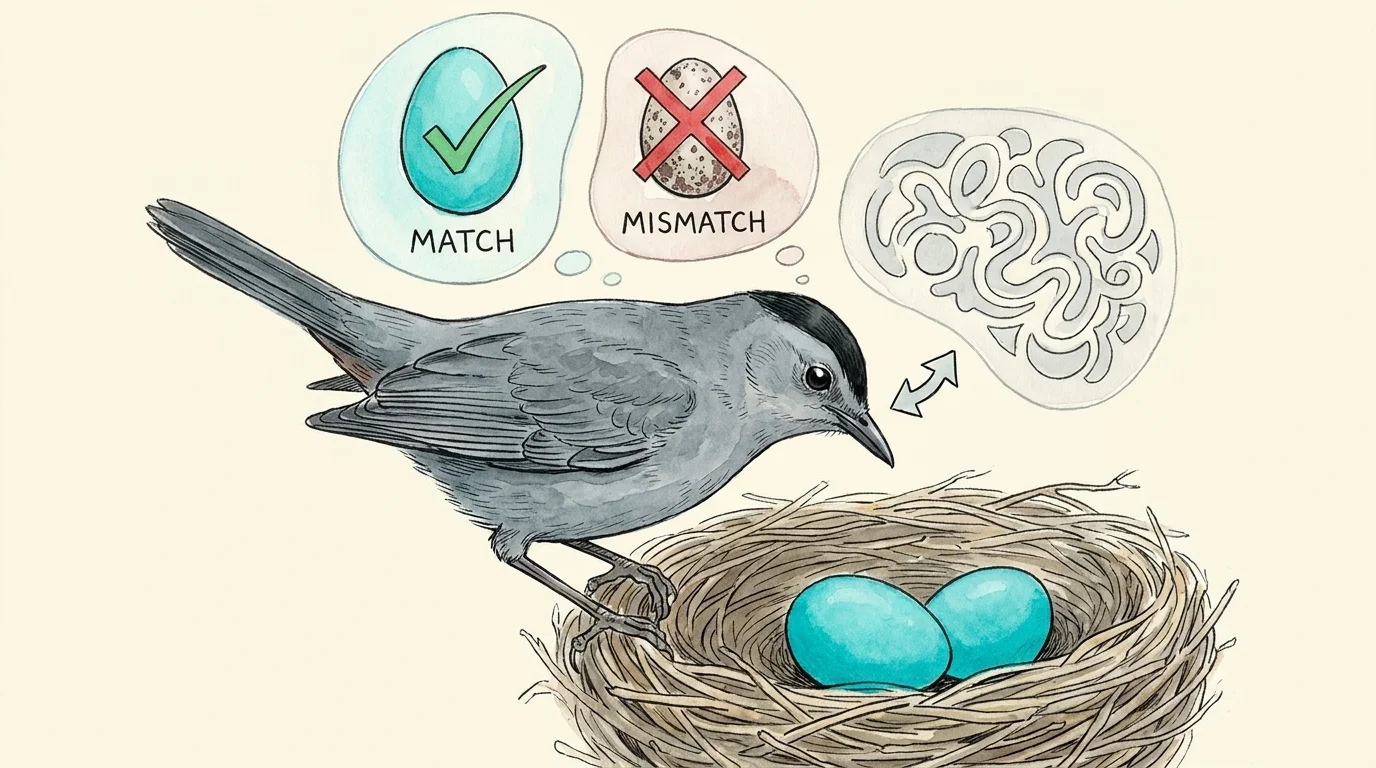
While the brown-headed cowbird successfully tricks dozens of bird species into raising its young, the gray catbird refuses to be fooled. Nesting in dense thickets across the eastern and midwestern United States, the catbird has developed a sophisticated cognitive defense against brood parasitism, boasting an incredible 95 percent success rate at rejecting foreign eggs.
Female catbirds lay beautiful, unmarked greenish-blue eggs. Research reveals that the female meticulously studies and memorizes the exact color and shape of the very first egg she lays. She uses this mental blueprint as a security scan for the rest of the nesting season. If a cowbird sneaks in and deposits a larger, speckled white egg, the catbird instantly recognizes the mismatch. Without hesitation, she pierces the invader’s egg with her beak and violently throws it out of the nest, ensuring her own biological chicks receive all her attention and resources.
The Black-capped Chickadee Physically Grows Its Brain Every Fall
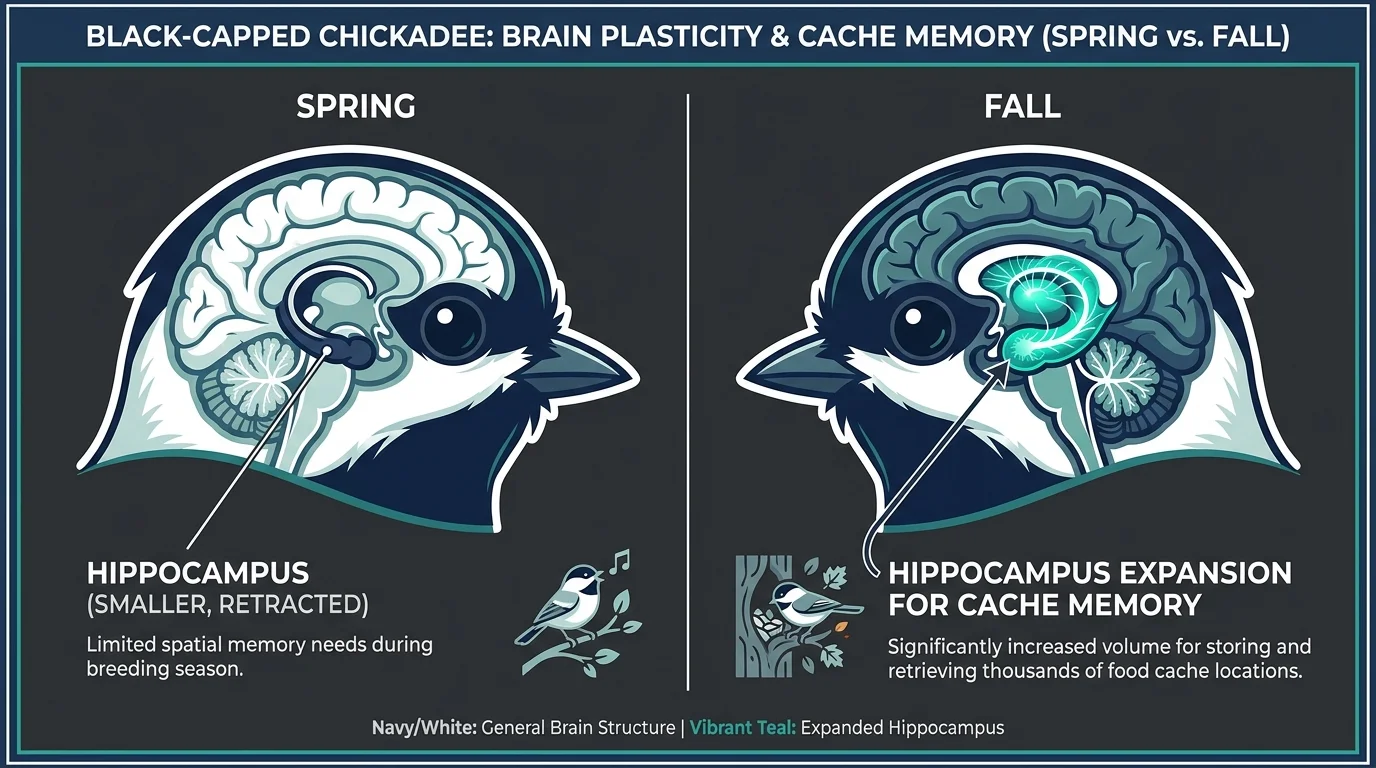
You probably recognize the black-capped chickadee as a cheerful, acrobatic visitor to your backyard feeder. However, one of the most astonishing bird behavior facts involves how this tiny creature survives the winter. Instead of migrating, the chickadee scatter-hoards seeds, hiding individual morsels under tree bark, inside crevices, and beneath dead leaves across a massive territory.
To remember the exact locations of tens of thousands of hidden seeds, the chickadee physically alters its own neuroanatomy. Every autumn, the bird’s hippocampus—the specific brain region responsible for spatial memory—grows in volume by roughly 30 percent. The brain generates fresh neurons, creating distinct neural barcodes to catalog every single cache site. When spring arrives and insects become plentiful again, the bird no longer needs its mental map. The hippocampus shrinks back down, shedding the obsolete memory cells to save energy and prepare a clean slate for the following autumn.
Comparing Avian Survival Tactics
To fully appreciate the diversity of these adaptations, it helps to categorize them. Here is a quick breakdown of how different species tackle the challenges of their specific habitats:
| Bird Species | Primary Habitat | Core Survival Strategy | Adaptation Type |
|---|---|---|---|
| Common Poorwill | Arid Desert Scrub | Entering a deep, hibernation-like torpor for weeks. | Physiological |
| Killdeer | Open Ground and Gravel | Luring predators away with a broken-wing display. | Behavioral |
| White-tailed Ptarmigan | Alpine Tundra | Growing dense foot feathers that act as snowshoes. | Morphological |
| Burrowing Owl | Underground Tunnels | Baiting insects with strategically placed mammal dung. | Tool Use / Behavioral |

Protecting Our Native Avian Innovators
Understanding these brilliant survival mechanisms highlights the delicate balance of North American ecosystems. Every adaptation—from the neurogenesis of a chickadee to the solar heating of a roadrunner—relies on specific environmental triggers and abundant natural resources. Safeguarding these species begins right in your own community. You can take immediate, practical action by planting native shrubs and trees that provide crucial winter cover and natural food sources. Furthermore, eliminating chemical pesticides from your lawn guarantees a healthy, non-toxic supply of insects for foraging birds to feed their young. By preserving local habitats and respecting wildlife corridors, you ensure that these incredible feats of avian engineering continue to thrive in our skies and forests for generations to come.